
A credit report can contain someone else’s financial history even when no identity theft has occurred. To understand what a mixed file on a credit report means, start with this distinction: information about two people has been combined in one credit file, often because details such as names, addresses, or Social Security numbers are similar.
It’s unsettling to find an account or personal detail on your report that isn’t yours. A mixed file can make it look as though you have debt, missed payments, or other credit history belonging to someone else. That information may affect how a lender views an application, but it does not reflect your financial behavior.
This article explains how file mix-ups happen, what signs to look for, and how a mixed file differs from identity theft. You’ll also learn why it’s important to review reports from all three national credit bureaus and what a dispute is meant to address, so you can take a clear, focused next step.
Key Takeaways
- Learn how a reporting mix-up differs from identity theft and why another person’s information can appear without fraud.
- Recognize how similar names and overlapping identifying details can lead to information being matched to the wrong file.
- Understand why incorrect accounts or personal details may affect how lenders assess a credit application.
- See what information can help clarify a file mix-up and what a dispute is intended to address.
What is a Mixed Credit File?
A mixed credit file combines credit information belonging to different people in one consumer’s report. Similar identifying details can cause records to be matched, and later updates may add more information to the file.
Mixed Files and Identity Theft
A mixed file is a reporting error that can place someone else’s accounts or personal details in your credit history, even when no identity theft has occurred. The distinction matters because an unfamiliar account alone doesn’t prove that anyone used your identity. For example, a stranger’s collection account might appear after a mistaken match, although you never applied for it.
Shared Identifiers Combining Records
Credit-reporting systems may combine records when names, addresses, birth dates, or Social Security numbers are similar. Someone with a common name, for example, may share identifying details with another consumer who lived at a similar address. The resulting file could include inaccurate names, phone numbers, or accounts. If the other person’s creditor reports updates, those details may continue appearing on your report.
Family Members and Strangers in Mixed Files
A mixed file can combine information from relatives or from people with no family connection. A parent and adult child may share an address, while siblings may have similar names or other overlapping details. Those similarities can contribute to a mistaken match, but they don’t make one person responsible for another’s accounts. A stranger’s information may also be attached when identifiers appear similar, despite no shared household or relationship.
Effects on Scores and Loan Applications
Another person’s negative accounts can make your credit history appear riskier and may affect your credit score. A lender reviewing the report could see excessive debt, delinquencies, hard inquiries, or a bankruptcy discharge belonging to someone else. This may lead to a denied application or less favorable terms. Because fair credit reporting depends on matching information to the right consumer, an unfamiliar account deserves careful attention.
How similar names and identifying details can cause file mix-ups
Credit files are matched using identifying details, not names alone. A close match can attach another person’s account history to your record.
Matching Identifiers Across Records
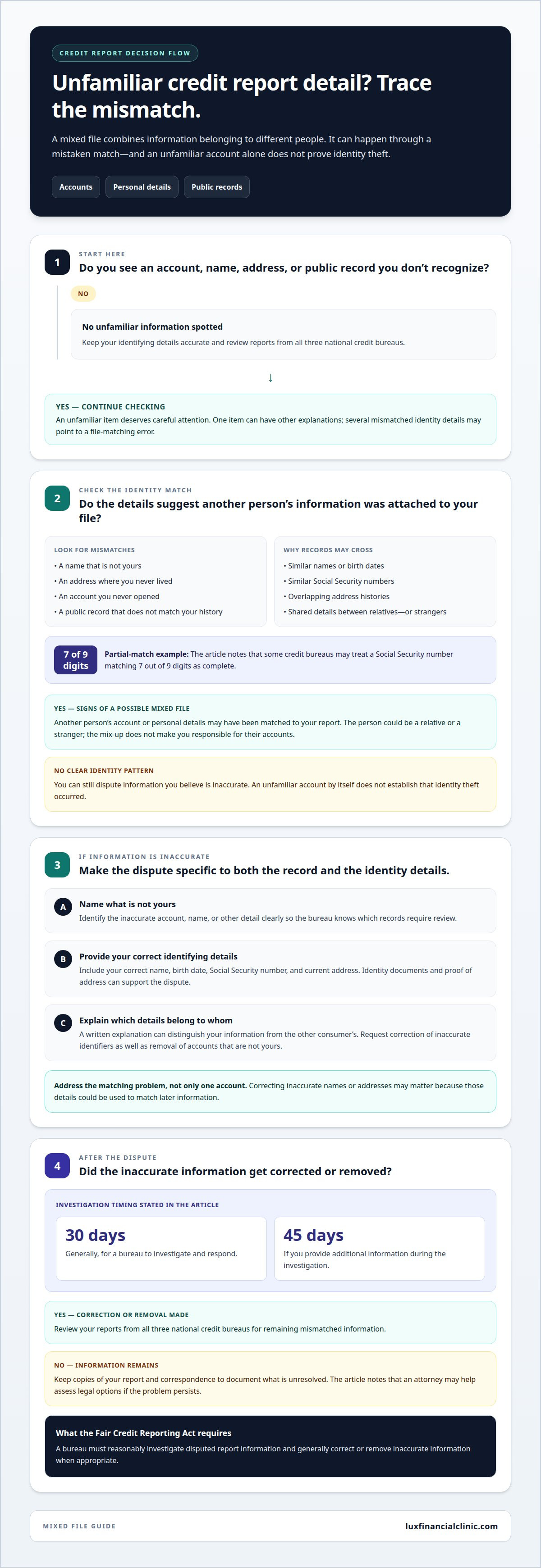
Matching systems may combine records when several identifiers appear similar, even if they belong to different people. Names, Social Security numbers, birth dates, and address histories can all contribute to a match. Some credit bureaus may treat a Social Security number matching 7 out of 9 digits as complete. That kind of partial match can matter when a creditor reports a credit card or loan under another consumer’s information.
Similar Details Causing Record Errors
Similar details can cause matching errors even when two people have different full identities. For example, two people named Jordan Lee may have lived on the same street at different times. Overlapping address histories and similar birth dates may help attach one person’s account to another’s file. Once an inaccurate record appears, later account updates can keep it there.
Correcting Identifying Information
Correcting identifying details in a dispute can help distinguish your file from the other person’s. Identify the account or name that isn’t yours, then provide your correct name, birth date, Social Security number, and current address. Identity documents and proof of address can support your dispute. A written explanation can clarify which details are yours and which belong to the other consumer.
You can’t control how a bureau matches incoming records, but you can keep your identifying details accurate and review your reports for unfamiliar information. If you dispute an error, request correction of inaccurate identifiers as well as removal of accounts that aren’t yours. Addressing the matching problem, rather than just one account, may help prevent the same error from appearing again after an update.
Definition of a mixed credit file
A mixed or merged credit file is a consumer report that combines information belonging to different people. In practical terms, a bureau’s file may show someone else’s accounts, identifying details, or public records alongside your own. The phrase “mixed file credit report” describes a report containing that combined information, not a separate type of report.
You might recognize your name and address but find an unfamiliar account or another person’s name in the report. Other signs include addresses where you never lived, accounts you never opened, or public records that don’t match your history. One unfamiliar item can have other explanations, but several mismatched identity details may point to a file-matching error. Equifax is one bureau where you can review your report for discrepancies.
How long do credit bureaus have to investigate a mixed-file dispute under the Fair Credit Reporting Act? Generally, a bureau has 30 days to investigate and respond, or 45 days if you provide additional information during the investigation. The dispute should identify the inaccurate information clearly, since the bureau needs to understand which records require review.
Consumers can dispute information they believe is inaccurate. The Fair Credit Reporting Act requires a bureau to reasonably investigate disputed report information and generally correct or remove inaccurate information when appropriate. If another person’s accounts remain after a dispute, keep copies of your report and correspondence to document what is unresolved. An attorney may help assess legal options if the problem persists, but first identify precisely which details aren’t yours.
Accuracy means more than removing one unfamiliar account. If a report contains someone else’s name or address, correcting those identifiers may also matter because they could be used to match later information. A mixed file means records have been assigned to the wrong identity, whether the information came from Equifax or another bureau.
What a mixed credit file is
A mixed credit file is more than a report with one unfamiliar entry. It describes a consumer file that combines information assigned to different identities. The key question is whether the accounts and identifying details belong to you. For example, a report may show your genuine credit history alongside a stranger’s collection account, making your overall profile misleading.
The error may appear in one credit bureau’s records but not in others. Equifax, TransUnion, and other reporting agencies maintain separate consumer reports, so a lender may see different information depending on which report it reviews. A credit freeze doesn’t stop a bureau from associating another person’s information with your existing file. Reviewing reports from all three agencies can show whether the problem is limited to one bureau or appears more widely.
A mixed file can change as creditors send updates. If a mismatched account remains linked to your identity, later information about that account may continue to appear in your report. Correcting one visible entry may not address the underlying problem if other identifying details are also inaccurate. A dispute can ask the bureau to remove information that isn’t yours, correct identifiers, and confirm that the records have been separated.
U.S. consumers can get a free credit report annually from each of the three national bureaus. Comparing the reports can help distinguish a one-bureau mismatch from a broader reporting problem. Focus on specific discrepancies, such as an unfamiliar account, an incorrect address, or a public record that belongs to someone else. These details explain the issue more clearly than a general statement that the report seems wrong.
If inaccurate credit-report information is complicating your next steps, get support reviewing your credit report through a structured credit-repair process.
Lux Financial Clinic
Lux Financial Clinic provides credit repair for people addressing inaccurate negative information on their credit reports. If a suspected mixed file includes accounts or other negative items that aren’t yours, structured dispute support can help you work through the correction process. The Basic/Repair Package and Comprehensive/Build Package offer options for addressing report inaccuracies.
A mixed-file problem may involve more than one incorrectly matched detail, so focus on what is inaccurate and how it affects your report. Credit repair can help when your next step is disputing inaccurate items. It does not replace legal advice if you’re considering a legal claim.
Contact Lux Financial Clinic for guidance on credit repair and your reporting concerns.
Choose a Clear Next Step
Understanding what a mixed file on a credit report means gives you a starting point, not a reason to blame yourself for information you didn’t create. Next, decide what support fits your situation: organizing a dispute, addressing inaccurate negative items, or considering how your broader credit profile supports future plans.
Lux Financial Clinic provides credit repair for people working to address inaccurate information on their reports. Its services also include Business Funding Consulting, which may be relevant when your financial goals extend beyond personal credit. The right focus depends on the concern you want to address, and no service can promise a particular credit outcome.
If you’re ready to discuss your credit concerns and possible next steps, contact Lux Financial Clinic. A thoughtful review can help you move forward with greater clarity and a plan that reflects your goals.
Frequently Asked Questions
Why do mixed files happen?
Mixed files happen when a credit bureau’s matching process links records to the wrong consumer. A shared address, similar name, or identifier with a small error can make two profiles appear connected. The issue may surface after a creditor submits an account update or a bureau adds identifying information. It can happen even when nobody has used your identity to open an account.
What Can You Do?
Start by identifying the specific entries and personal details that aren’t yours. Compare reports from all three national credit bureaus, since the problem may differ between them. Dispute inaccurate information and ask for incorrect identifiers to be corrected. Written disputes create a useful record of what you challenged. When sharing documents, redact full Social Security and account numbers, leaving only the last four digits if needed.
What if the credit bureau “verifies” information that isn’t mine?
A bureau’s verification doesn’t make an account yours. Keep its response and your original dispute, then identify precisely what remains incorrect and provide relevant identity or address documents. If the creditor continues reporting the account, contact that creditor with the same clear explanation and ask it to investigate its records. A continuing mismatch may require attention to the identifying details linking the account to your file.
What is a mixed file on a credit report?
A mixed file is a credit report that includes information belonging to more than one person. For instance, your report might show your own accounts alongside another consumer’s collection or address. The defining issue is a mistaken link between information and identity, not simply an account you don’t remember. If the report also includes unfamiliar identity details, consider whether they point to a broader file-matching problem.
What causes a mixed credit file?
Similar or overlapping identifying information can lead a bureau’s system to associate separate consumer records. Examples include similar names, addresses, birth dates, or Social Security numbers. A number entered incorrectly by one digit may also contribute to a mistaken match. Shared information doesn’t prove that two people are related or that either acted improperly; it may simply reflect an error in how records were matched.
How is a mixed credit file different from identity theft or a merged credit report?
A mixed file can result from mistaken record matching, without anyone using your identity to apply for credit. Identity theft involves someone using another person’s identifying information, so an unfamiliar account alone doesn’t establish which problem occurred. “Merged credit report” is often used to describe the same kind of combined file. The key distinction is whether another person’s information was misassigned or fraudulently used.


