
A budget isn’t a restriction; it’s a structure that gives every paycheck a clear purpose. Learning how to stop living paycheck to paycheck starts with recognizing warning signs, listing income and essential bills, and assigning money before it’s spent. Build an emergency fund, beginning with a starter goal of $500 to $1,000, then direct planned extra money toward high-interest debt.
When money feels spoken for before payday arrives, it can be hard to see a way forward. That pattern isn’t a personal failing; it signals that your current plan may need more breathing room. A clear picture of your cash flow can show where the pressure builds and help you choose a manageable first step.
This guide explains how to spot the warning signs, build a budget around payday, start emergency savings, and approach high-interest debt with intention. You’ll have a practical framework for making each paycheck a step toward greater stability.
Key Takeaways
- Recognize warning signs such as relying on credit for routine expenses or having little left before payday.
- Build a budget that aligns bills with paydays and gives each dollar a clear purpose.
- Start emergency savings with a manageable goal, then build toward a stronger financial cushion.
- Choose a debt repayment approach that fits your balances and helps you make steady progress on high-interest debt.
Building an emergency fund
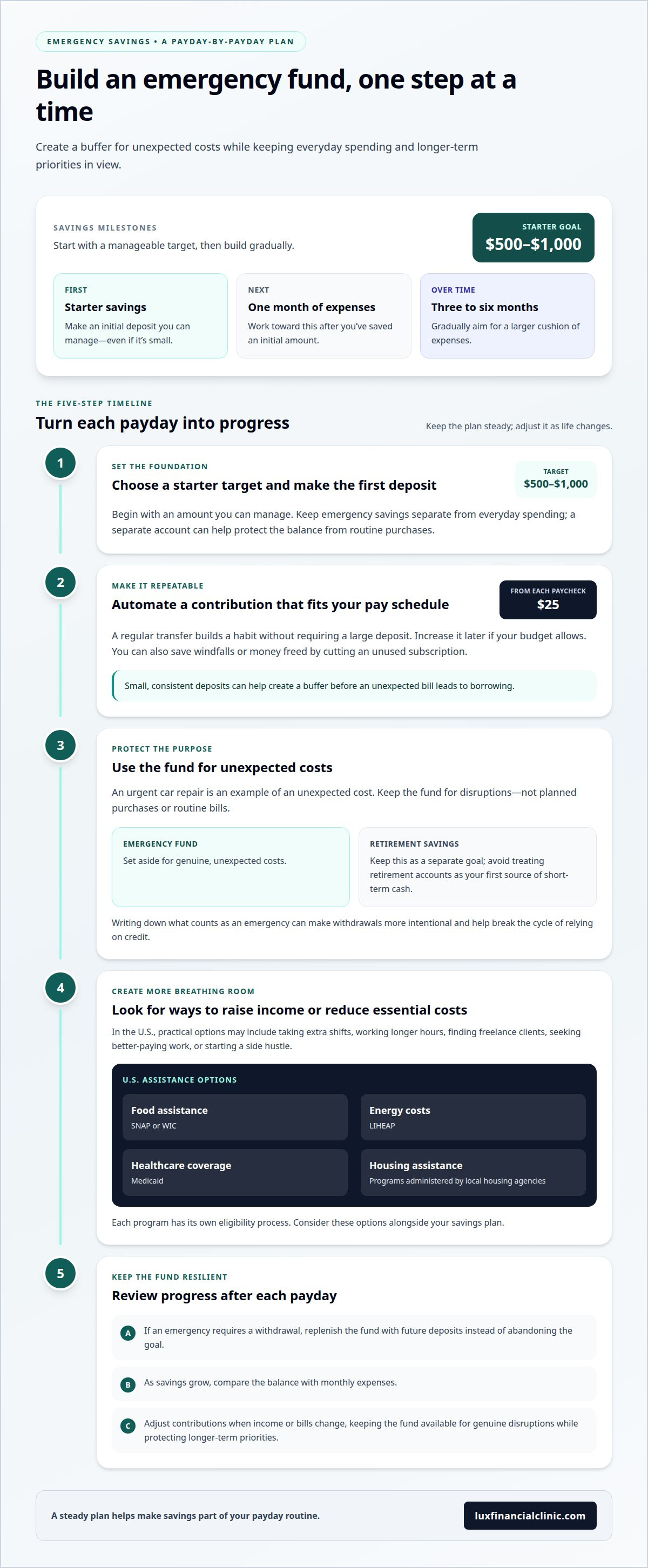
- Set an initial savings target and make the first deposit. Start with an amount you can manage, even if it’s small, and keep emergency savings separate from everyday spending. A separate account can help protect the balance from routine purchases. Once you’ve saved an initial amount, work toward one month of expenses, then gradually aim for three to six months.
- Automate a contribution that fits your pay schedule. Directing $25 from every paycheck into savings builds a regular habit without requiring a large deposit. If your budget allows, increase the transfer later. Save windfalls or money freed by cutting an unused subscription, too. These small steps can help create a buffer before an unexpected bill leads to borrowing.
- Give your emergency fund a clear purpose. Use it for unexpected costs, such as an urgent car repair, rather than planned purchases or routine bills. Keep retirement contributions and emergency savings as separate goals, and avoid treating retirement accounts as your first source of short-term cash. Writing down what counts as an emergency can make withdrawals more intentional and help break the cycle of relying on credit.
- Look for ways to increase income or reduce essential costs. In the U.S., practical options include taking extra shifts, working longer hours, finding freelance clients, seeking better-paying work, or starting a side hustle. Food assistance may include SNAP or WIC; LIHEAP can help with energy costs, and Medicaid supports healthcare coverage. Housing assistance is available through programs administered by local housing agencies. Each program has its own eligibility process, so consider these options alongside your savings plan.
- Review your progress after each payday. If an emergency requires a withdrawal, replenish the fund with future deposits instead of abandoning the goal. As your savings grow, compare the balance with monthly expenses and adjust contributions when income or bills change. A steady plan keeps the fund available for genuine disruptions while protecting longer-term priorities.
Creating a budget
Build your plan around actual income and bills, then assign money according to due dates. A realistic budget can reveal where spending habits leave room for change.
-
Set a Realistic Budget
List dependable income and recurring expenses before setting spending limits. If income barely covers expenses, protect essentials first and identify discretionary costs to reduce. For example, cutting one or two restaurant meals a week can lower food spending. Don’t build the plan around extra money you might earn; adjust it when your income actually changes.
-
Use Zero-Based Budgeting
Give every dollar of expected income a purpose, including bills, food, savings, and flexible spending. In a zero-based budget, income minus planned expenses equals zero because no money is left unassigned. That doesn’t mean spending everything: savings and unexpected expenses get their own allocations. Review the plan monthly and adjust categories when actual costs differ.
-
Prioritize Bills and Expenses
Rank essential expenses as food, utilities, shelter, and transportation, in that order, when money is tight. Then schedule other obligations and discretionary spending around what remains. If you can’t save $100-$200 per paycheck, review nonessential costs, such as unused gym memberships or streaming services. A spending review may also reveal a recurring takeout habit, such as $100 a week.
-
Plan Around Paychecks
Match each paycheck to the bills due before the next payday, rather than relying only on monthly totals. For biweekly pay, list due dates beside each deposit and reserve money for upcoming obligations first. With irregular income, base essential commitments on dependable earnings, then assign extra money after it arrives. For example, setting aside $50 monthly covers car maintenance when annual spending is $600.
Paying down high-interest debt
Choose a debt repayment approach that fits your cash flow, and keep required payments current. A clear sequence helps extra money make measurable progress.
-
Apply the Debt Snowball
List debts from the smallest balance to the largest, regardless of interest rate. Keep making minimum payments on every account, then direct extra money toward the smallest debt. For example, add $40-$50 to that balance each month. After paying it off, roll its payment into the next debt. This debt snowball can take several years, so review balances regularly and maintain a workable budget.
-
Pay Off Credit Card Debt
Pay at least each credit card’s required minimum, then put available extra money toward one selected balance. A debt snowball targets the smallest balance first; an interest-focused approach instead targets the costliest debt. Choose a method you can follow consistently. Some cards offer 0% interest promotions for a set period, while many may charge balance transfer fees. Compare the fee and promotional period with your repayment plan before moving a balance.
-
Negotiate Lower Payments
Contact your landlord, utility company, insurer, or creditor to ask about a lower bill or payment arrangement. Explain what you can afford, and request the terms in writing before changing your budget. Start with the expense creating the most pressure, then discuss available options directly with the provider. Don’t agree to a payment that leaves too little for essentials.
- Schedule debt payments around payday so the money is available when due. Keep bill funds in your checking account and avoid moving them into a savings account earmarked for emergencies. For example, if a $70 minimum payment is due, adding $50 toward that debt means directing $120 to its balance. As each debt is cleared, redirect that payment instead of absorbing it into routine spending.
Signs of living paycheck to paycheck
Review when income arrives, when bills are due, and when you make everyday purchases to see whether each payday is already committed. Repeated cash shortfalls can reveal pressure points before they become harder to manage.
-
Identify Signs of the Cycle
Compare your account balance on payday with what remains just before the next deposit. If groceries, utilities, and scheduled payments leave little or nothing, your income may already be fully committed. Notice whether you postpone bills, use credit cards for routine costs, or depend on your next paycheck to cover an unexpected expense. These patterns matter even when every payment eventually clears.
-
Recognize Trapping Habits and Risks
Review recent transactions for habits that repeatedly crowd out essentials. Frequent takeout or small unplanned purchases, for example, may leave less for groceries and bills. Using credit cards to bridge each gap can add interest and make balances harder to pay off. Other pressure points include irregular income, rising household expenses, and unexpected car or medical costs without savings to cover them.
- Track each shortfall by date and cause for one full paycheck cycle. Note whether the gap followed a late bill, a change in income, or discretionary spending. Then distinguish a temporary disruption from a recurring pattern: one unexpected repair is different from relying on credit for groceries every month. This record gives you a practical starting point for adjusting payment timing or spending categories.
- Choose one pressure point to address first. If credit card use covers groceries before payday, set a specific grocery limit and plan purchases around available cash. If scheduled payments arrive before income, map due dates against deposits and adjust the timing where possible. A financial diagnostic review can help organize the factors affecting your cash flow and identify a focused next step.
Lux Financial Clinic
Lux Financial Clinic can help address financial challenges that accompany a paycheck-to-paycheck budget. A Financial Diagnostic Consultation can help you review your situation and identify a practical next step. If inaccurate negative items are affecting your credit profile, the Credit Repair - Basic/Repair Package and Credit Repair - Comprehensive/Build Package use structured dispute protocols to address them.
Self-employed readers can also turn to the firm for Self-Employed / 1099 Tax Preparation, while Business Funding Consulting may fit business funding questions. These services complement the budgeting steps above, but they don’t replace your household budget or emergency savings plan.
If you’d like support identifying a useful next step, contact Lux Financial Clinic.
Make Your Next Financial Move With Intention
Financial stability doesn’t come from one perfect month. It grows through decisions that make your money more predictable and help you prepare for change. As you consider how to stop living paycheck to paycheck, focus on a routine you can maintain through ordinary weeks and unexpected disruptions. A plan that adapts to real life is more useful than one that depends on everything going exactly right.
Choose a clear, manageable next step, then leave room to refine it. Review your plan after a change in income, a new recurring bill, or progress toward a financial goal. Each review can show what’s working and where to focus next. Steady adjustments can build confidence without requiring a dramatic reset.
If professional guidance would help you move forward with greater clarity, explore a next step with Lux Financial Clinic. Your progress can begin with one considered decision.
Frequently Asked Questions
How Do You Stop Living Paycheck to Paycheck?
Start by identifying what repeatedly uses up your income before the next payday, then change one pressure point at a time. To learn how to stop living paycheck to paycheck, compare deposits with actual transactions rather than estimates. If car repairs keep disrupting bill payments, prioritize a repair reserve; if card balances are growing, plan extra payments to reduce them.
What does it mean to live paycheck to paycheck?
It means relying on upcoming income to cover routine expenses, with little financial breathing room between deposits. This can happen even with a steady income, especially when large fixed bills or debt payments absorb most of it. For example, needing the next deposit to buy groceries after rent and utilities clear suggests that cash flow has little flexibility.
What are the first steps to stop living paycheck to paycheck?
Start with a clear snapshot: note income dates, recurring obligations, current balances, and variable expenses. Then identify the next bill or purchase likely to create a shortfall and adjust one decision before it happens. Delaying a nonessential purchase, for instance, can preserve cash for an upcoming payment. Review the plan after payday and revise it when actual costs differ.
How can I track and reduce monthly spending?
Use bank and card statements to group purchases into categories, then compare the totals with your monthly plan. A simple spreadsheet or notes app can reveal patterns without specialized software. Look for recurring charges and purchases made during stressful or rushed moments. Choose one category to change, such as takeout, and record the result next month to see whether the adjustment lasted.
How much emergency savings should I build, and where should I keep it?
A long-term target is three to six months of expenses, built gradually as your circumstances allow. Keep emergency savings separate from the account you use for routine spending, so everyday purchases don’t blur the reserve’s purpose. Choose an account you can access when an unexpected cost arises, but keep it separate enough to discourage casual withdrawals. Revisit your target when essential expenses change.
How can I pay off credit card debt while building savings?
Keep making required card payments while directing a manageable, planned amount toward savings and any available extra money toward debt. This preserves a modest cash buffer and can reduce the need to charge the next surprise expense. If you have balances on several cards, list each balance and interest rate, then choose a repayment order you can maintain. Avoid adding new charges while paying down balances.


