
What if the deposit isn’t what rebuilds your credit, but the habits you establish after opening the account? A secured credit card to rebuild credit can give you a structured way to practice those habits. It works differently from a regular card: your deposit helps secure the account, while your payment activity may be reported to credit bureaus. Whether and when the deposit is returned depends on the issuer’s terms.
It’s understandable to wonder whether tying up money is worthwhile, whether a new account might help your credit profile, or how much to charge each month. A secured card can be one useful part of a credit-building plan, but opening one alone doesn’t guarantee a score increase. Consistent, on-time payments and manageable balances matter, and you should confirm the card’s reporting practices before applying.
This guide explains how secured cards work, what to compare when reviewing deposits, fees, and reporting, and how to establish a steady payment routine. You’ll also learn how to consider a card alongside your wider credit goals and avoid common mistakes as you make an informed choice.
Key Takeaways
- Review your credit reports before applying, and follow up separately on information you believe is inaccurate.
- Compare issuers’ reporting practices, fees, deposit terms, account access, and upgrade policies before choosing a card.
- To use a secured credit card to rebuild credit, create a routine around on-time payments and manageable balances.
- Ask the issuer whether it reports account activity to all major nationwide credit reporting agencies.
- Think of a secured card as one possible part of a broader credit-building plan, not a solution for every credit concern.
What a Secured Credit Card Can Do to Help Rebuild Credit
Rebuilding credit takes time. A secured card is one possible tool, not a shortcut or a complete plan. A secured credit card to rebuild credit may give you a way to establish a record of account use and payments. Whether it helps depends on the issuer’s reporting practices and how you manage the account. Before applying, find out how the deposit is handled, what the account costs, and whether the issuer reports activity to credit bureaus.
How a secured card differs from an unsecured card
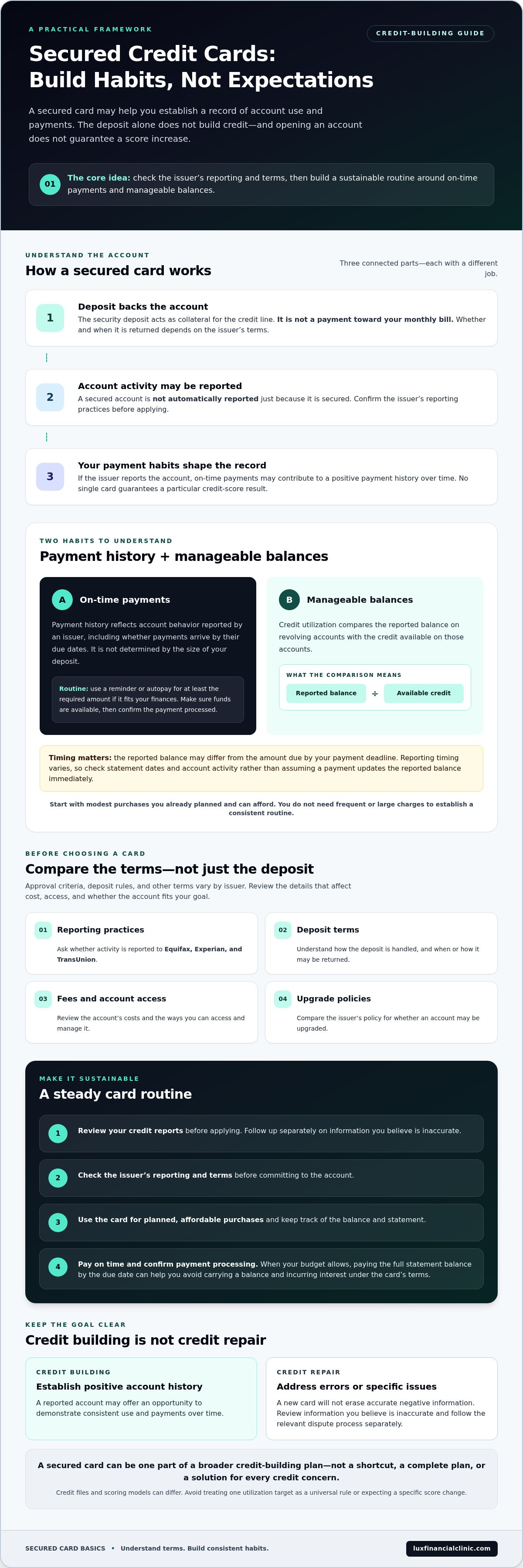
A secured card typically requires a security deposit that backs the account’s credit line. The deposit is collateral, not a payment toward your monthly bill, so you still need to pay charges according to the account terms. The issuer may return the deposit under specified conditions. Check when and how that can happen before you commit. Approval criteria, deposit rules, and other terms vary by issuer.
An unsecured card generally doesn’t require a security deposit. But “secured” describes how the account is backed, not whether the issuer reports your activity. The Secured credit card section offers additional background on the deposit’s role. Confirm the specific card’s current terms and reporting practices directly with its issuer.
What credit reporting can, and cannot, change
If an issuer reports the account, on-time payments may contribute to a positive payment history. That record may support your credit profile over time, but an account is not reported automatically just because it is secured. Ask whether the issuer reports to Equifax, Experian, and TransUnion, and confirm the answer before applying.
Credit building adds positive account history; credit repair addresses errors or other specific issues in a credit file. A new card may give you an opportunity to demonstrate consistent use, but it won’t erase accurate negative information or guarantee approval for another account. A particular score outcome can’t be promised, either.
Consider the card as one part of a broader plan. If your reports contain information you believe is inaccurate, review it separately and follow the relevant dispute process. If your main goal is to establish a consistent payment record, choose an account whose terms and reporting fit that goal, then use it in a way you can sustain.
How Secured Credit Cards Affect Payment History and Credit Utilization
Two account details can affect your credit profile in different ways: whether you pay on time and how much of your available credit appears as a balance. The deposit does not replace either habit. If you’re using a secured credit card to rebuild credit, understanding the difference can help you build a routine that’s manageable rather than stressful.
Why on-time payments matter
Payment history reflects account behavior reported by an issuer, including whether payments arrive by their due dates. It isn’t determined by the size of your security deposit. If the issuer reports the account, paying on time may help establish a positive payment record, though no single account can guarantee a particular credit-score result.
Choose a reminder or automatic-payment setup that fits your finances. Autopay for at least the required amount can help you avoid overlooking a due date, but check that enough money will be available in the linked account. Review scheduled payments and confirm they’ve processed. When your budget allows, paying the full statement balance by the due date can help you avoid carrying a balance and incurring interest under the card’s terms.
How to keep balances manageable
Start with modest purchases you already planned and can afford. You don’t need frequent or large charges to establish a consistent payment routine. Check your account balance and billing statement so you know what you owe and when it’s due.
Credit utilization is the reported balance on revolving accounts compared with the credit available on those accounts. The balance an issuer reports may differ from the amount due by your payment deadline. Reporting timing varies, and a payment made after a balance is reported may not change that snapshot. Check your statement dates and account activity with the issuer instead of assuming every payment updates the reported balance immediately.
Credit files and scoring models can differ, so don’t treat a single utilization target as a universal rule or expect a specific score change. The Federal Trade Commission’s How Secured Cards Compare explains how secured cards differ from other payment cards. For help understanding how payment and balance habits fit into your broader goals, a financial diagnostic consultation may help you review your circumstances.
How to Compare Secured Credit Cards Beyond the Deposit
The deposit is only one part of choosing a secured credit card to rebuild credit. A card with a deposit that fits your budget may still be a poor match if its fees are unclear, reporting is limited, or the account is difficult to manage. Compare the full terms side by side, and confirm details directly with each issuer before applying.
What to compare
Questions to ask
Bureau reporting
Does the issuer report account activity to Equifax, Experian, and TransUnion? How often does it send updates?
Fees and interest
What annual or other disclosed fees apply? Review the interest terms, late-payment consequences, and any restrictions.
Deposit terms
Is the deposit refundable? What conditions apply, and how and when would the issuer process a return?
Upgrade policy
Does the issuer review accounts for possible graduation to an unsecured card? Ask how reviews work, without assuming an upgrade is assured.
Account access
How can you make payments, monitor transactions, contact support, and request help with account issues?
Look beyond the advertised deposit
Read the account agreement and fee disclosures, not just the application summary. Confirm what happens to the deposit if you close the account, miss a payment, or have an outstanding balance. Ask how to request a refund and whether conditions apply. Review account restrictions and payment instructions so you understand the everyday requirements before committing funds.
Pay particular attention to reporting. A secured account isn’t automatically reported to every bureau, so ask the issuer specifically about Equifax, Experian, and TransUnion, and how often it sends updates. Also check how to report an account error, close the card, or follow up on a deposit return. Keep written terms or issuer responses for reference.
Approval, graduation, and a particular score change aren’t guaranteed. Compare the card’s terms with your wider goals rather than choosing based on a promised outcome. If inaccurate items on your reports are also a concern, the existing pillar Essential Guide to 3-Bureau Credit Dispute Services for 2026 provides related dispute context. A secured card can support account-history building, while inaccurate report information calls for separate review and follow-up.
How to Rebuild Credit with a Secured Card Step by Step
A clear routine can make a secured card easier to manage. Before opening an account, review your reports and decide how the card will fit your budget and wider credit goals. The steps below offer a practical starting point without treating a new account as a guaranteed fix.
Before applying: prepare your plan
- 1. Review your credit reports. Check reports from Equifax, Experian, and TransUnion for account details you recognize and information that may be inaccurate. Note possible errors for separate follow-up instead of expecting a new card to resolve them.
- 2. Compare issuer terms with your budget. Review application requirements, deposit handling, fees, reporting practices, and payment options. Choose an account only if its deposit and ongoing obligations feel manageable.
- 3. Consider the timing. Think about your existing financial obligations and any applications you’re planning. Decide whether opening another account fits your circumstances before submitting an application.
After approval: establish a steady routine
- 4. Set your guardrails before the first purchase. Decide what modest, planned expenses you’ll put on the card and how much you can comfortably repay. Choose a payment reminder or automatic-payment arrangement, and make sure funds will be available if a payment is scheduled.
- 5. Review each statement. Check transactions, the amount due, and the payment deadline. Contact the issuer promptly if something looks unfamiliar or incorrect, and keep a record of your communication.
- 6. Pay on time and monitor activity. Make at least the required payment by the due date, and pay the full statement balance when your budget allows. Keep an eye on your account so you can spot missed payments, unexpected charges, or changes to the terms.
- 7. Check your reports after allowing time for updates. Reporting schedules vary, so don’t assume account activity will appear immediately. Review your reports over time, confirm whether the account is showing as expected, and follow up separately with the relevant bureau about inaccurate report information.
Use modestly, pay on time, and review your reports regularly. That repeatable cycle can help you manage a secured card with intention. The goal is steady account management, not a promised score change. If you’d like help clarifying how payment habits and report concerns relate to your broader credit goals, consider a financial diagnostic consultation.
When a Secured Card Fits a Broader Credit-Building Plan
A secured card may fit if you can set aside the deposit without disrupting essential expenses, manage the account’s fees, and follow a payment routine you can sustain. It can offer an opportunity to build reported account history, but it isn’t the right tool for every situation. Consider how it fits with your existing obligations and goals before applying for a secured credit card to rebuild credit.
When another approach may deserve consideration
If funding a deposit would strain your budget, or you’re unsure you can make payments consistently, pausing is a practical choice. Fees and missed payments can add pressure rather than support progress. You might also research other options, such as a credit-builder loan or an authorized-user arrangement, but neither is automatically suitable or beneficial for everyone.
Compare any option by its eligibility requirements, total costs, reporting practices, and potential risks. For an authorized-user arrangement, clarify how the account will be managed and whether its activity is reported. For any product, review the terms directly with the provider and consider whether taking on another financial obligation makes sense right now.
How personalized credit guidance can support next steps
A card is only one part of a broader plan. If your credit reports contain negative information you believe is inaccurate, review those items separately and use the applicable dispute process. Opening a new account won’t correct inaccurate reporting, and accurate negative information isn’t guaranteed to be removed through a dispute.
A financial diagnostic consultation can give you an opportunity to review your circumstances and consider how account habits relate to your broader credit goals. Lux Financial Clinic offers structured credit dispute support for inaccurate negative items and personalized credit-building roadmaps. These services can help you organize next steps, but they don’t promise a particular score outcome or the removal of accurate information.
Whether you choose a secured card, explore another option, or wait before taking on a new account, a thoughtful plan can help you make a more informed decision. If tailored guidance would be useful, you can explore a personalized credit roadmap at your own pace.
Choose Your Next Credit-Building Step with Clarity
A secured credit card to rebuild credit may support your goals when its deposit and terms fit your budget, but steady account habits matter more than simply opening the account. Confirm the issuer’s reporting practices, make payments on time, and monitor your reports. If you find information that appears inaccurate, address it through a separate review and dispute process.
Your next step doesn’t have to be complicated. Lux Financial Clinic offers structured credit dispute programs for inaccurate negative items, and comprehensive packages may include a personalized credit-building roadmap and strategist support. These services can help you organize a plan, without promising a particular score change or removal of accurate information.
If you’d like to explore guidance shaped around your circumstances, explore a personalized credit roadmap. A thoughtful, consistent approach can help you move forward with greater confidence.
Frequently Asked Questions
Can a secured credit card rebuild credit?
Yes, a secured card may help build positive credit history if the issuer reports the account and you make payments on time. Using a secured credit card to rebuild credit is a consistent-habits strategy, not a guarantee of a score improvement. A new account won’t erase accurate negative information or ensure approval for future credit. Confirm the issuer’s reporting practices and consider how the account fits your overall financial plan.
How does a secured credit card work?
A secured card typically requires a deposit that serves as collateral for the account. The issuer sets a credit limit according to its terms, and you use the card to make purchases and pay the bill separately. The deposit isn’t a monthly payment. Review the agreement to understand fees, payment requirements, deposit handling, and the conditions for getting the deposit back.
Does a secured credit card report to all three credit bureaus?
Not necessarily. Reporting practices depend on the issuer, so ask whether it reports account activity to Equifax, Experian, and TransUnion before applying. Also ask how often it sends updates, then check your reports after allowing time for the account to appear. If it isn’t showing as expected, contact the issuer to confirm its reporting process and ask how to address a possible reporting issue.
How long does it take for a secured card to help build credit?
There’s no set timeline for seeing an effect, and a particular score change can’t be promised. The account must first be reported, and update timing varies by issuer. Any effect also depends on your wider credit file and the scoring model used. Keep payments current, monitor your reports periodically, and assess the account as one part of your credit-building efforts rather than expecting an immediate result.
Should I carry a balance on a secured credit card to build credit?
No, carrying a balance and paying interest isn’t required to build credit history. Use the card for purchases that fit your budget, pay at least the required amount by the due date, and pay the statement balance in full when financially feasible. Check your statement for the amount due and deadline. A reported balance may differ from the amount due because issuer reporting and payment timing can vary.
Can I get my secured card deposit back?
The deposit may be refundable, but the issuer’s agreement determines whether, when, and how it’s returned. Check the conditions before applying, including what happens if you close the account or have an outstanding balance. Some issuers may review accounts for a possible transition to an unsecured card, but an upgrade or deposit return isn’t assured. Ask the issuer to explain its process and requirements.
Is a secured credit card better than a credit-builder loan?
Neither option is universally better. They work differently and may suit different budgets and goals. A secured card is a revolving account backed by a deposit, while a credit-builder loan is an installment loan with its own payment terms. Compare eligibility, costs, reporting practices, and the risk of taking on payments you can’t sustain. Choose the option that fits your circumstances, and verify current terms with each provider.


