
A collection account can affect your credit file, but it doesn’t have to define your next steps. If you’re trying to rebuild credit after collections, it can be hard to know what to do first, especially when you’re unsure whether the account is accurate, how long it may remain on your report, or whether paying it will help. Payment doesn’t automatically remove a collection or guarantee a score increase, so review your options before acting.
This guide explains how to compare your credit reports, check collection details, and decide whether inaccurate information may need to be disputed. It also covers ways to build positive credit habits around your existing accounts and budget, including making payments on time and carefully evaluating credit-building tools. The goal is a steady plan, with realistic expectations: progress takes time, and specific outcomes can’t be guaranteed.
Key Takeaways
- Compare your reports from major credit bureaus to spot details that differ or need closer review.
- Rebuild credit after collections in a measured sequence: review your reports, address genuine errors, protect current accounts, then consider new credit.
- Separate rebuilding decisions from decisions about a debt. Check whether a collection is accurate, unfamiliar, or already paid before choosing a next step.
- The time negative information remains on a report and the pace of score changes are separate matters. Progress also depends on your broader credit history.
- Make a follow-up plan that fits your circumstances. Lux Financial Clinic can help assess potential errors and guide credit-building, but cannot guarantee removals or score increases.
Rebuilding Credit After Collections Starts With Understanding Your Reports
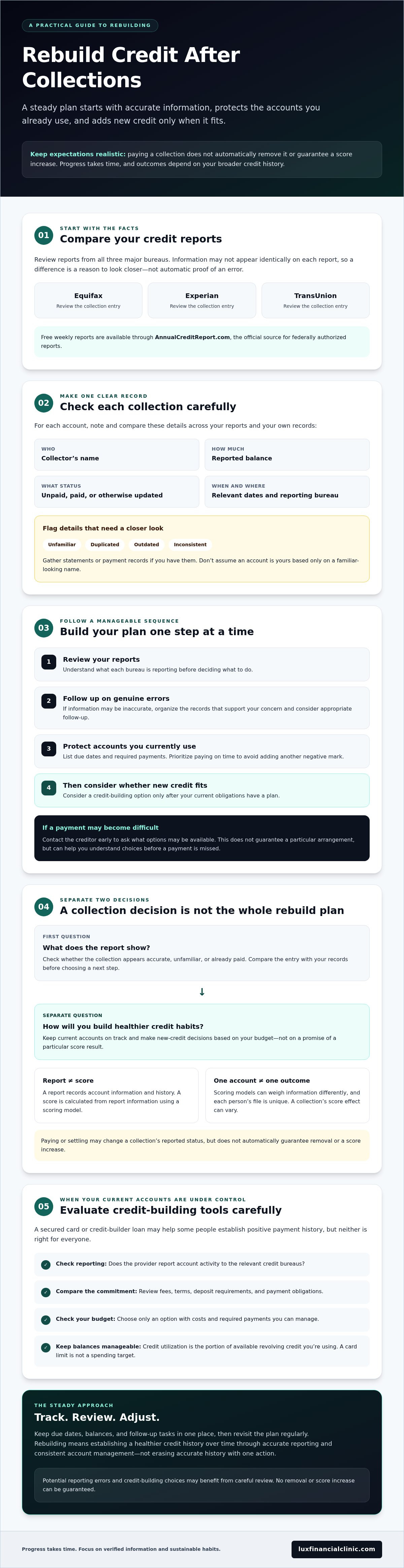
Before deciding what to do about a collection, find out exactly what each credit report says. Credit rebuilding means establishing a healthier credit history over time through accurate reporting and consistent account management. It isn’t a way to erase accurate history, and it doesn’t depend on one action alone.
Review your reports from Equifax, Experian, and TransUnion. Details may differ because information isn’t always reported identically to all three bureaus. You can access free weekly reports through AnnualCreditReport.com, the official source for federally authorized reports. For general background on what happens when a debt goes to collections, learn how collection activity works before assessing a specific account.
What to check on each credit report
Compare collection entries across reports and record the details in one place. For each account, note the collector’s name, balance, status, relevant dates, and which bureau reports it. Check whether the account is listed as unpaid, paid, or otherwise updated, and compare the dates and balance with your records.
Flag anything unfamiliar, duplicated, outdated, or inconsistent for follow-up. A difference between reports isn’t automatically an error, but it’s a reason to take a closer look. Gather related statements or payment records if you have them. Don’t assume an account is yours based only on a familiar-looking name.
Collection account or credit score: what’s the difference?
A credit report records account information and history. A credit score is a number calculated from report information using a particular scoring model. Models can weigh information differently, and each person’s file is unique, so the score effect of a collection can vary.
This distinction helps set expectations. Paying or settling a collection may change its reported status, but it doesn’t automatically guarantee removal or a score increase. First, establish what your reports show. Then you can make a more informed decision about how to rebuild credit after collections, including whether a detail needs follow-up because it may be inaccurate.
Build a Credit Rebuilding Plan After Collections, One Step at a Time
A clear order makes the process easier to manage: review your reports, follow up on genuine errors, protect accounts you currently use, and then consider adding credit. This keeps your attention on information you can verify and habits you can sustain. If you’re weighing help with a possible reporting error, the three-bureau credit dispute service guide explains what to consider when evaluating dispute support.
Protect current accounts before adding new credit
List each current account’s due date and required payment. Prioritize paying every account on time. A new late payment can add another negative mark while you’re working toward a steadier history. Calendar reminders can help, and automatic minimum payments may be useful if you can keep enough money in the account to cover them.
If you think a payment may become difficult, contact the creditor early to ask what options may be available. Reaching out doesn’t guarantee a particular arrangement, but it may help you understand the choices before a payment is missed. Organizing existing obligations creates a steadier foundation than opening new credit before you have a plan for current accounts.
Choose manageable credit-building tools carefully
Once your current accounts are under control, consider whether a credit-building product fits your needs. A secured card or credit-builder loan may help some people establish positive payment history, but neither is right for everyone. Check whether the provider reports account activity to the relevant credit bureaus, then compare fees, terms, deposit requirements, and payment obligations.
Choose an option only if its costs and required payments fit your budget. A card’s limit, for example, isn’t a spending target. Credit utilization is the portion of available revolving credit you’re using. Keeping balances manageable relative to your limits can support a considered plan. Focus on what you can repay, not simply what a lender makes available.
As you plan how to rebuild credit after collections, track due dates, balances, and follow-up tasks in one place, then revisit the plan regularly. The National Consumer Law Center’s Surviving Debt guide offers additional consumer-focused information about debt and credit reports. If a personalized roadmap would help you organize next steps, learn about credit repair and credit-building guidance.
Should You Pay a Collection Before Rebuilding Credit?
Deciding what to do about a debt and taking steps to rebuild credit are related, but they aren’t the same decision. You can protect current accounts and establish positive habits while you verify a collection. Before paying, settling, or disputing it, understand what the account represents and consider your broader financial circumstances.
Payment doesn’t guarantee that a collection will be deleted from your credit report or produce a particular score change. Reporting and scoring outcomes depend on the account and applicable circumstances. Be cautious of anyone promising a specific result.
| What the account shows | Practical next step |
|---|---|
| Appears accurate | Review the collector, balance, dates, and status. Consider your budget and options before deciding how to address the debt. |
| May be inaccurate | Document the specific discrepancy and gather relevant records before contacting the credit bureau or the company that supplied the information. |
| Unfamiliar | Don’t assume the account is yours based on a similar name. Verify the details and consult current consumer guidance before responding or making a payment. |
| Already paid | Keep proof of payment and check whether the reported status reflects it. Follow up if the information appears incorrect or incomplete. |
When accuracy questions may call for a dispute
If you find a factual error, write down exactly what appears wrong, such as a balance that doesn’t match your records or an account you don’t recognize. Keep copies of relevant statements, receipts, or correspondence. A dispute should identify information you believe is inaccurate, not simply ask for accurate history to be removed.
For an overview of debt-collection topics and consumer protections, consult the CFPB’s Know Your Rights with Debt Collectors resource. Review current CFPB and Fair Credit Reporting Act guidance for applicable procedures and deadlines before submitting a dispute. Requirements can depend on the situation.
When a collection appears accurate
Check the account details and weigh any payment or settlement decision against essential expenses, existing obligations, and your overall finances. A payment may update how an account is reported, but it doesn’t necessarily remove the entry or raise a score. Don’t treat a credit score outcome as the only measure of whether an action makes sense.
If the debt is complex, a lawsuit is involved, or you have questions about a statute of limitations, seek qualified legal or financial guidance before acting. Rules and consequences can vary by circumstances and location. A careful review can help you make an informed choice while continuing other steps to rebuild credit after collections.
How Long Does It Take to Rebuild Credit After Collections?
There isn’t one reliable timeline for credit recovery. A score may change as information in your file changes, but the pace and direction depend on what else is reported, which scoring model is used, and how you manage your accounts over time.
Credit rebuilding timelines differ because every person’s report, scoring model, and later account history are different. A collection’s reporting period isn’t the same as the time it may take for a score to shift. In general, a collection account may remain on a credit report for up to seven years from the original delinquency date, even if it’s sold or transferred. That reporting window doesn’t predict when a score will change or by how much.
What can influence the pace of progress?
Payment history, current balances, account age, and new credit applications all contribute to the broader picture considered by scoring models. Their influence can vary, so don’t treat any single action as a guaranteed way to move a score. For example, paying down a card balance may change the reported information, but the result depends on the rest of your file and the model being used.
Lenders may choose different scoring models for different decisions. The score you see through one service may not be the score a lender reviews, and the same report details may be assessed differently across models. No provider can responsibly promise a specific score, deadline, loan approval, or collection deletion.
How to track progress without adding pressure
Rather than checking for daily movement, set a regular time to review your reports and note meaningful account changes. Look for updates to balances and payment status, and check that the information remains accurate. A simple record can help you see whether your habits are consistent, even if a score doesn’t move right away.
Track what you can control: whether payments are made on time and whether balances remain manageable within your budget. Before applying for another account, revisit your goals and consider whether new credit is necessary and affordable. Applications can affect your credit file, and opening an account makes sense only if its terms and required payments fit your plan.
To rebuild credit after collections, focus on steady actions rather than a promised finish date. If you’d like structured support in reviewing your credit-building priorities, explore personalized credit repair guidance.
Create a Sustainable Credit Plan With the Right Support
A workable plan should fit your finances and be simple enough to maintain. Start with a copy of each credit report, note details that need follow-up, and list your current accounts with their due dates and required payments. Then choose a regular time to review account updates and check whether you’re keeping up with the habits you set.
- Review: Keep your reports and notes together so you can track questions and changes.
- Prioritize: Focus first on required payments for current accounts and a budget you can sustain.
- Follow up: Record responses to disputes or account updates, and revisit your plan as your circumstances change.
This structure can help you rebuild credit after collections without making a score target the only measure of progress. Consistent follow-through matters, even when a report or score doesn’t change as quickly as you’d hoped.
When professional credit repair support may be useful
Professional guidance may help if account details differ across reports, you’re unsure how to organize potential errors, or you’d value support turning priorities into a practical roadmap. You can also review your reports and pursue appropriate disputes yourself. If you consider a provider, ask about the service’s scope, fees, process, and realistic expectations before enrolling.
Lux Financial Clinic offers credit repair support for negative items, including collections. Its comprehensive offering includes a personalized credit-building roadmap and strategist support. Dispute assistance is relevant when information may be inaccurate. No provider can guarantee that accurate information will be removed or promise a particular score result.
Questions to ask before choosing a credit service
Ask how the provider distinguishes factual inaccuracies from accurate negative information, what steps it takes when an item may warrant a dispute, and what services and ongoing support are included. Make sure you understand the fees and process before agreeing to anything.
Be cautious of claims promising specific score gains, guaranteed deletions, or instant outcomes. A reputable service should explain what it can assess and support, while being clear about what remains outside its control. To assess whether structured support suits your needs, learn about credit repair and credit-building support.
Take Your Next Credit-Building Step With Clarity
A collection doesn’t have to define your financial future. Start by reviewing your reports, identifying details that may need follow-up, and protecting the accounts you currently rely on. Then build positive habits at a pace your budget can support. These consistent steps can help you rebuild credit after collections, though timing and results vary with your credit history and scoring model.
If you’d like structured guidance, Lux Financial Clinic offers dispute support for potentially inaccurate negative items and a comprehensive credit repair service that includes a personalized credit-building roadmap and strategist support. No provider can guarantee a deletion or a particular score increase, so choose support that explains its process and sets realistic expectations.
For a practical next step, explore personalized credit repair and rebuilding support from Lux Financial Clinic.
Frequently Asked Questions
Can you rebuild credit after collections?
Yes. You can rebuild credit after collections by checking your reports, following up on genuine errors, and building a consistent record of positive account activity. Start by protecting current accounts with on-time payments and manageable balances. Accurate negative information generally can’t be erased simply because you want it removed, but its presence doesn’t prevent you from working toward a healthier credit history over time.
How long does it take to rebuild credit after a collection account?
There’s no fixed timeline. Score changes depend on your credit file, the scoring model used, and what happens with your accounts going forward. A collection account may remain on a credit report for up to seven years from the original delinquency date, but that reporting period doesn’t predict how quickly a score may change. Focus on sustainable habits rather than a promised deadline or daily score movement.
Should I pay a collection before trying to rebuild my credit?
Not necessarily. Rebuilding habits and deciding how to handle a debt are related but separate steps. First, review the account details and consider whether it’s accurate, unfamiliar, or already paid. If it appears accurate, weigh your options in light of your budget and overall circumstances. Payment or settlement doesn’t guarantee removal or a particular score change. For complex debt or legal concerns, seek qualified guidance.
Will paying a collection remove it from my credit report?
Paying a collection doesn’t automatically guarantee that it will be removed. The account may instead be updated to show its paid status, and whether a score changes depends on the scoring model and your overall credit file. The three major credit bureaus have voluntary policies to remove paid medical collections, but reporting rules can vary by account and circumstance. Check current bureau guidance before relying on a particular outcome.
Can a collection account be disputed if the information is inaccurate?
Yes. If a collection contains a factual error, you can dispute the information with the credit bureau and the company that supplied it. Identify the specific detail you believe is wrong, such as an unfamiliar account or an incorrect balance, and gather relevant records. A dispute should address potentially inaccurate information, not simply request deletion of an accurate account. Check current CFPB and Fair Credit Reporting Act guidance for procedures and deadlines.
What is the first step to take after a collection appears on my credit report?
Review the account across your credit reports before deciding what to do. Get reports from Equifax, Experian, and TransUnion through AnnualCreditReport.com, then compare the collector, balance, status, and dates. Mark anything unfamiliar, duplicated, outdated, or inconsistent, and gather records that may help clarify it. Don’t assume a listing is accurate or inaccurate without checking the details. This review gives you a clearer basis for follow-up.
Does opening a secured credit card help rebuild credit after collections?
A secured card may help some people establish positive payment history, but it isn’t the right choice for everyone and can’t guarantee a score increase. Before applying, confirm that the issuer reports account activity to the credit bureaus, and review the fees, deposit, interest rate, and terms. Choose it only if you can manage the payments and keep spending within your budget. Consistent, affordable use matters more than opening an account quickly.


