
What if filing felt less uncertain before tax season began? A business tax consultant can help organize the process by clarifying which records to gather, what questions to resolve, and where tax preparation ends and other professional guidance begins. For small-business owners, understanding how income and expenses fit into a return can make the next steps more manageable.
It’s understandable to worry that a payment, receipt, or business expense may be missing from your records. This article explains what a business tax consultant does, what information to prepare before a conversation, and how to approach filing with greater clarity. It also distinguishes tax preparation from ongoing accounting and legal advice, so you can understand the consultant’s role and its boundaries.
You’ll find practical guidance on organizing income and expense records, noting questions about your business activity, and preparing for a focused filing process. Lux Financial Clinic provides personalized small-business tax preparation, including remote support for business owners nationwide. A clear set of records and expectations can make filing a more structured part of managing your business.
Key Takeaways
- Understand how a business tax consultant can help organize tax information and prepare business tax returns, while recognizing the limits of tax preparation.
- See how your business structure and income sources can shape the records and forms relevant to filing.
- Use complexity, available time, confidence, and record quality to decide whether filing independently or seeking preparation support is a better fit.
- Prepare for a productive discussion by identifying your business, gathering income and expense records and prior returns, noting changes, and listing questions.
- Regular recordkeeping can make future tax preparation more organized and help you identify questions before filing time.
What Does a Business Tax Consultant Do for a Small Business?
Business tax questions can be hard to organize alongside customer needs, daily operations, and the many details involved in running a company. A business tax consultant can bring structure to the process by preparing a business tax return and explaining relevant filing information. The work depends on the engagement and the owner’s circumstances.
The term tax advisor can refer to professionals who help people understand tax matters, though their services and qualifications vary. For a small-business owner, support may focus on gathering and organizing tax information, preparing a return, and explaining how the records relate to the filing. A consultant can also help identify questions to resolve before the return is completed.
Which small-business owners may benefit from tax preparation support?
Sole proprietors run a business themselves, while independent contractors earn income by providing services rather than as employees. Other small-business owners may operate through different ownership structures. Each situation can involve different income sources, records, and business changes, so preparation needs vary.
For example, an independent contractor may need to bring together income information from several clients, while another business owner may also need records of business purchases or a change in operations. These examples don’t mean every owner needs the same level of support. The usefulness of professional preparation depends on factors such as record quality, the complexity of income, and the owner’s comfort with filing.
What can a tax consultant help with, and what is outside the role?
Tax preparation can include organizing the information used for a return, preparing the return, and explaining relevant filing details. It relies on accurate records from the business owner, so clear documentation and communication matter. Bookkeeping, by contrast, involves maintaining and categorizing financial records over time. Tax preparation uses relevant financial information for a filing, but it isn’t the same as ongoing bookkeeping or legal advice.
Tax preparation organizes financial information for a tax return; it doesn’t replace bookkeeping, legal advice, lending, or investment management. A consultant can explain tax-related filing matters within the agreed scope, but legal questions call for legal guidance, and specialized financial advice falls outside tax preparation. This distinction helps set clear expectations from the start.
For business owners seeking filing support, the practical purpose is to prepare and understand business tax returns with greater clarity. Lux Financial Clinic provides small-business tax preparation, including remote preparation and e-file delivery. The preparation process is shaped by your records, income, and circumstances, not by a one-size-fits-all assumption.
How Business Structure and Income Shape Tax Preparation
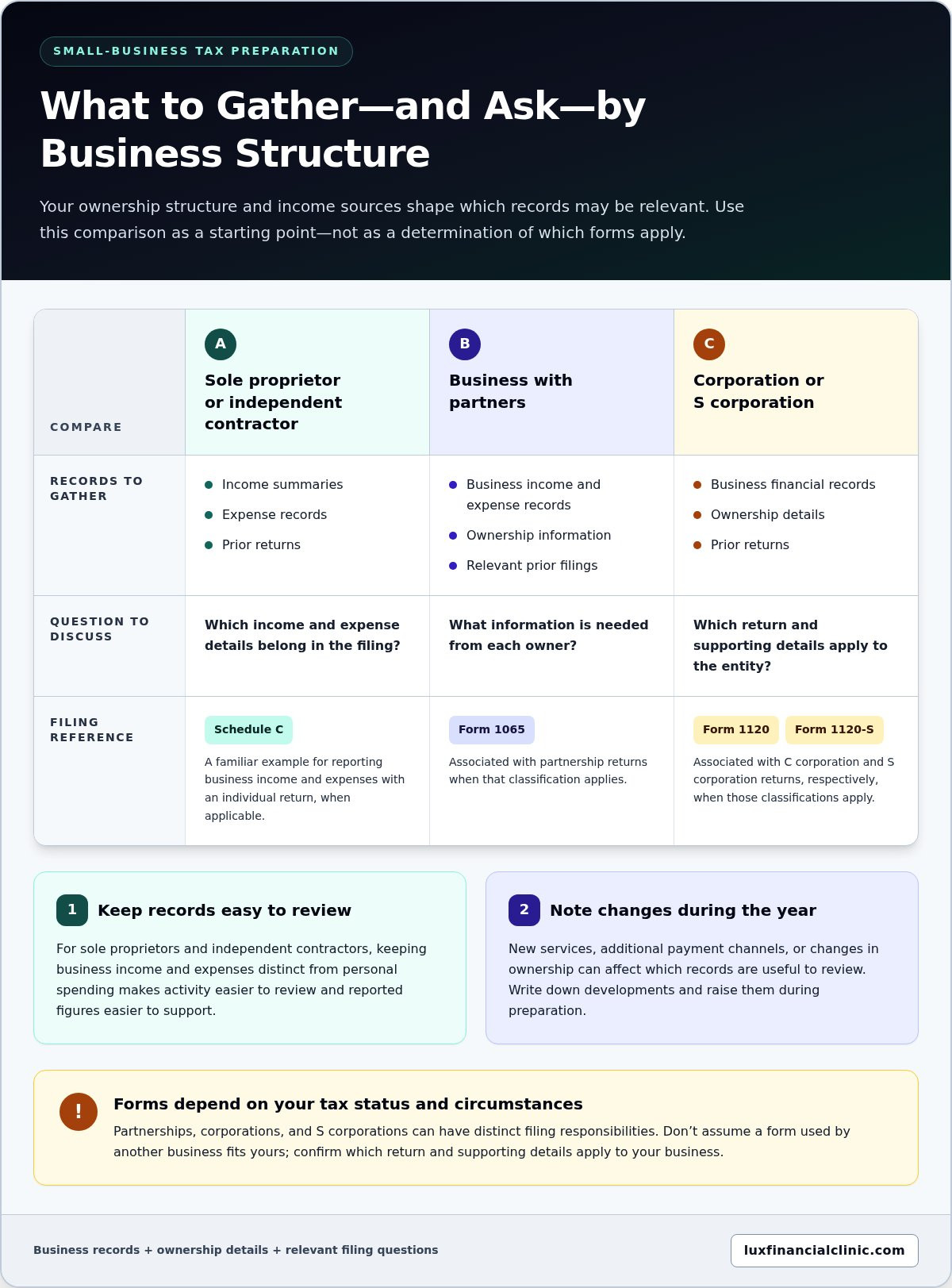
Your business’s ownership structure and income sources help determine which records and filing details may be relevant. A sole proprietor with service income may need different information from a business with partners or a corporation. The goal at this stage isn’t to choose a structure; it’s to understand what your current setup means for preparing a return.
For sole proprietors and independent contractors, keeping business income and expenses distinct from personal spending makes activity easier to review and reported figures easier to support. Schedule C is a familiar example of a form used to report business income and expenses with an individual return when applicable. For more detail, see the published article on sole proprietorship tax preparation.
Records and questions can vary by business situation
Use this comparison as a starting point for gathering information, not as a substitute for determining which forms apply to your circumstances. The IRS offers guidance on how to select a reputable practitioner and what to consider when working with a tax professional.
| Business situation | Records to gather | Questions to discuss |
|---|---|---|
| Sole proprietor or independent contractor | Income summaries, expense records, and prior returns | Which income and expense details belong in the filing? |
| Business with partners | Business income and expense records, ownership information, and relevant prior filings | What information is needed from each owner? |
| Corporation or S corporation | Business financial records, ownership details, and prior returns | Which return and supporting details apply to the entity? |
Different structures can mean different filing responsibilities
Partnerships, corporations, and S corporations can have distinct filing responsibilities. For example, Forms 1065, 1120, and 1120-S are associated with partnership, C corporation, and S corporation returns, respectively, when those classifications apply. The right form depends on the business’s tax status and circumstances, so don’t assume a form used by another business fits yours.
Income sources and changes during the year also matter. New services, additional payment channels, or changes in ownership can affect which records are useful to review. Keep a note of those developments and raise them during preparation rather than relying on memory at filing time.
When records reflect your business’s actual structure and income, tax preparation can be more focused. Lux Financial Clinic offers small-business tax preparation to help business owners prepare their filings with personalized support.
When Is a Business Tax Consultant More Useful Than Filing Alone?
There isn’t one right approach for every owner. The choice depends on how involved your business activity is, how much time you can set aside, how confident you feel preparing the return, and whether your records are organized enough to use. A small operation can still have details that need careful review, while a straightforward business with well-kept records may feel manageable to file independently.
Business complexity, not business size alone, can shape how much preparation support is useful. A large staff or high revenue isn’t the only reason to seek help. Income from several sources, changes in how the business operates, or uncertainty about which records apply can make professional preparation useful, even for a new or modest-sized venture.
What signs suggest you may want professional preparation support?
Consider preparation support if you’re sorting through income from multiple clients or platforms, have changed your business activity, or aren’t sure how to organize expenses and supporting records. A new venture may also benefit from thoughtful recordkeeping before it earns a profit. Startup activity, early purchases, and changes in operations can raise questions to organize for tax preparation.
These circumstances don’t automatically mean a return is complicated or that something is wrong. They suggest that another perspective may help you identify what information needs attention and which questions to resolve. Professional preparation can bring structure to the process, but it can’t replace complete records or guarantee that every error will be avoided.
When might self-filing remain a reasonable option?
Filing independently may suit an owner with a relatively straightforward business situation, organized records, and a clear understanding of the relevant forms and filing steps. It can also be practical when the owner has time to review the return carefully and feels comfortable addressing questions that arise.
Before deciding, ask yourself: Can I identify and support the income and expenses I’m reporting? Do I understand the filing information that applies to my business? Can I give this task the attention it needs? If the answers are clear, self-preparation may be a fit. If they aren’t, professional support can offer a more guided process. A reliable tax preparation guide can provide a broader overview, but weigh the information against your own circumstances.
There’s no need to treat the decision as a judgment about your business skills. It’s a practical choice about time, confidence, and the quality of the information available. Lux Financial Clinic provides small-business tax preparation for owners who prefer personalized support with preparing a return.
What Should You Prepare Before Meeting a Business Tax Consultant?
A little preparation can make a tax discussion more focused, even if your records aren’t perfectly arranged. Use this four-step checklist to gather what you can and flag anything that needs clarification. The exact documents depend on your business, its activity, and the tax year, so treat these as useful examples rather than a universal list.
- Identify the business. Note its ownership structure, the type of work it does, and how it earns income.
- Gather relevant records. Collect income summaries, expense documentation, prior returns, and business account summaries that show financial activity.
- Note changes. Write down changes in ownership, operations, income sources, or business activity, along with any records that may be missing.
- List your questions. Keep a short list of transactions or filing details you’re unsure about so they can be discussed directly.
Which records are useful to gather before tax preparation?
Start with records that show money coming in and business expenses going out. Depending on how your business operates, useful materials may include payment or sales summaries, receipts and invoices, business bank or payment account summaries, and prior tax returns. If you have employees or use contractors, relevant payroll or contractor records may also help. Not every item will apply to every business.
Organized, complete records give the preparer a clearer picture of the business and make it easier to identify questions. Keep sensitive tax documents in a secure location, limit access to people who need them, and use a secure method when sharing files. Avoid sending private financial information through channels that aren’t intended to protect it.
Which questions can make a tax consultation more productive?
Ask what information is needed for your circumstances and how the preparation process will be organized. Raise business changes, uncertain transactions, or missing records early rather than waiting until the return is nearly complete. If you’re self-employed, the published guide to self-employed tax preparation may also help you understand which records and questions are relevant to your situation.
Before your discussion, you might ask:
- Which records would help clarify my income and expenses?
- How should I share documents securely?
- What should I do if a receipt or statement is missing?
- Which business changes should I explain as we prepare the return?
These steps can help you make better use of time with a business tax consultant and see what still needs attention. Lux Financial Clinic provides small-business tax preparation for owners seeking guided filing support.
How to Turn Business Tax Preparation Into a Clearer Year-Round Process
Tax preparation is easier to approach when you maintain business records as part of regular operations instead of gathering details from memory at filing time. A consistent routine won’t guarantee a particular tax result, but it can keep information accessible and make questions easier to identify before they become a last-minute concern.
What simple habits help keep business tax information organized?
Choose a consistent system for tracking income and expenses, such as organized digital folders, accounting software, or another method that suits your business. Update it regularly so transactions don’t pile up, and save receipts, invoices, statements, and other supporting documents with clear labels. Keep prior tax records in a secure place where you can find them when needed.
Small habits can also preserve context. If your business changes its services, ownership, or way of earning income, make a brief note of what changed and when. Record questions as they arise, too. A note about an unfamiliar transaction is easier to revisit later than a detail you’re trying to recall months afterward.
- Update income and expense records on a recurring schedule.
- Store supporting documents and prior tax records securely.
- Note business changes and questions for discussion during preparation.
How can Lux Financial Clinic support small-business tax preparation?
Lux Financial Clinic provides small-business tax preparation, including remote preparation and e-file delivery for clients nationwide. Organized records can support a more focused preparation process, while personalized support helps business owners work through information relevant to their return. Preparation needs vary according to each business’s circumstances.
If you’re considering a business tax consultant, the useful first step is to bring your current records and questions together. Then you can discuss what information applies to your filing and how to proceed with greater clarity. Prepare your questions in advance, and explore small-business tax preparation with Lux Financial Clinic when you’re ready for support.
Make Your Next Filing Feel More Manageable
A clearer filing process starts with understanding what tax preparation covers, how your business structure and income shape the records to review, and whether self-filing or professional support fits your circumstances. Keeping income and expense information current, saving supporting documents securely, and noting questions as they arise can also make future preparation more organized.
You don’t need to have every detail resolved before seeking support. A prepared set of records and a short list of questions can make the conversation more focused. Lux Financial Clinic provides small-business tax preparation with remote and e-file support for clients nationwide, giving owners a practical next step when they want personalized help preparing a return.
Explore small-business tax preparation with Lux Financial Clinic and take your next step with greater clarity. Consistent preparation can help you approach filing with more confidence, one organized step at a time.
Frequently Asked Questions
What does a business tax consultant do?
A business tax consultant helps organize tax information, prepare business tax returns, and explain relevant filing details. The work may include reviewing income and expense records and identifying information needed to complete a return. Responsibilities depend on the engagement and the business’s circumstances. Tax preparation is distinct from ongoing bookkeeping, legal advice, lending, and investment management, so questions outside that scope may call for a different type of professional guidance.
Do I need a tax consultant for a small business?
Not necessarily. The right choice depends on your business activity, records, available time, and confidence with the filing process. If your income comes from several sources, your business changed during the year, or you’re unsure how to organize records, professional preparation may help bring clarity. Owners with straightforward activity, well-organized records, and familiarity with the relevant forms may feel comfortable filing independently. There’s no single approach that suits every business.
What documents should I bring to a business tax consultant?
Bring records that help explain your business income and expenses, such as income summaries, receipts, invoices, relevant business account statements, and prior tax returns. Ownership or business records may also be useful. Payroll or contractor information can matter if it applies to your business. Requirements vary by business and tax year, so treat these as examples, not a universal checklist. Store sensitive documents securely and share them through an appropriate protected method.
Can a tax consultant help with self-employed business taxes?
Yes. Tax preparation support can help self-employed people organize business income and expense information and prepare the relevant return. For example, an independent contractor may gather payment summaries from clients, expense records, and prior returns for review. Lux Financial Clinic provides self-employed and 1099 tax preparation. The records and filing details depend on your circumstances, so keep track of income sources and business activity and raise questions during preparation.
What is the difference between a tax consultant and an accountant?
A tax consultant generally focuses on tax-related guidance and preparation, while an accountant may work on broader financial records and reporting, depending on their role and services. The titles can overlap, and responsibilities vary by professional and engagement. For example, preparing a tax return is different from maintaining a business’s books throughout the year. Legal questions and specialized investment advice also fall outside routine tax preparation.
Can a business tax consultant help with remote tax preparation?
Yes. Business owners can work with a tax preparer remotely by organizing and sharing relevant records electronically, discussing questions through remote communication, and completing the filing process without an in-person meeting. Lux Financial Clinic provides remote small-business tax preparation and e-file delivery for clients nationwide. Use secure methods to share sensitive tax documents, and keep your income, expense, and business records accessible during preparation.
When should a small business start preparing for tax filing?
Start organizing throughout the year rather than waiting until filing time. Update income and expense records regularly, save supporting documents securely, and note business changes or questions as they arise. This routine can make it easier to see what information you have and what may need attention. Begin gathering prior returns and relevant business records well before you plan to file, allowing time to address missing details calmly.


