
A single income doesn’t prevent you from building credit: credit building for single mothers can begin with accounts in your own name, consistent on-time payments, and careful use of available credit. An authorized user’s credit report can reflect a card’s history for as long as they remain on the account. For example, a $300 balance on a card with a $1,000 limit represents 30% credit utilization.
When household costs compete for every dollar, building credit on one income can feel difficult. A steady plan helps you make progress without taking on borrowing you can’t comfortably manage. This guide explains practical steps for credit building for single mothers, including choosing an account, managing payments, reviewing credit reports for errors, and teaching children about saving and borrowing. The goal is to make credit part of a broader foundation for financial confidence.
Key Takeaways
- Build credit on one income with manageable accounts and payment habits that fit your budget.
- Understand how credit history may shape everyday decisions, from renting to borrowing.
- Consider the risks as well as the potential benefits before becoming an authorized user.
- Review your credit reports for unfamiliar or inaccurate information and take organized steps to address errors.
- Make money conversations practical for children by discussing saving, borrowing, and household choices.
1. Can you build credit on a single income?
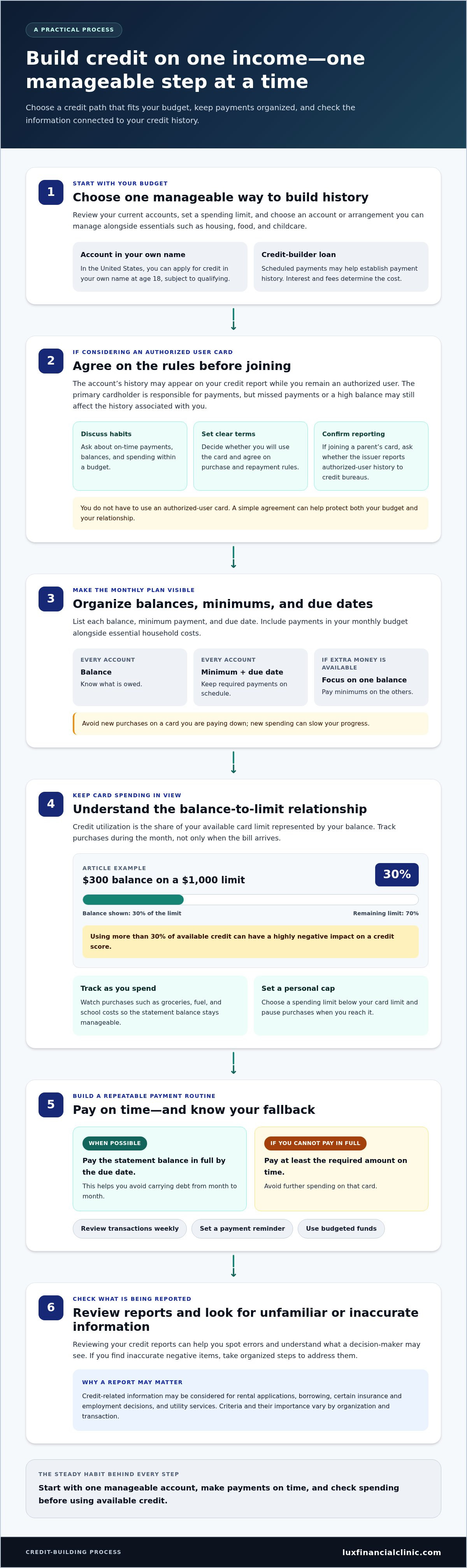
Yes. A single income can support steady credit building when you choose manageable borrowing and make payments on time. In the United States, you can apply for credit in your own name at age 18, subject to qualifying. A practical plan for credit building for single mothers starts with reviewing current accounts, setting a spending limit, and choosing one manageable way to establish payment history.
Becoming an authorized user on a partner’s credit card may help establish credit history. The account’s history may appear on your credit report while you remain an authorized user. Before joining, discuss the partner’s payment habits, balance, and spending. Ask whether they pay on time and keep purchases within a budget. You don’t have to use the card, and you can agree not to make purchases. The primary cardholder remains responsible for payments, but missed payments or a high balance may still affect the account history associated with you.
A parent’s card may be another authorized-user option, especially if they have a consistent payment record. Ask your parent to confirm that the issuer reports authorized-user history to credit bureaus, then agree on whether you’ll use the card. If you do, set clear rules for purchases and repayment before spending. Keeping the arrangement simple can help protect your relationship and your budget.
Are credit-builder loans worth it, and what do they cost? They can help establish payment history through scheduled payments, but the lender’s interest and fees determine the cost.
To manage credit card debt on one income, list each balance, minimum payment, and due date. Include those payments in a monthly budget alongside essentials such as housing, food, and childcare. Put any extra money toward one balance while making minimum payments on the others. Avoid new purchases on a card you’re paying down, since they can slow your progress.
A low-limit credit card can make spending easier to contain. For example, a $300 balance on a card with a $1,000 limit represents 30% credit utilization. Using more than 30% of available credit can have a highly negative impact on a credit score. Track purchases during the month, not just when the bill arrives, and leave room for planned expenses.
Paying your credit card balance in full by the due date helps you avoid carrying debt from month to month. Try reviewing transactions weekly, setting a payment reminder, and paying the statement balance from your budgeted funds. If you can’t pay in full, pay at least the required amount on time and avoid further spending on that card.
How can single mothers build credit from scratch in the United States? Start with one manageable account, make every payment on time, and check your spending before using available credit. A small, planned purchase, such as a household item you already budgeted for, can help establish a routine without relying on unplanned borrowing.
2. Why credit history matters for renting, borrowing, insurance, employment, and utilities
A credit report can help landlords and lenders assess how you’ve managed borrowed money. A rental application, for example, may prompt a review of your payment history and outstanding balances. Lenders also consider credit information alongside income and other details. Insurers, employers, and utility providers may review credit-related information for certain decisions. The criteria and their importance vary by organization and transaction. Reviewing your reports before applying can help you spot errors and understand what a decision-maker may see.
Credit history is only one part of an application. Steady income, rental references, and clear records of monthly payments can also help explain your situation. Before applying for housing or a loan, gather proof of income and receipts for rent or recurring bills. If your history is limited, ask how the organization assesses applicants with little credit information. This lets you prepare relevant documents without taking on debt solely to strengthen an application.
Putting utility and recurring bills in your name can make payments easier to track, but it doesn’t automatically build credit. In the United States, utility payments usually don’t affect a credit score unless unpaid bills go to collections. Some services let consumers add on-time utility payments to credit reports. Before relying on this option, find out whether the service reports your payment history and what information it includes. Keep a monthly bill calendar, use reminders, and address billing errors promptly.
Low credit utilization means using a small share of your available card limit. Track purchases throughout the month, especially groceries, fuel, and school costs, so your statement balance stays manageable. A low reported balance can support a healthier credit profile, while spending close to the limit can signal financial strain. Set a personal spending cap below your card limit and pause purchases when you reach it. Pay on time and don’t use the card for bills your budget can’t cover.
When bills compete with essentials, assistance may help protect the household budget. The National Diaper Bank Network distributes diapers and other basic baby needs, which can ease pressure on grocery or household funds. Eligible families may also receive food assistance through SNAP, while TANF may provide temporary cash assistance, job training, or childcare support. Directing any freed-up money toward essential bills can reduce missed payments. If inaccurate negative items appear on a report, credit repair support can help organize disputes and address those entries.
3. How the primary cardholder’s payment behavior can affect credit
If a partner or parent adds you as an authorized user, the card’s history may appear on your credit report while you remain on the account. The primary cardholder is responsible for making payments, even if another person uses the card. Their payment habits and balance may still shape the account information associated with you. Before accepting, agree on whether you can make purchases, how spending will be monitored, and what happens if a payment is missed.
Set clear rules before making the first purchase. For example, agree to use the card only for a planned expense and repay that amount promptly. If the primary cardholder carries a balance or misses payments, pause your card use and consider whether staying on the account still supports your goals. You can also request removal from the account if the arrangement no longer makes sense.
Payment history is built through consistency. Put each credit card due date on a calendar, enable account reminders, and schedule payments around income deposits. In the United States, a late credit-card payment generally isn’t reported to credit bureaus until it is at least 30 days overdue. That doesn’t make late payments harmless: fees or interest may apply sooner, and missed payments can harm an account’s record. According to the Consumer Financial Protection Bureau, negative items such as late or missed payments generally remain on a credit report for seven years.
When expenses compete, prioritize required payments. List minimum payments, due dates, and essential bills in one monthly plan. If payday falls after a due date, contact the card issuer to ask about changing the payment date. A recurring reminder a few days before each due date can help you spot a cash-flow squeeze before it leads to a missed payment.
Utilities work differently from credit cards. In the United States, utility payments usually don’t affect a credit score unless unpaid bills go to collections. Some services let consumers add on-time utility payments to credit reports. Before enrolling in a reporting program, understand which bills it includes and how it records payment history. Keep utility statements and payment receipts, even if the account isn’t reported.
On-time payments and low card balances support a more stable credit profile. You can pay on time while still carrying a balance close to your card’s limit, so track both due dates and spending. Review transactions weekly, pause nonessential purchases when your balance rises, and pay what your budget allows by the due date. If the primary cardholder’s payment habits are inconsistent, consider building history through an account you control.
4. Reviewing and resolving errors on credit reports
Set aside time to review each credit report, not just your credit score. Check your name, current and past addresses, account ownership, balances, payment status, and inquiries. An unfamiliar card account or a payment marked late despite a receipt, for example, deserves a closer look. Reports can influence borrowing decisions and interest rates, so accuracy matters. Keep a list of anything incomplete, duplicated, outdated, or unfamiliar.
Compare account entries with statements, bank records, and emails. If a card balance looks wrong, match the reported amount against the relevant statement and payment confirmation. If an account is unfamiliar, check whether it could be a joint or authorized-user account before treating it as fraud. Note the company name, account details shown, and the specific information you believe is incorrect. Clear notes help you explain the issue without sending unrelated personal documents.
For each suspected error, gather relevant evidence and make copies. A payment receipt, account-closure confirmation, or identity document may help explain the discrepancy. Send a dispute to the credit reporting company showing the error and to the business that supplied the information. Identify the entry, explain why it’s inaccurate, and include supporting records. Keep a copy of your message and delivery details so you can track responses and follow up.
After the investigation, review the report and compare the result with your original notes. If an error remains, organize your earlier correspondence, evidence, and response, then submit a clear follow-up explaining what still needs correction. If you find an unfamiliar account, contact the named creditor through its established customer-service channel. Secure your email and financial account passwords, and review recent transactions for other activity you don’t recognize.
Which scams and high-fee credit-repair services should single mothers avoid? Avoid anyone who promises to erase accurate negative information, guarantees a credit score, or urges you to dispute information you know is correct. Pressure to pay quickly, unclear fees, or requests for sensitive account credentials are warning signs.
Protect your savings by setting a spending limit for any help you choose and reviewing the written terms first. Credit repair should focus on inaccurate or unverifiable entries, not removing accurate account history. A service that explains its dispute steps and keeps records can make it clearer what’s being challenged. Continue paying current credit cards and other bills as scheduled while disputes are underway. This keeps correcting report errors separate from managing ongoing expenses and building a reliable payment record.
5. Teaching financial literacy and responsible borrowing
Financial literacy starts with making household choices visible and understandable. Set a regular time to review income, essential expenses, debt, and savings with your children. One parent reviews the family debt spreadsheet with her children every couple of months, turning bills into a practical lesson about planning. Explain how interest adds to unpaid balances, then compare the total repayment with the original amount borrowed. These conversations can help children understand why purchases need to fit the budget.
Use everyday decisions to teach responsible borrowing. For example, compare a planned purchase with the cash available, then discuss whether using a credit card adds interest or means delaying another bill. Explain that credit is borrowed money, not extra income, and that a missed payment can affect a credit record. Review the payment schedule and total repayment before deciding whether a purchase fits your household budget.
Long-term stability also depends on savings, not just credit. Keep contributions manageable and consistent, then use the fund for an unexpected expense instead of borrowing. A joint account, such as an auto loan, can add variety to your credit accounts, but take on shared debt only when the payment fits both borrowers’ budgets.
Single-parent households can face substantial financial pressure. In the United States, 42% of single-mother families lived below the poverty line in 2023, compared with 8% of married-couple families. If food, childcare, or housing costs make payments difficult, seek support before relying on costly borrowing. Local Salvation Army branches may provide emergency financial, food, or housing assistance. SNAP and TANF can also support eligible households, helping preserve income for essential expenses.
Build financial education into a routine. MyMoney.gov offers resources on budgeting, saving, investing, and managing debt, while community colleges and local financial institutions may offer low-cost or free classes. Choose one topic, such as comparing interest or planning monthly expenses, and discuss it at home. If you want structured help reviewing credit issues and building a responsible plan, explore credit repair and credit-building support.
Lux Financial Clinic: Credit Repair - Basic/Repair Package
Lux Financial Clinic’s Credit Repair - Basic/Repair Package helps address inaccurate negative items on credit reports, including collections, charge-offs, and late payments. Its structured dispute protocols can help when you’ve reviewed your reports and found entries that don’t match your records. Gather relevant statements, payment confirmations, or account correspondence so the disputed information can be clearly identified.
For a broader credit-rebuilding approach, Lux Financial Clinic also offers the Credit Repair - Comprehensive/Build Package. The right next step depends on whether you need help addressing report inaccuracies or support with a wider credit restoration plan. Credit repair can’t remove accurate information simply because it’s unfavorable, and it can’t promise a particular score.
For help considering your credit repair options, contact Lux Financial Clinic or visit luxfinancialclinic.com.
Choose a steady next step for your financial future
You don’t need to solve every financial concern at once. Choose one priority, such as understanding an item on your credit file or creating a borrowing plan that fits your household. A focused step can help you stay organized and keep your goals aligned with the resources you have.
For support with credit report concerns, Lux Financial Clinic offers the Credit Repair - Basic/Repair Package and the Credit Repair - Comprehensive/Build Package. Its Business Funding Consulting can help with business funding needs. Each service addresses a different goal, so consider what kind of support fits your current priorities. Credit building for single mothers is a personal process shaped by household needs, payment habits, and choices made over time.
When you’re ready to discuss a next step, contact Lux Financial Clinic today. You can begin with a clear question and a practical goal, then move forward at a pace that feels manageable. Consistent, thoughtful decisions can help you build a more confident financial foundation.
Frequently Asked Questions
Can you build credit on a single income?
Yes. You can build credit on one income by choosing borrowing that fits your budget and keeping payments manageable. Start by comparing essential household expenses with reliable income, then select an account with terms you understand. A predictable purchase, for example, may be easier to plan for than an unexpected bill on a card. Credit progress comes from a sustainable routine, not borrowing more than you can repay.
Should single parents avoid credit altogether?
No. Avoiding all credit can leave you without a borrowing history, while using credit without a repayment plan can create costly debt. A single parent can weigh each account against current expenses, interest, and the purpose of borrowing. If a card would cover recurring shortfalls rather than planned spending, focus first on budgeting and support resources. Credit should serve a clear financial need, not replace income.
What is a credit score?
A credit score is a number calculated from information in your credit history to help assess how you manage borrowed money. Scoring models can weigh factors such as payment records, account balances, and length of history differently. A lender may consider a score alongside income, existing obligations, and the application itself. Because models differ, the score you see from one service may not match the score used for a particular decision.
What’s the safest way to start building credit?
Start with an account whose payments and terms fit your current budget. Before applying, review its fees, interest, due date, and how the account reports activity. Use it for a planned expense rather than an emergency, and keep enough funds available to make the payment. If you’re not ready to borrow, consider whether becoming an authorized user on a trusted family member’s account suits your situation.
What credit score is needed to rent an apartment, get a car loan, or qualify for a mortgage?
No single score guarantees approval for every apartment, car loan, or mortgage. Landlords and lenders can use different scoring models and weigh other details, including income, payment history, debts, and application requirements. For a specific application, review the stated criteria and prepare documents showing stable income and reliable payments. A score is one part of the decision, not a complete picture of your finances.
Which secured credit cards have the lowest fees and deposit requirements?
The best secured card for you is one whose full terms fit your budget, not simply the one advertising a low deposit. Compare the required deposit, annual and monthly fees, interest, and whether the issuer reports account activity to credit bureaus. Read the fee schedule before applying, then consider whether you can afford to have the deposit tied up. Don’t choose a card based only on promotional language.
How can rent, utility, and phone payments be reported to credit bureaus?
Ask your landlord, utility company, and phone provider whether they report payment history directly. If they don’t, look into a reporting service and confirm which bills it accepts, which bureaus receive the information, and whether it reports past payments. Keep payment receipts and account statements so you can document your history if an entry is missing.
How can a single mother get a free credit report and dispute errors?
Request your reports through AnnualCreditReport.com and save a copy of each for comparison. Mark unfamiliar accounts, incorrect balances, duplicate entries, or payments recorded inaccurately. Gather supporting records, such as statements or payment confirmations, and dispute the specific item with the reporting company and the business that supplied it. Keep copies of your dispute and the response, then review the updated report to see whether the correction appears.


