
Your credit score reflects how you’ve managed credit, and it can shape how lenders view an application. In the United States, credit scores typically range from 300 to 850 points, according to the Consumer Financial Protection Bureau. The most useful credit building tips for young adults focus on steady habits: paying bills on time, keeping balances manageable, and reviewing credit reports for errors.
Starting out can feel uncertain, especially when you’re still learning how credit works. A thoughtful approach can make the process clearer without taking on more credit than you can comfortably manage. This guide covers credit scores, authorized-user accounts, report monitoring, timely payments, and common mistakes to avoid as you build a sound credit history.
Key Takeaways
- Consider authorized-user status as a way to begin building credit, while choosing an account managed with consistent, on-time payments.
- Review your credit reports for unfamiliar activity or errors, and learn how to request the disclosures available to you at no charge.
- Set up a reliable bill-payment routine and keep credit card balances manageable to support healthy credit habits.
- Avoid applying for multiple accounts at once, and understand the responsibilities before becoming a co-signer.
1. Becoming an authorized user
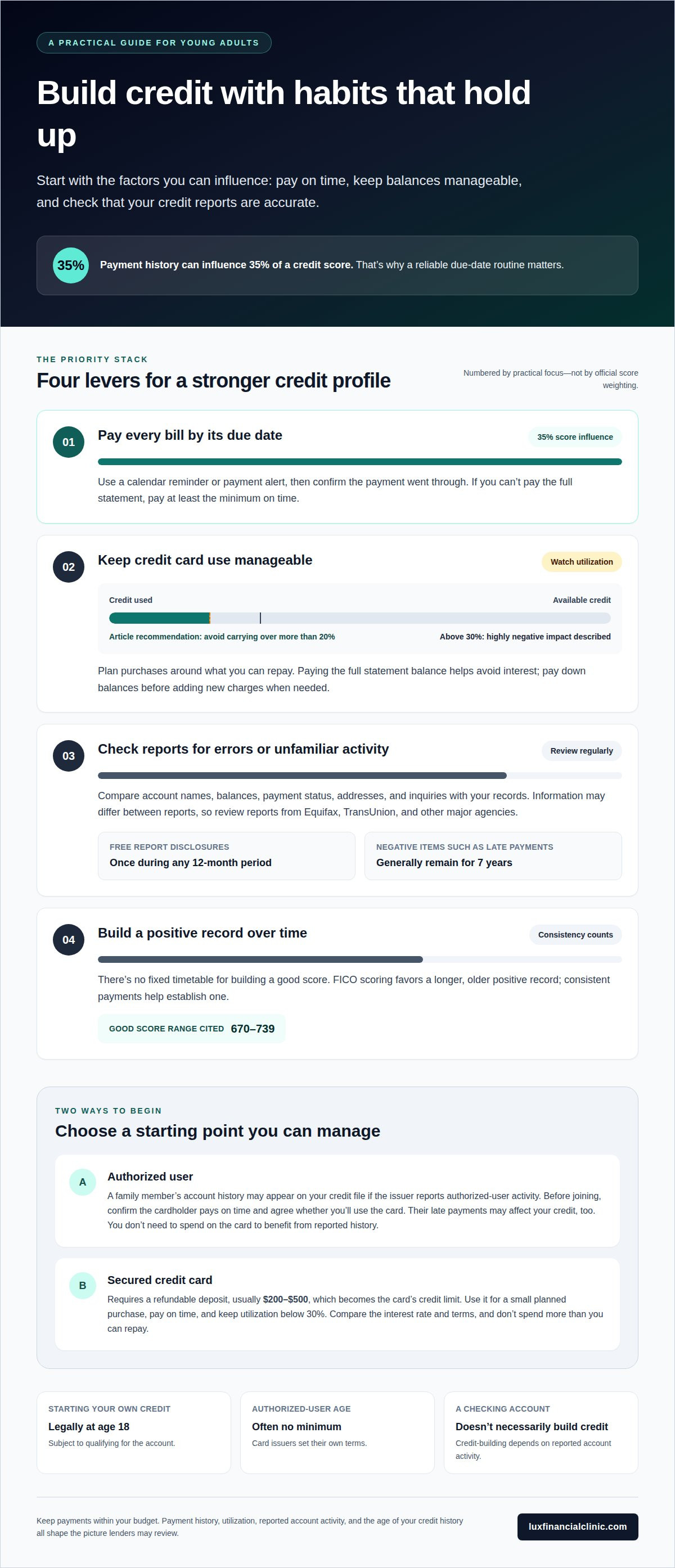
Becoming an authorized user can help you start building credit through a family member’s credit card account. If the card issuer reports authorized-user activity, the account’s history may appear on your credit file, including years or decades of positive payment history. The primary cardholder remains responsible for the account, but their habits can affect your credit, too.
In the United States, you can legally take out credit in your own name at age 18, subject to qualifying for the account. There’s often no minimum age to become an authorized user, though card issuers set their own terms. To build credit as an authorized user, ask a trusted parent or family member about adding you to an account they manage carefully.
Before joining, confirm that the cardholder pays on time, ask whether the issuer reports authorized-user accounts, and agree on whether you’ll use the card. Late payments by the primary cardholder may harm your credit as well as theirs. You don’t need to spend on the card to benefit from its reported history, and you shouldn’t use it without permission.
How long does it take to build a good credit score from scratch? There’s no fixed timetable; it depends on reported account activity, payment habits, and the age of your credit history. FICO scoring favors a longer, older positive record, and scores from 670 to 739 are considered good. Consistent payments help establish that record over time.
If you’re not ready to rely on someone else’s account, a secured credit card offers another starting point. It requires a refundable deposit, usually $200-$500, that becomes the card’s credit limit. Use it for a small purchase, pay the balance on time, and keep utilization below 30%. Compare the interest rate and terms, and never spend more than you can repay. A checking account alone doesn’t necessarily build credit.
2. Monitoring credit reports
Your credit report records account details that lenders may review when assessing applications. Checking it can help you spot unfamiliar credit cards, incorrect balances, or accounts opened without your knowledge. A credit score is different: it’s calculated from information in your report, and scores can vary between bureaus. Reviewing both gives you a fuller picture of your credit profile.
According to the Federal Trade Commission, consumer reporting agencies must provide all disclosures pursuant to section 1681g of this title once during any 12-month period upon your request, without charge. You can request free credit reports annually. Review them carefully to find errors or possible fraud, such as an account you don’t recognize or a balance that doesn’t match your records.
Review your report methodically. Compare each account with your records, including the lender’s name, payment status, balance, and other account details. Look for unfamiliar addresses or credit inquiries you don’t recognize. If a report shows a card you never opened, note the bureau and account information, then use that bureau’s process to report the inaccurate entry.
Review reports from Equifax, TransUnion, and the other major credit reporting agencies. Information can differ between reports, so checking just one may leave errors elsewhere undiscovered. Lenders may use scores based on different bureau data, which helps explain why your scores aren’t always identical. Tracking report changes also shows how new activity and payments appear over time.
Negative items such as late or missed payments generally remain on a report for seven years, according to the Federal Trade Commission. If you find inaccurate negative entries, credit repair support can help address them through structured dispute protocols. Keep copies of reports and account records so you can identify the disputed information clearly and organize your next steps.
3. On-time bill payments
Payment history records whether you pay credit accounts by their due dates. Paying on time supports a positive credit history, and payment history can influence 35% of a credit score. Even one missed or late payment can hurt, especially when your credit file is thin. Set a calendar reminder or payment alert for each monthly due date, then review your account to make sure payment was received.
Build a payment routine around what you can afford. Choose a small, planned credit card purchase, such as a monthly expense, and budget for its payment before spending. Paying the full statement balance each month helps avoid interest. If you can’t pay in full, pay at least the minimum due on time. Don’t use credit for purchases you can’t repay, since a rising balance can strain your budget and increase credit utilization.
On-time payments and utilization are separate parts of your credit profile. A strong payment history doesn’t cancel out a high card balance, because the amount of available credit you use also matters. Keep purchases within your repayment plan, and consider paying down the balance before adding new charges. An authorized user may build history through a parent’s account, but the parent’s late payments may affect that record, too.
How do student loans, rent payments, and utility bills affect credit history? On-time student loan payments can help build credit, while missed payments can hurt your score. Utility companies sometimes report payment histories, particularly late payments. Some services can also add rent, utility, or phone payments to a credit profile.
For student loans and household bills, keep due dates and payment methods in one place. If rent or utilities are added through a reporting service, check that the payment details appear accurately in your credit profile. Keep payment confirmations, too. These records can help you spot a missing or misapplied payment and follow up with the account provider promptly.
4. Common credit-building mistakes
A high card balance can work against a carefully managed payment routine. Using more than 30% of available credit is described as having a highly negative impact on scores monthly; one recommendation is to avoid carrying over more than 20%. Keep purchases within your budget, and pay down balances rather than treating the credit limit as spending money.
Applying for several credit cards in a short period can signal that you’re seeking substantial new credit. FICO Scores weigh new credit inquiries at 10%, so space out applications and apply only when an account suits your needs. Before submitting an application, consider whether you can manage its payments and terms alongside existing bills.
Co-signing without understanding the responsibility can affect both people’s finances. A co-signer accepts 100% joint responsibility for the loan, as if they were the primary borrower. If that borrower misses payments or defaults, the co-signer becomes responsible for payment, and their credit is equally affected. Discuss a repayment plan before agreeing to co-sign.
Don’t confuse savings activity with credit history. A savings account doesn’t appear on a credit report, and a debit card draws from checking without affecting credit scores. Neither automatically builds a credit profile. If you choose a secured credit card, use it only for planned purchases and stay within an amount you can repay. That keeps credit use aligned with your budget, not your available limit.
An apartment application may also prompt a lender or landlord to review credit information. A score below 670 may require a cosigner for major commitments such as apartment rentals or car loans. Before applying, review your credit reports and avoid adding unnecessary accounts. If inaccurate negative items are a concern, get help addressing credit report errors through a structured dispute process.
Lux Financial Clinic: Credit Repair - Basic/Repair Package
Lux Financial Clinic offers the Credit Repair - Basic/Repair Package for people addressing inaccurate negative items on their credit reports. Its structured dispute protocols focus on items such as collections, charge-offs, and late payments that may have been reported inaccurately.
Consider this support after reviewing your reports and identifying information that doesn’t belong to you or appears incorrect. Keep copies of relevant account records and note the specific entries you’re disputing. Credit repair and ongoing credit habits address different needs, so continue paying accounts on time and managing balances carefully.
Credit repair doesn’t replace the work of establishing a positive payment history, and no service can promise a particular score. For support addressing inaccurate report entries, contact Lux Financial Clinic to discuss the Credit Repair - Basic/Repair Package.
Make your next credit step intentional
Building credit is less about chasing a number and more about creating a financial record that reflects thoughtful decisions. The credit building tips for young adults in this guide can help you choose a manageable next step, whether that means reviewing a report, adjusting a payment routine, or getting support with inaccurate entries.
For help with credit concerns, Lux Financial Clinic offers the Credit Repair - Basic/Repair Package and Credit Repair - Comprehensive/Build Package. The firm also provides Business Funding Consulting for business funding needs. These services address distinct goals, so consider which one fits the financial decision you’re making.
If you’d like to discuss credit repair support, contact Lux Financial Clinic today. A clear plan can help you move forward with greater confidence and steady purpose.
Frequently Asked Questions
WHAT IS A CREDIT SCORE?
A credit score summarizes information in your credit history to help lenders assess how you’ve managed borrowing. It isn’t the same as a credit report, which contains the underlying account details. Think of a score as a snapshot: lenders may use it alongside other information, and different scoring models can interpret the same report differently.
Need Help Getting Started?
Start by identifying your immediate priority: understanding a report, correcting inaccurate entries, or building stronger credit habits. If you’d value structured guidance, Lux Financial Clinic offers a Financial Diagnostic Consultation. Use the conversation to clarify which financial concern to address first and what practical next step fits your circumstances, rather than trying to solve everything at once.
How does a credit score work in the United States, and what factors affect it?
In the United States, scoring models use credit-report information to estimate how reliably someone manages credit. Common factors include payment patterns, balances relative to available limits, the age and mix of accounts, and recent applications. The model and bureau information used can vary, so a lender may see a score different from the one you checked. A score is one part of an application, not the entire decision.
What are the best ways for young adults to build credit with no credit history?
One practical starting point among credit building tips for young adults is choosing a single manageable account instead of applying for several. Options include becoming an authorized user on a responsibly managed family account, using a secured card, or considering a credit-builder loan with reported payments. Checking and savings accounts alone don’t establish credit history. Choose an approach with payments that consistently fit your budget.
Are secured credit cards or credit-builder loans better for beginners?
Neither option is automatically better; they build credit differently. A secured card requires a refundable deposit that usually sets its credit limit, then lets you manage purchases and repayments. A credit-builder loan can establish payment history when the lender reports payments to credit bureaus. When comparing these options, consider whether each payment commitment fits your budget before choosing.
How can becoming an authorized user help build credit, and what are the risks?
An authorized-user account may add its reported history to your credit file, giving you an opportunity to benefit from another person’s account management. The account holder controls the card, so agree on spending expectations before being added. Their late payments could affect your credit, too. Ask whether the issuer reports authorized users, then monitor your report to see whether the account appears.


