
No credit history isn’t the same as bad credit, and a score can often begin to take shape within months. In the United States, a credit score can typically be generated within 3 to 6 months after credit activity is reported to the bureaus. Building credit from scratch with no history means starting with an account or reported payment activity and managing it consistently.
If you’re unsure where to begin, that’s understandable: the first steps can feel less clear when there’s no record for lenders to review. This guide explains how long the process may take, how rent reporting and a secured credit card can help establish payment history, and which habits support steady progress. You’ll also learn why a credit history matters beyond the score itself, so you can choose a practical starting point with greater clarity.
Key Takeaways
- Expect credit history to develop gradually; consistent, reported activity is the foundation for a score.
- Explore whether rent reporting can help turn your regular housing payments into part of your credit profile.
- Use a secured card thoughtfully: make manageable purchases and pay on time to build positive habits.
- If inaccurate negative items are complicating your credit picture, learn how Lux Financial Clinic’s Credit Repair - Basic/Repair Package may help address them.
How long does it take to build credit from scratch?
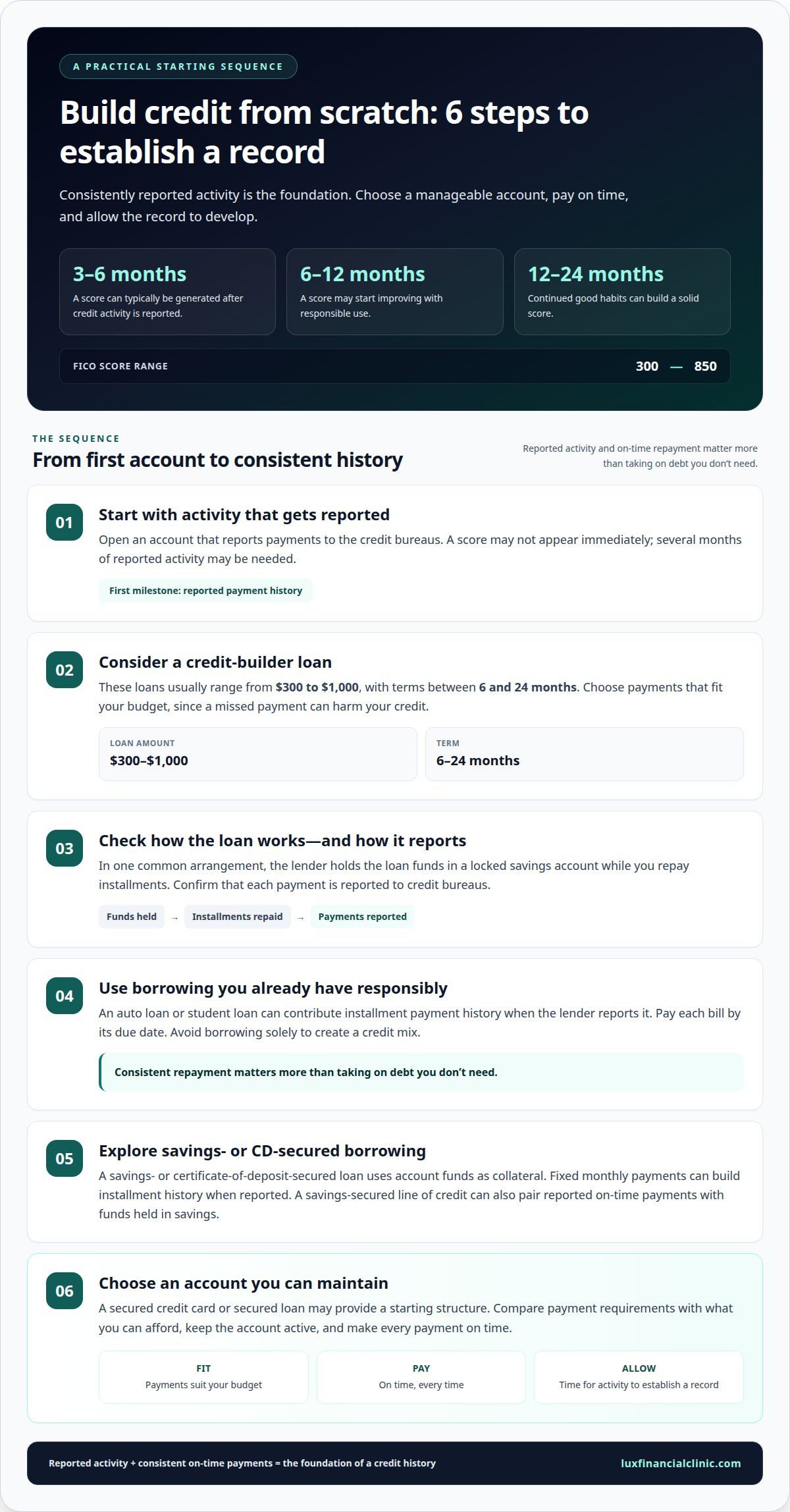
After an account reports credit activity, a score can typically be generated within 3 to 6 months. A credit score typically ranges from 300 to 850, according to FICO. Lenders may review reports from major credit bureaus and use FICO or VantageScore models. The bureau and model can vary by lender and application.
- Allow time for reported activity. Open an account that reports payments, then pay on time. Several months of reported activity may be needed before a score appears. A score may start improving after 6-12 months of responsible use, while continued good habits can build a solid score within 12-24 months.
- Consider a credit-builder loan. These loans usually range from $300 to $1,000, with terms between 6 and 24 months. Before choosing one, make sure each payment fits your budget, since a missed payment can harm your credit.
- Understand how the loan works. With one common arrangement, the lender holds the loan funds in a locked savings account while you repay installments. Confirm that payments are reported to credit bureaus.
- Use existing borrowing responsibly. An auto loan or student loan can contribute installment payment history when the lender reports it. Pay each bill by its due date and avoid borrowing solely to create a credit mix. Consistent repayment matters more than taking on debt you don’t need.
- Explore savings- or CD-secured borrowing. A savings- or certificate-of-deposit-secured loan uses funds in an account as collateral. Fixed monthly payments can build installment history when reported. A savings-secured line of credit can also pair reported on-time payments with funds held in savings.
- Choose an account you can maintain. A secured credit card or secured loan may provide a starting structure, but compare its payment requirements with your ability to pay. Keep the account active, make every payment on time, and give reported activity time to establish a record.
Rent reporting and past payment history
Rent and utility payments may support a credit file when their activity is reported. An authorized-user account may also help if the issuer reports authorized users and the account is managed responsibly.
-
Add Bill Payments to a Credit File
Review your credit reports to see whether any existing bills appear and whether the details are accurate. You can request a free report from each major credit reporting agency once per year. Utility payments typically contribute only when reported, so keep payment records and check that any entries are accurate. Don’t assume paying a bill automatically adds it to your credit file.
-
Report Rent and Utility Payments
Check whether your landlord or property management company reports rent, since rent payments typically aren’t included otherwise. Ask how reporting works and whether past payment history can be submitted. Rent reporting has expanded: the share of renter households with any rent payments reported grew from about 3% in 2020 to 13% in 2024. Keep lease and payment records organized.
-
Respond promptly after a missed payment.
Pay an overdue bill as soon as you can, then contact the company to understand the account status and next steps. A missed payment can negatively affect a credit score, and late payments may remain part of your payment history for a long time. Review your report for accuracy, then use reminders or automatic payments to support timely payments going forward.
-
Consider an authorized-user account carefully.
A primary cardholder can add you to an account as an authorized user. You may benefit from its positive history if the issuer reports authorized users to credit bureaus. The account’s payment record and balance matter: missed payments or a high balance could affect your score. Agree on expectations with the cardholder and make sure the account is managed responsibly.
Is a secured credit card a good place to start?
A secured card can be a structured first step if you can set aside the deposit and manage repayments. Before applying, compare how the issuer reports account activity, the card’s terms, and whether the payments fit your monthly budget.
-
Compare Secured Credit Cards
Choose a secured card whose issuer reports activity to the credit bureaus, then review its fees and payment terms. Make a small, planned purchase and pay the balance on time each month. Use the card for routine spending, such as one regular bill, rather than treating its credit limit as extra income. This keeps use and repayment manageable.
-
Review Secured-Card Security Deposits
Check how the deposit sets the credit limit and when the issuer returns it. Deposits typically range from $200 to $2,500, and usually become the cardholder’s limit. Set aside funds you can leave unavailable while the account is open. Many major issuers review secured accounts after 6 to 12 months of responsible use and may offer an unsecured card.
-
Compare student credit cards.
Compare student cards with secured cards, including their interest, fees, and repayment terms. A student card may suit someone with income and a manageable budget, while a secured card offers a deposit-based credit limit.
-
Understand credit-building debit tools.
Before using a credit-building debit card, find out what payment activity it reports and where that activity appears. Debit spending uses your own funds, unlike borrowing with a credit card. Don’t assume a debit transaction builds a credit file just because a product is described as credit-building. Reporting and how the activity is treated by scoring models are what matter.
-
Weigh store cards before applying.
Compare a store card’s interest rate and terms with other options. Store cards often have higher interest rates than other cards, so carrying a balance can make purchases more costly. Apply only if the account fits your budget and you can repay as agreed. Avoid opening an account just to get a one-time promotion.
Why a credit history matters
- Recognize what a lender can see.
Being credit invisible means you have no credit record for lenders to evaluate. It isn’t the same as having bad credit. Without a file, lenders have less information about how you handle borrowing. Establishing a history creates a record of reported accounts and payments that lenders can consider when you apply for credit.
- Build a record of consistent payments.
Payment history accounts for about 35% of a FICO score, making on-time payments a central habit to establish. Set reminders or automatic payments for each account, then review your statements regularly. A single missed payment can affect a score, so choose monthly payments that fit your budget before opening an account.
- Give your accounts time to mature.
Length of credit history accounts for about 15% of a FICO score. A history lasting 2+ years can contribute to higher credit scores and better loan terms. That makes early, responsible account management useful beyond generating an initial score. Keep older accounts in good standing when they remain suitable for your finances.
- Use an authorized user account thoughtfully.
A well-managed account may help you establish history as an authorized user, but the issuer must report the account to credit bureaus for it to appear in your file. The primary cardholder’s missed payments or high balance could affect your score. Agree on responsible use and payment expectations before being added.
- Keep the goal broader than approval.
A credit history gives lenders information, but it also helps you understand how your borrowing habits appear over time. Check your credit reports for inaccurate personal details or unfamiliar accounts, then address errors you find. If inaccurate negative items are affecting an existing record, explore credit repair support as a separate step toward a clearer file.
Lux Financial Clinic: Credit Repair - Basic/Repair Package
Lux Financial Clinic offers its Credit Repair - Basic/Repair Package to address inaccurate negative items on credit reports. If you’re building credit from scratch with no history, this service is relevant when errors, such as incorrectly reported collections, charge-offs, or late payments, also need attention. Credit repair addresses report accuracy; it does not create payment history or guarantee a particular score.
Lux Financial Clinic uses structured dispute protocols to address inaccurate negative items. For broader support with your credit file, the Credit Repair - Comprehensive/Build Package is another option. First distinguish between establishing new positive activity and resolving inaccurate information already on your reports. These are separate parts of your credit picture.
For help addressing inaccurate items as you work toward a clearer credit profile, contact Lux Financial Clinic.
Set a Steady Course for Your Credit
Building credit from scratch with no history takes consistent steps. Start by choosing one manageable account and making its payments part of your routine. Keep records organized, review your reports periodically, and give those habits time to establish a foundation. If inaccurate negative information is also affecting your profile, credit repair can address that separate issue while you build positive history.
Lux Financial Clinic offers the Credit Repair - Basic/Repair Package and the Credit Repair - Comprehensive/Build Package, as well as Business Funding Consulting for a different financial need. The right next step depends on your goal: addressing report inaccuracies or exploring funding support.
Contact Lux Financial Clinic today to discuss your goals and consider a thoughtful next step. Progress begins with a clear plan and consistent follow-through.
Frequently Asked Questions
What Is Credit and Why Does It Matter?
Credit is a record of how you borrow and repay money, which lenders may review when assessing an application. A credit score summarizes information in your credit file, but it isn’t the file itself. For example, a lender may consider your history alongside income and other application details. A clean, accurate record can help show how you manage financial commitments over time.
How Is Your Credit Score Calculated?
FICO scores weigh several parts of your credit profile: payment history accounts for 35%, amounts owed for 30%, length of credit history for 15%, and credit mix for 10%. These factors make everyday account management relevant, not just the number of accounts you hold. For example, paying bills on time and avoiding balances that strain your budget support the habits reflected in your profile.
How Long Does It Take?
A score can typically be generated within 3 to 6 months after credit activity is reported to the bureaus. The practical timing depends on when an account begins reporting and whether the activity creates enough history for a score. Mark your first statement date and payment due dates on a calendar. That makes it easier to track reporting and spot missed reminders early.
What if I make a mistake?
If you miss a payment, bring the account current as soon as you can and contact the creditor about its status. If your credit report shows an account or payment you don’t recognize, review your records and dispute inaccurate information with the reporting agency. Keep copies of statements and correspondence. Lux Financial Clinic’s credit repair packages use structured dispute protocols to address inaccurate negative items.
How can you build credit from scratch with no credit history?
Start with one account that reports activity, such as a secured card, and choose a credit limit and payment schedule your budget can support. If you rent, find out whether your rent payments can be reported. You could also become an authorized user on a well-managed account, provided the issuer reports authorized users. Review your credit reports periodically to confirm that new information appears accurately.
What is the fastest way to establish a credit score in the U.S.?
The most direct approach is to open a credit account that reports to the bureaus and make payments on time. A secured card can provide a clear starting structure, while rent reporting may add eligible payment activity. Avoid opening several accounts at once, as multiple applications in a short period may result in several hard inquiries. Focus on one manageable account and track its statements and credit reporting.


