
A first FICO Score may appear after about six months of credit history. If you’re wondering how long it takes to get a good credit score, the answer is often a year or more, depending on your starting point and the habits you build.
It’s natural to want a clear timeline, especially if you’re starting with no credit or recovering from missed payments. Progress can feel gradual, but a slow start doesn’t mean you’re stuck. Consistent account management can build a stronger foundation over time.
This guide explains when a first score may appear, how payment history and card balances affect progress, and why recovering from late payments takes time. You’ll also learn about credit-building options and habits that can support your next steps, without relying on quick fixes or promises of a particular score.
Key Takeaways
- Build a clear picture of your starting point by understanding when credit activity can produce a score.
- Keep card balances low and make payments on time to support steady progress.
- Compare beginner-friendly options, such as secured cards and credit-builder loans, before opening an account.
- After a late payment, focus on bringing accounts current and maintaining a consistent payment record.
How Long Does It Take to Get Your First Credit Score?
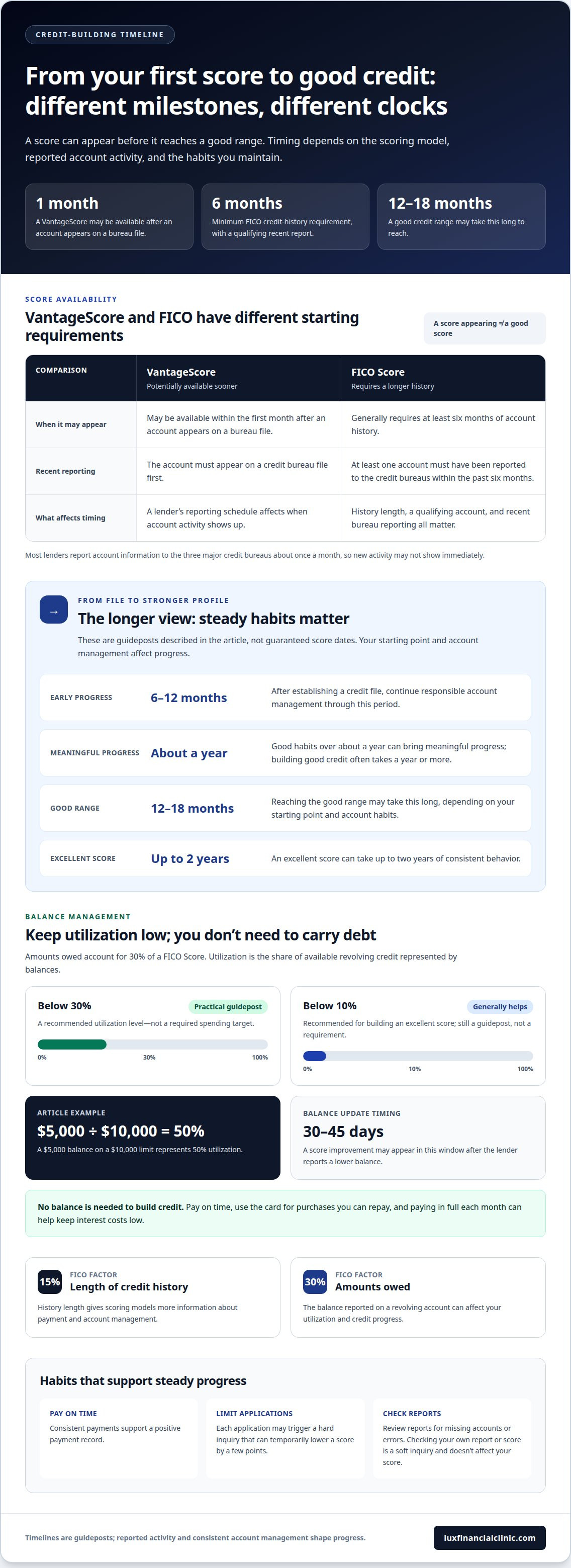
A first FICO Score generally requires six months of credit history and a qualifying account reported recently. The account’s activity, the reporting schedule, and the scoring model all affect when a score becomes available.
Credit History for a First FICO Score
Credit history is the record of how you manage credit accounts over time, and FICO needs that record before it can score your profile. In the United States, a FICO Score requires at least six months of account history and at least one account reported to the credit bureaus within the past six months. The Consumer Financial Protection Bureau says credit scores typically range from 300 to 850 points.
History length matters because it gives scoring models more information about paying and account management. Length of credit history accounts for 15% of a FICO Score. Chapter 7 bankruptcy stays on a U.S. credit report for 10 years, according to the Federal Trade Commission, so older negative information may remain visible while you build newer positive history.
Authorized Users and Positive Credit History
An authorized user is someone added to another person’s credit card account, which may help establish credit history without opening a separate card. A 16-year-old may be able to begin building credit this way on a parent’s account, but not all lenders report authorized-user information to credit bureaus.
Before relying on an account to build credit, confirm that its activity is reported to the bureaus. Positive history depends on responsible management, including paying on time and keeping balances manageable. If an authorized account isn’t reported, it may not help establish a credit file or improve your credit. An account reported in your own name can build a separate record.
Reporting Account Activity and Checking Credit
Most lenders report account information to the three major credit bureaus about once a month. A new account or recent payment may not show up immediately because it follows the lender’s reporting cycle. A VantageScore may be available within the first month after an account appears on a bureau file, while FICO has separate history requirements.
Request your U.S. credit reports for free through AnnualCreditReport.com. To check a score, look for free access through a bank or card issuer. Checking your own report or score is a soft inquiry and doesn’t affect your score. Comparing reports can help you spot missing accounts or errors that may interfere with building positive credit history.
How Long Does It Take to Build Credit?
Credit-building progress partly depends on how much of your available card limit you use. Keeping balances low and paying steadily can support responsible credit management over time.
Credit Utilization and Balances
Credit utilization is the share of your available revolving credit represented by your balances. It matters because amounts owed account for 30% of a FICO Score, so the balance reported on your account can affect your progress.
For example, a $5,000 balance on a $10,000 limit represents 50% utilization. Paying down balances can reduce that share, but the amount shown on your report depends on when the lender reports. After the lender reports a new, lower balance, a score improvement may appear in 30 to 45 days.
Credit Utilization Recommendations
Keeping utilization below 30% is a practical recommendation; below 10% generally helps a score and is recommended for building an excellent one. These are guideposts, not required spending targets. You don’t need to carry debt to establish a positive payment history or build credit.
Paying your card balance in full each month can support strong scores while keeping interest costs low. You don’t need to carry a balance to show activity. Use the card for purchases you can repay, then pay by the due date.
Change takes time. Meaningful improvement is unlikely within 30 days for someone starting without credit history. After establishing a credit file, continue responsible account management for 6 to 12 months. Good habits over about a year can bring meaningful progress, while reaching the good range may take 12 to 18 months. An excellent score can take up to two years of consistent behavior.
If inaccurate negative items are affecting your credit progress, credit repair support can help address them.
Credit-building options for beginners
The fastest safe routes are a secured credit card or credit-builder loan, paired with on-time payments and limited applications. Choose an account you can manage consistently, rather than seeking rapid score changes.
Starting to Build Credit
Starting credit means opening an account that can establish a record with the credit bureaus.
Before applying, review how the account works and whether it reports to the bureaus. A person generally must be at least 18 to open a first line of credit, such as a card or loan. Use the account for manageable activity and pay as agreed, so the credit report can reflect responsible habits.
Timeline for Building a Good Score
Building a stronger credit profile takes time for account activity to be reported and habits to become consistent. In the United States, reaching good credit can take a year or more, depending on your starting point and how you manage your accounts.
A VantageScore may be available within the first month after an account appears on a bureau file, but getting a score isn’t the same as reaching a good range. Lenders and scoring models assess reported information over time. Review your credit reports periodically to see which accounts and habits are shaping your progress.
Safe Ways to Build Credit Quickly
Build positive credit activity without taking on credit you don’t need. Apply for one suitable account, keep its balance manageable, and pay on time. Opening several accounts in a short period can suggest to lenders that you’re facing financial setbacks.
Each application may trigger a hard inquiry, which can temporarily lower a score by a few points. Avoid repeated applications while a new account is establishing its history. Instead, use it responsibly and check your report for errors that could affect your credit profile.
Late payments and rebuilding credit
A late payment can slow credit recovery, but the next steps matter. Payment history accounts for 35% of a FICO Score, making it the score’s largest factor. A payment reported as 30 or more days late can significantly damage a score. Focus first on preventing another missed due date, then give positive payment behavior time to build.
If an account is past due, bring it current and keep it current. List bill due dates, set electronic reminders, or arrange automatic payments for at least the minimum due. For example, a reminder several days before a credit card payment is due gives you time to review the balance and move funds.
Late payments and other derogatory marks can remain on a U.S. credit report for seven years from the original delinquency date. Their presence doesn’t stop you from building positive history now. Newer on-time payments help show a different pattern of account management, even while older information remains on your report.
Review your credit reports and make sure any late payment listed is accurate. If you spot an error, dispute it with the credit reporting company and the business that provided the information. Correcting a reporting error may lead to improvement in 30 to 60 days. Keep records of payment confirmations and dispute correspondence so you can track what changed.
Rebuilding credit doesn’t mean opening several accounts to offset a late payment. A new card may generate another inquiry, and additional accounts can bring more payment obligations. Keep the plan simple: bring overdue accounts current, pay bills on time, and avoid borrowing more than your budget can manage. Consistent habits create the clearest path forward.
Lux Financial Clinic: Credit Repair - Basic/Repair Package
Lux Financial Clinic’s Credit Repair - Basic/Repair Package can help if inaccurate negative items are weighing on your credit profile. Its structured dispute protocols address items such as collections, charge-offs, and late payments. The focus is on challenging inaccurate information, not erasing accurate history or promising a particular score.
Credit repair support may suit you if you’ve reviewed your reports, identified information you believe is inaccurate, and want help addressing it. If you also want to build stronger credit habits, the Comprehensive/Build Package offers a broader focus. Neither approach replaces consistent account management, which remains important as your credit history develops.
For a considered next step, contact Lux Financial Clinic to discuss credit repair support.
Make Your Next Credit Decision With Clarity
Credit rebuilding is easier to manage when you focus on the next useful action rather than an ideal score or fixed deadline. How long it takes to get a good credit score depends on the record you’re building. Focus on sustainable steps: review account information, pay reliably, and choose credit carefully.
As your circumstances change, revisit your goals and consider whether you need help addressing inaccurate negative information or developing a broader credit-building plan. Lux Financial Clinic offers credit repair support for these needs, with the right approach depending on what you’re working to resolve.
Connect with Lux Financial Clinic to discuss a considered next step. Progress begins with a clear view of your situation, and each responsible decision can help you move forward with greater confidence.
Frequently Asked Questions
How Long Does It Take to Rebuild Credit?
Rebuilding credit takes ongoing positive account activity, not one corrective action. If you’re asking, “how long does it take to get a good credit score,” the answer depends partly on your starting record and the information reported. Start by identifying overdue accounts and prioritizing bringing them current. Review bureau reports for errors, too, because correcting inaccurate information can change what lenders see.
What Affects Your Credit?
Payment history, balances, account age, credit mix, and new applications can all affect scoring. For example, a high card balance compared with its limit affects the amounts-owed factor, while a recent application may create a hard inquiry. Scoring models weigh reported details differently, so the same financial action may not affect every score in the same way. Reviewing your reports helps you see what information is present.
Where Do Scores Come From?
Credit scores come from scoring models that analyze information in credit bureau files. Lenders and other account providers report details such as payment activity and balances. Models like FICO and VantageScore use that information to calculate scores. A lender’s choice of model and bureau file can produce different scores, even when your financial situation hasn’t changed.
How long does it take to build a good credit score from scratch?
Building credit from scratch can take a year or more to reach good credit, depending on account activity and payment habits. A FICO Score generally requires six months of account history, and reaching a good score takes additional positive reporting. Limit applications and manage each account consistently to show reliable behavior over time.
How soon can you get a credit score after opening your first credit account?
A VantageScore may be available within the first month after an account appears on a bureau file. A FICO Score has a longer history requirement: the file needs at least six months of account history and an account reported within the past six months. The timeline depends on when the lender reports the account, not just when it was opened.
How long does it take to improve a bad credit score by 50 or 100 points?
There’s no single timeline for a particular point increase. If you’re wondering, “how long does it take to get a good credit score,” the answer depends on the items affecting your file and when updates are reported. Paying down balances may lead to improvement 30 to 45 days after reporting. Correcting a reporting error may lead to improvement in 30 to 60 days.


