
What if the most useful support in a credit dispute isn’t a promise of removal, but a clearer plan? A credit dispute strategist can help you review concerns on your credit reports, organize relevant documents, and track follow-up. They can’t guarantee that a bureau or creditor will change an entry, and accurate, verifiable information may remain on your report.
If you’re unsure which details may be inaccurate or how to keep track of a dispute, experienced guidance may help. Before deciding whether a service fits your needs, you should understand exactly what it includes. This article explains a strategist’s role and limits, and what to prepare so you can make an informed choice.
You’ll learn how to identify report details worth reviewing, gather records that may support a dispute, and plan for next steps. We’ll also cover questions to ask about a provider’s process and scope, plus warning signs such as guaranteed outcomes. The goal is a practical next step, whether you manage a dispute yourself or seek structured support.
Key Takeaways
- Learn how a credit dispute strategist can help organize report concerns and clarify possible next steps, without controlling how an investigation is resolved.
- Use a structured review to pinpoint entries you want to examine and identify records that may help explain your concern.
- Compare self-directed disputes with professional support based on your time, comfort with paperwork, and need to track correspondence.
- Know which promises and unclear service terms should prompt you to pause, ask questions, and verify the details before enrolling.
- Build a measured action plan that separates disputes about report information from longer-term credit-building goals.
What Is a Credit Dispute Strategist, and What Can They Help With?
Credit-report concerns can be difficult to sort through, especially when account names, dates, balances, or payment details don’t match your records. A credit dispute strategist can help you review those concerns and organize the information and next steps that may help address them. Their role is to provide structured support, not to control how a bureau or creditor responds.
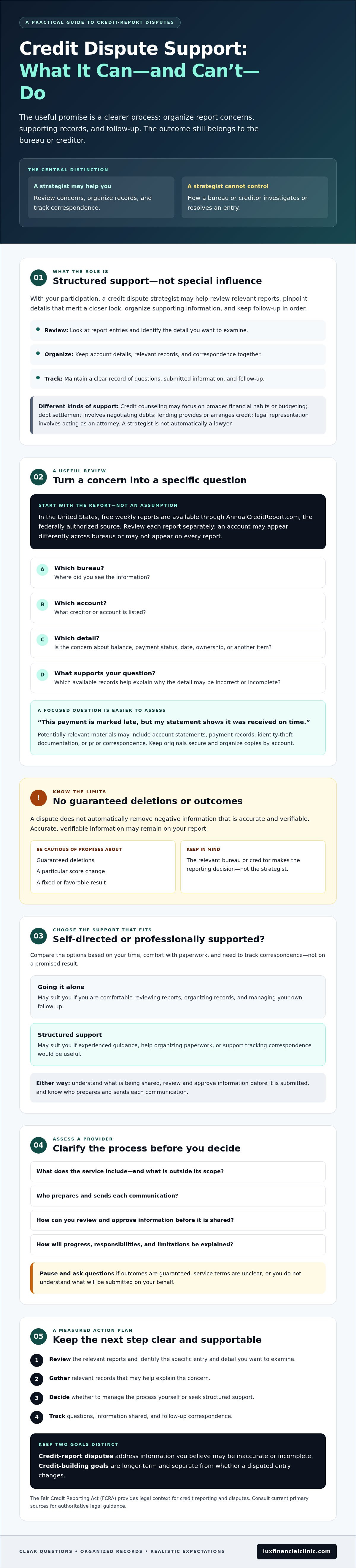
A credit dispute strategist helps consumers organize potential reporting concerns, supporting records, and dispute follow-up, while leaving reporting decisions to the relevant bureau or creditor. The work may include reviewing reports with you, identifying entries that merit closer examination, and keeping account details and correspondence in order. For example, if an account appears unfamiliar or a payment date seems inconsistent with your records, a strategist can help you frame the question and identify potentially relevant documents.
This support differs from credit counseling, which may focus on broader financial habits or budgeting; debt settlement, which involves negotiating debts; lending, which provides or arranges credit; and legal representation, which involves acting as an attorney. A strategist can help organize your dispute process, but that doesn’t make them a lawyer or give them special influence over credit reporting. The Fair Credit Reporting Act (FCRA) provides legal context for credit reporting and disputes, but consult current primary sources for authoritative legal guidance.
What Does a Credit Dispute Strategist Do?
With your participation, a strategist may review the relevant reports, help identify details that need a closer look, and organize supporting records such as account statements or payment confirmations. They may also help track questions, submitted information, and follow-up correspondence so each concern has a clear record. Before anything is submitted on your behalf, understand and approve the information being shared. Ask who prepares and sends each communication, and how you can review it.
What a Strategist Cannot Promise
A dispute won’t automatically remove negative information that is accurate and verifiable. A strategist can’t promise deletions, a particular score change, a fixed outcome, or a favorable decision from a bureau or creditor. Be cautious of claims that suggest otherwise. Before engaging a provider, ask for a plain-language explanation of the service scope, your responsibilities, and how the provider will communicate progress and limitations. Clear expectations are part of sound support.
How a Credit Dispute Strategist Reviews a Credit-Report Concern
A useful review starts with the report, not an assumption about what should be removed. A credit dispute strategist can help turn a general concern into a specific question supported by the information you have. The steps may vary depending on the account, the type of concern, and where the information came from.
From Report Review to a Clear Question
Start by obtaining your reports from the major credit reporting agencies. In the United States, free weekly reports are available through AnnualCreditReport.com, the federally authorized source for these reports. Review each report separately: the same account may appear differently across bureaus or may not appear on every report.
For each entry you want to examine, note:
- Which bureau: Where did you see the information?
- Which account: What creditor or account is listed?
- Which detail: Is the balance, payment status, date, ownership, or another item the concern?
- What supports your question: Which records help explain why the detail may be incorrect or incomplete?
Gather relevant materials if available, such as account statements, payment records, identity-theft documentation, or prior correspondence. Keep originals secure and organize copies by account. A focused question, such as “This payment is marked late, but my statement shows it was received on time,” is easier to assess than a broad request to remove an account. Keep a dispute focused on one specific, supportable concern, not a desired outcome.
Disputes, Responses, and Follow-Up
The appropriate recipient depends on the issue and its source. A concern may involve information displayed by a credit bureau, details supplied by a creditor or other data provider, or both. The Consumer Financial Protection Bureau explains how to dispute an error on your credit report. Check its current guidance and the relevant bureau’s instructions before submitting anything, since procedures and case needs can differ.
Keep a dated copy of each submission, the documents included, delivery or confirmation records, and any response. A strategist may help maintain this file and identify what needs attention next, but follow-up depends on the response and the facts of your case. Review every statement before it’s sent, and make sure you understand what’s being communicated on your behalf.
If you’d like help organizing questions about your financial picture, learn about Lux Financial Clinic’s financial diagnostic consultation.
Credit Dispute Strategist vs. Going It Alone: Which Support Fits?
You can handle a credit-report dispute yourself. Professional support doesn’t provide special access to credit bureaus or guarantee a different decision; it may help you manage the work. The right fit depends on how involved the concerns are, how much time you have, and whether you’re comfortable preparing and tracking paperwork.
| Consideration | Self-directed dispute | Professional organizational support |
|---|---|---|
| Time | You set aside time to review reports, prepare submissions, and monitor responses. | A provider may help organize tasks and correspondence, depending on the service scope. |
| Paperwork comfort | May suit you if you’re comfortable gathering records and writing a clear explanation. | May help if sorting documents and keeping details in order feels demanding. |
| Number of concerns | One clear concern may be manageable to address on your own. | Several concerns across reports may benefit from a structured way to keep each issue distinct. |
| Follow-up | You control and track every communication yourself. | Ask whether and how the provider helps track correspondence and responses. |
When Self-Directed Disputes May Be Practical
If you’ve identified a specific concern and have records that help explain it, handling the process yourself may feel straightforward. You may also prefer to write, submit, and track each communication directly. Before sending anything, check current procedures with the relevant bureau or information source, and keep copies of your dispute and supporting documents. The Federal Trade Commission’s Disputing Errors on Credit Reports resource offers consumer guidance, including a sample letter.
When Structured Support May Be Helpful
Multiple reports, several separate concerns, or limited time can make it harder to keep records and follow-up organized. A credit dispute strategist may help arrange the work into a personalized sequence, while leaving decisions and approvals in your hands. Ask exactly what the service includes and who handles each step. For additional service-scope context, consult the article “Essential Guide to 3-Bureau Credit Dispute Services for 2026.”
Choose support based on complexity, capacity, and clarity, not promised results. If you can explain the concern, gather relevant records, and track communications, a self-directed approach may fit. If organizing several moving parts is the challenge, structured assistance may be worth considering, provided its scope and limits are clear.
How to Assess a Credit Dispute Strategist Without Falling for Guarantees
Choosing support is easier when you know exactly what the service will and won’t do. Before sharing sensitive information or enrolling, ask for clear written terms and enough time to review them. A responsible provider should be able to explain its process without promising that a bureau or creditor will reach a particular decision.
Questions to Ask Before Choosing Support
Use these questions to understand the service and your role in it:
- Which tasks are included? Ask who reviews reports, prepares correspondence, submits information, and tracks responses. Confirm which steps remain your responsibility.
- What documentation may be needed? Ask how records will be collected, shared, stored, and protected, and whether you can review materials before they’re submitted.
- How will communication work? Clarify how progress and responses will be shared, who you can contact with questions, and how often you should expect updates. Don’t assume a particular schedule unless it’s stated in writing.
- What are the fees and terms? Request a written explanation of charges, cancellation terms, and any other conditions before agreeing.
- What if the information appears accurate? Ask what the provider will explain if your records don’t support a concern or a dispute doesn’t lead to the result you hoped for.
These questions help you assess whether the provider’s responsibilities match your expectations. If the answers are vague, request clarification in writing before making a decision.
Warning Signs and Realistic Expectations
Pause if a company guarantees removal of every negative item, promises a specific score change, pressures you to act immediately, or can’t clearly describe fees and your responsibilities. A dispute isn’t a reliable way to erase information simply because it’s unfavorable. The details and supporting records matter, and a strategist doesn’t control the outcome.
Review current consumer guidance before signing. The Federal Trade Commission’s credit-report dispute guidance explains practical considerations, while the Consumer Financial Protection Bureau’s dispute instructions outline consumer steps. Refer to these agencies’ current materials rather than relying on sales language to explain your options. This is general information, not legal advice.
A measured decision comes from understanding the service scope, the written terms, and what happens if the result is uncertain. If you’d like to discuss your financial picture and possible support options, explore Lux Financial Clinic’s financial diagnostic consultation.
Your Next Steps: Build a Clear Credit-Report Action Plan
A clear plan can make the next step feel more manageable. Start with the report details and records you have, then decide whether to handle the process independently or explore structured guidance. You don’t need to resolve every question at once. Focus first on understanding the concern and what information may help clarify it.
A Simple Preparation Checklist
- Gather your reports. In the United States, free weekly reports from Equifax, Experian, and TransUnion are available through AnnualCreditReport.com.
- Record the specific concern. Note the bureau, account, reported detail, and why it may be inaccurate or incomplete.
- Collect relevant records. Organize any statements, payment records, identity-theft documentation, or correspondence related to the issue.
- Write down your questions and goal. Be clear about what you’re asking to have reviewed, and note any dates or deadlines you need to verify through current official guidance.
- Keep a dated record. Save copies of communications, submitted materials, and responses so you can follow up with a clear history.
Preparation can also help you have a more useful conversation with a provider. A credit dispute strategist should be able to explain which tasks are included, what you’ll need to do, and how the service handles uncertainty, without promising a particular result.
Choosing Support for Your Situation
If you’re comfortable organizing records and tracking correspondence, independent action may suit your needs. If you have several concerns or would value help structuring the work, compare professional services carefully and confirm their scope in writing.
Dispute work and credit building are related, but they serve different purposes. A dispute addresses a specific concern about reported information; credit building focuses on longer-term financial habits and goals. For a separate focus on that next phase, see Rebuild Credit After Collections: A Practical Step-by-Step Guide.
Lux Financial Clinic offers a financial diagnostic consultation and credit repair services. Its comprehensive package is described as including personalized dispute support and a credit-building roadmap, a planning resource rather than a promise of score results. To learn more about the clinic’s approach, explore its financial diagnostic consultation and ask about the current service scope before deciding whether it fits.
Move Forward With a Clear, Measured Plan
Credit-report questions can feel more manageable when you turn them into a clear, documented plan. Identify the specific entry, gather relevant records, and decide whether handling follow-up yourself or seeking structured support better fits your time and comfort. A credit dispute strategist can help organize the process, but can’t determine how a bureau or creditor responds.
Before choosing a service, make sure you understand its scope, your responsibilities, and how fees and progress will be communicated. Dispute work focuses on concerns about reported information; credit building is a separate, longer-term part of your financial plan. Keeping these goals distinct can help you set realistic expectations and choose useful next steps.
Lux Financial Clinic provides structured dispute support for concerns across Experian, Equifax, and TransUnion. Its comprehensive package includes dedicated strategist support and a personalized credit-building roadmap to support planning, not to promise a particular score result. To learn more about the clinic’s approach, explore Lux Financial Clinic’s credit support.
With clear information and thoughtful support, you can move forward at a pace that feels right for you.
Frequently Asked Questions
Can a credit dispute strategist remove accurate negative information?
No. A dispute isn’t a way to erase accurate information simply because it’s unfavorable. It’s intended to raise a concern about information you believe is inaccurate, incomplete, or otherwise requires investigation. The result depends on the details and review. Before choosing a provider, ask how it handles information that appears accurate, and check current dispute guidance from authoritative sources such as the relevant credit bureau or government agencies.
Is it better to dispute a credit report yourself or hire a strategist?
Either approach may fit, depending on your circumstances. You might handle a clearly identifiable concern with supporting records yourself, particularly if you’re comfortable managing paperwork and follow-up. Structured support may help organize several issues or correspondence when time is limited. Compare the provider’s transparency, service terms, and responsibilities with what you need. Hiring support doesn’t provide special access or guarantee a different decision or outcome.
How does a credit dispute strategist review a credit report?
A strategist may help identify the bureau and account, note the specific reported detail in question, review available supporting records, and organize a follow-up plan. The process can vary by provider and situation. Keep copies of the report pages, documents submitted, and correspondence received. Before taking action, check current dispute instructions from the relevant bureau or another appropriate primary source, since the right steps depend on the concern and information involved.
Can a credit dispute strategist guarantee a score increase?
No. A strategist can’t guarantee a score increase because the result of a dispute isn’t within their control. Credit scores depend on information in a credit file and the scoring model used, so a change to one report detail doesn’t promise a particular score outcome. Treat guaranteed-score claims as a reason to pause. Ask the provider to explain its service, limitations, and fees clearly before you decide.
What should I ask before hiring a credit dispute strategist?
Ask what the service includes, which tasks you’ll handle, what documents may be needed, and how progress and fees will be communicated. Find out how your records are handled and what happens if a concern appears accurate or a dispute doesn’t lead to your preferred result. Review the written terms, including cancellation conditions, and don’t feel pressured to enroll. A provider should explain realistic limits without promising deletions, score changes, or a set timeline.


