
What if the most useful credit dispute support is the service that makes the fewest promises and explains its process most clearly? Choosing a professional credit dispute clinic can feel difficult when you’re unsure whether a negative item is inaccurate, verifiable, or simply unfamiliar. It’s reasonable to want guidance while also asking careful questions about claims, fees, and how your personal information will be handled.
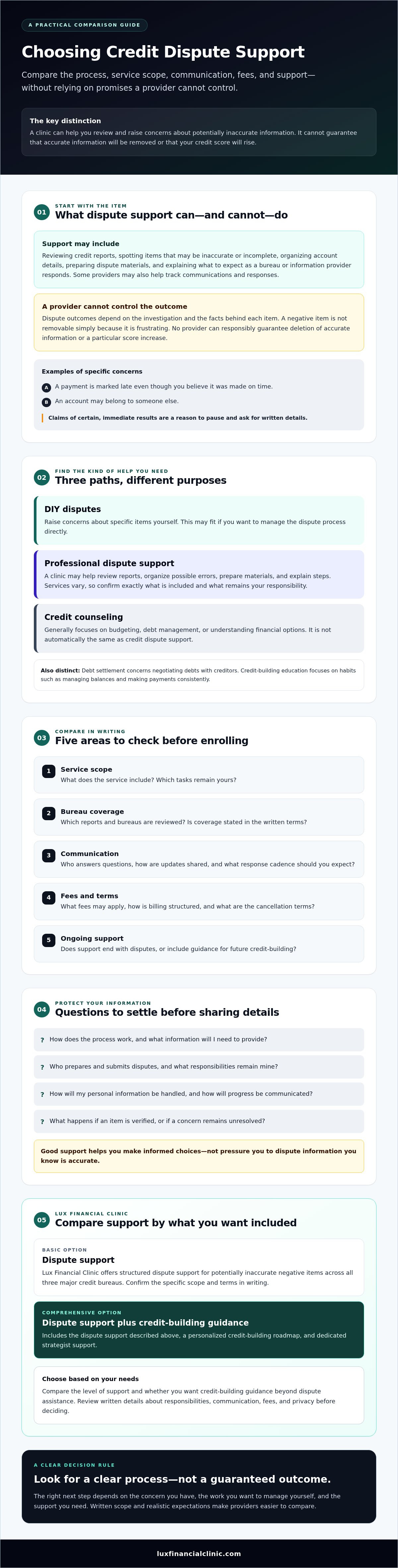
A clinic can help you review potential inaccuracies and understand the steps involved, but it can’t guarantee that accurate information will be removed or that your score will rise. This guide explains how to compare professional support with other options, assess service scope and communication, and clarify fees and privacy before enrolling. You’ll also learn how dispute assistance differs from longer-term credit-building support. Lux Financial Clinic offers structured dispute support for potentially inaccurate items across the three major credit bureaus. Its comprehensive package also includes a personalized credit-building roadmap. The aim is to find support that fits your needs and encourages accurate reporting and steady financial habits.
Key Takeaways
- Compare professional credit dispute clinics using written details about scope, bureau coverage, communication, and fees.
- Choose a next step that fits your needs: dispute items yourself, seek professional support, or explore credit counseling.
- Before sharing sensitive information, ask how the process works, what you’ll need to do, and what the service does not include.
- Compare Lux Financial Clinic’s basic and comprehensive options by the level of support and credit-building guidance you want.
What a Professional Credit Dispute Clinic Does, and What It Cannot Promise
A professional credit dispute clinic helps consumers review credit reports, spot items that may be inaccurate or incomplete, and decide how to raise those concerns. Depending on the service, support may include organizing account details, preparing dispute materials, and explaining what to expect as a bureau or information provider responds. A clinic has no special authority to change a report simply because an item is frustrating or unfavorable.
It’s also important to distinguish dispute assistance from other kinds of financial support. Credit counseling generally focuses on budgeting, debt management, or understanding financial options. A credit counseling provider is not automatically a credit dispute clinic. Debt settlement concerns negotiating debts with creditors, while credit-building education focuses on habits such as managing balances and making payments consistently. These services address different needs, so first identify the kind of help you’re looking for.
Dispute outcomes depend on the investigation and the facts behind each item, not on a provider’s promise. If an account is accurate and current, its negative effect alone doesn’t make it removable. A dispute should identify a specific concern, such as a payment marked late that you believe was made on time, or an account that may belong to someone else.
What support can a credit dispute clinic provide?
Depending on the service, a clinic may review reports, help organize possible errors, prepare dispute materials, and explain the steps involved. Some providers may also help track communications and responses across bureaus, making it easier to see what has been submitted and what remains unresolved. Services vary, so ask for a clear description of what is included before enrolling.
What a clinic cannot promise or control
No provider can responsibly guarantee that accurate information will be deleted or that your credit score will increase by a particular amount. A clinic also can’t legitimately erase all negative history or create a new credit identity to avoid existing records. Claims of certain, immediate results are a reason to pause, ask for written details, and find out how the provider would address your specific concerns.
Good support should help you make informed choices, not pressure you to dispute information you know is accurate. Before signing up, confirm who prepares and submits disputes, what responsibilities remain yours, how the clinic communicates progress, and what happens if an item is verified. These details help you judge whether the service offers practical guidance or simply sells an outcome it cannot control.
How to Compare Professional Credit Dispute Clinics
Start with the details of the service, not a sales pitch about fast results. Ask each professional credit dispute clinic the same questions and compare the answers in writing. A clear process should explain what the provider will review, what information you’ll need to supply, and how it will handle each concern. Broad assurances alone don’t show whether the service fits your situation.
Use this framework to organize your questions. Resolve anything that remains unclear before enrolling.
| What to compare | Questions to ask |
|---|---|
| Service scope | What does the service include, and what tasks remain my responsibility? |
| Bureau coverage | Which credit reports and bureaus are reviewed? Is coverage stated in the written terms? |
| Communication | Who will answer questions, how will updates be shared, and what response cadence should I expect? |
| Fees and terms | What fees may apply, how is billing structured, and what are the cancellation terms? |
| Ongoing support | Does support end with disputes, or does it include guidance for future credit-building? |
Check service scope and bureau coverage
Compare equivalent services. Ask whether the clinic reviews reports from all major credit bureaus or only selected reports, and make sure the answer is documented. Also distinguish dispute preparation from broader credit-building guidance. For a closer look at what three-bureau support can involve, see this 3-bureau credit dispute services guide.
Lux Financial Clinic’s credit repair services address potentially inaccurate negative items across all three major bureaus. Its comprehensive package also includes a personalized credit-building roadmap and dedicated strategist support. Confirm the current inclusions directly, then compare them with the written scope of any other provider you’re considering.
Assess fees, communication, and support
Request written terms covering fees, billing, included services, and cancellation conditions. Ask who your point of contact will be, how updates will arrive, and what support is available if a bureau’s response raises further questions. Compare the clarity and value of the service, not just the fee. A higher price alone doesn’t show that a provider is more suitable or can deliver a particular outcome.
The Federal Trade Commission’s Fixing Your Credit guide offers a useful reference for understanding credit repair claims and consumer options. If structured assistance may suit your goals, review Lux credit repair services and ask the same questions about scope, fees, and communication before deciding.
Clinic, DIY Disputes, or Credit Counseling: Which Fits Your Situation?
The right approach depends on the concern you’re addressing and how much guidance you want. You can submit a dispute directly without hiring a clinic. A professional credit dispute clinic may offer structure and help tracking steps, while credit counseling may be more relevant if you want broader help understanding your budget or debt-management options. None of these approaches is automatically right for every person or report issue.
| Option | May suit you if | Consider |
|---|---|---|
| DIY dispute | You can identify a specific concern and are comfortable organizing documents and follow-ups. | You’ll manage the process and keep your own records. |
| Professional support | You want help organizing a multi-step process or tracking communications. | Review the provider’s written scope and stay involved in decisions and document review. |
| Credit counseling | Your main need is broader financial guidance, such as understanding a budget or debt-management options. | Confirm the organization’s services and whether they address your specific concern. |
When handling a dispute yourself may make sense
A self-directed approach may work if you have time to review your reports carefully and can explain what appears wrong. Compare reports from each bureau, since the same account or detail may not appear identically across them. Keep copies of relevant statements or correspondence, write down what you believe is inaccurate, and save records of what you submit and any responses.
If the issue involves several accounts, unfamiliar records, or details you can’t confidently assess, pause before sending a dispute. The Federal Trade Commission’s Credit Repair Organizations Act is a reference for understanding the federal law that applies to credit repair organizations. For individual circumstances, consider qualified guidance rather than guessing about a complex issue.
When structured professional support may be useful
Guided support may appeal if you want help keeping information organized, understanding the sequence of steps, or monitoring responses across multiple reports. A clinic can provide structure, but it doesn’t replace your judgment. Review the information, provide accurate documents, and understand what is being submitted on your behalf. Ask how the provider will involve you throughout the process.
For more role-specific context, read this guide to the credit dispute strategist role and process. Consider what kind of guidance would help, then weigh your available time, confidence, and the complexity of your report concern. The goal is to choose a suitable level of support, not simply the most involved option.
Questions to Ask Before Choosing a Credit Dispute Clinic
Before sharing personal documents or authorizing a service, find out exactly how the clinic works. A professional credit dispute clinic should be able to explain its process in plain language, describe your role, and put key terms in writing. Use this checklist during a consultation, then review the agreement at your own pace.
- How do you identify concerns? Ask how the clinic reviews reports and determines which items may warrant attention. What documents or information might you need to provide?
- Who prepares and submits communications? Clarify whether the clinic drafts materials, sends them, or guides you while you handle those steps. Ask how you’ll review and approve communications before they’re submitted.
- What happens if a response doesn’t resolve the concern? Ask how the clinic shares responses, explains possible next steps, and identifies what falls outside its service.
- How will you communicate with me? Find out who your contact will be, how progress updates are delivered, and what response cadence you can reasonably expect.
- How is my personal information handled? Ask what information the provider collects, why it needs it, how it’s stored, who may access it, and how it’s protected.
- What will I pay, and what are the terms? Request written pricing, billing details, package scope, cancellation terms, and information about any recurring obligations. Don’t rely on a verbal summary alone.
- What results do you not promise? Confirm that the clinic doesn’t guarantee deletion of accurate information or a specific score increase. Ask how it describes possible outcomes and the factors that affect them.
Read the full agreement before signing, and keep a copy along with your credit reports, supporting documents, submitted correspondence, and provider updates. Organized records make it easier to track what has happened and refer to the agreed terms if questions arise. If an answer is unclear, ask for clarification in writing before proceeding.
Clear terms and realistic expectations make it easier to choose support with confidence. A provider’s willingness to explain its limits is as useful to assess as its description of services.
If you’re considering structured support, review Lux Financial Clinic’s credit repair services and use these questions to clarify the scope and terms that apply to your needs.
Is Lux Financial Clinic the Right Professional Credit Dispute Clinic for You?
Lux Financial Clinic may be worth considering if you want structured support to review potentially inaccurate negative items across Experian, Equifax, and TransUnion. Three-bureau coverage can help if you want a coordinated view of concerns across your major credit reports. As with any provider, the right fit depends on your goals, the guidance you want, and the terms you confirm before enrolling.
How Lux’s services may align with your needs
Lux offers a basic repair package and a comprehensive package. The comprehensive option includes a personalized credit-building roadmap and dedicated strategist support, providing longer-term guidance alongside dispute assistance. That distinction may matter if you want to think about future credit habits as well as report concerns. It does not assure a particular score change or removal.
Before choosing either package, ask the clinic to explain the current scope in writing. Confirm which tasks are included, what responsibilities remain yours, how communication works, and what fees, enrollment terms, and cancellation conditions apply. This lets you compare the service with your priorities instead of relying on a package label alone.
Choose a next step that feels informed
Start by identifying what you need most. If your priority is help addressing potential inaccuracies across reports, ask how the dispute support works. If you also want continued guidance, ask what the roadmap and strategist support involve and how they relate to your goals. Review the written details carefully and give yourself time to decide.
If collections are part of your broader credit picture, Lux’s practical guide to rebuilding credit after collections may offer useful context for thinking beyond a single dispute.
A thoughtful choice is one you understand before you commit. You can explore Lux Financial Clinic’s services and ask about current scope, fees, terms, and responsibilities before deciding whether its support fits your needs. No clinic can guarantee that accurate information will be removed or that your credit score will increase.
Choose Support That Fits Your Next Step
The right professional credit dispute clinic should offer a clear process, written terms, and realistic expectations. Before deciding, consider whether you’re comfortable addressing a specific report concern yourself or would benefit from structured guidance. Accurate information isn’t automatically removable, and no provider can promise a particular score increase.
Lux Financial Clinic provides structured dispute support across Experian, Equifax, and TransUnion. Its comprehensive package includes a personalized credit-building roadmap and dedicated strategist support, which may suit people seeking guidance beyond dispute preparation. Confirm the current service scope, fees, terms, and your responsibilities before enrolling.
Take your next step carefully, without pressure. You can explore Lux Financial Clinic’s credit support and ask about your options to learn more and decide whether its services align with your goals. Clear information can help you move forward with greater confidence and build habits that support your longer-term financial wellbeing.
Frequently Asked Questions
What does a professional credit dispute clinic do?
A professional credit dispute clinic helps consumers review credit reports, identify possible inaccuracies or incomplete details, and organize steps for raising those concerns. Depending on its service, it may assist with preparing disputes, tracking communications, or understanding responses. The provider should explain what it will handle and what remains your responsibility. Outcomes depend on the facts and investigation of each item, so support cannot guarantee a particular result.
How do I know if a credit dispute clinic is legitimate?
Look for written terms that clearly explain the service, fees, communication process, privacy practices, and cancellation conditions. Ask how the provider reviews concerns, what documents it needs, and what you’ll be expected to do. Be cautious of claims that promise certain removals or a specific score increase. A credible provider should explain its limits plainly and give you time to read the agreement before sharing sensitive information or enrolling.
Can a credit dispute clinic remove accurate information from my credit report?
A clinic can help address information you believe is inaccurate or incomplete, but accurate negative history isn’t automatically removable simply because it’s unfavorable. For example, you might ask about a payment marked late that you believe was made on time, while a correctly reported late payment is different. Ask the provider to explain the basis for disputing each item and how it handles information that is verified.
Is it better to dispute credit report errors myself or hire a clinic?
Either approach may fit, depending on your time, confidence, and the complexity of the concern. If you can identify a specific issue, gather supporting records, and track follow-ups, handling a dispute yourself may feel manageable. A clinic may suit you if you prefer structured guidance or help organizing several steps. Consider how involved you want to be, and remember that hiring a provider doesn’t remove your need to review documents and decisions.
How much does a professional credit dispute clinic cost?
Fees vary by provider and the scope of support, so there’s no single price that applies to every service. Request the current written fee schedule and confirm what each charge covers, how billing works, whether charges recur, and what cancellation terms apply. Compare those details with the specific assistance offered rather than relying on a verbal estimate. Don’t enroll until you understand the full cost and terms.
How long does a credit dispute clinic take to address a report issue?
Timing can vary based on the concern, the documents available, and the investigation and responses involved. A provider may guide you through the steps or help track communications, but it can’t control how quickly others respond or promise a fixed resolution date. Ask what stages to expect, how updates are shared, and what happens if the initial response doesn’t address your concern. Treat a guaranteed rapid outcome with caution.
What should I ask before signing up for credit dispute services?
Ask which reports and items the service covers, what tasks it performs, and what responsibilities remain yours. Request written details on fees, billing, cancellation terms, and any recurring obligations. Find out how personal information is collected, used, stored, and protected, and who will communicate with you. Finally, ask how you’ll review dispute materials and confirm that the provider doesn’t guarantee deletion of accurate information or a particular score increase.


