
Bad credit can affect more than your ability to borrow. It can weigh on your mood, sleep, concentration, and everyday decisions. The emotional toll of bad credit may show up as persistent worry about bills, difficulty focusing, or stress-driven spending. These effects can make financial pressure feel even harder to manage.
If money worries are following you into other parts of your life, that reaction deserves attention, not judgment. Debt-related stress can affect mental and physical well-being, while anxiety or other challenges can make it harder to manage finances. This article explores how financial strain can influence your health, focus, and spending, and how mental health and money difficulties can reinforce each other.
Understanding this pattern is a practical first step toward greater clarity and a steadier way forward.
Key Takeaways
- Recognize how money worries can contribute to anxiety, shame, or hopelessness, and notice when those feelings are affecting daily life.
- Understand how financial stress may show up in sleep, physical well-being, and concentration, not only in your finances.
- See how mental health challenges and financial difficulties can reinforce each other, making small, manageable steps toward clarity especially valuable.
- Identify stress-driven spending patterns, including recurring subscriptions or gambling, and consider what emotions may be influencing those choices.
How Can Debt and Money Issues Impact Your Mental Health?
Debt-related anxiety can turn ordinary decisions into constant calculations. A rent notice, overdue card balance, or mortgage application may trigger shame or fear. When a credit score feels tied to personal worth, a setback can seem like proof of failure. It isn’t. A late payment or collection is a financial issue to assess, not a measure of character. Hopelessness can surface when progress feels slow, especially while you’re managing housing costs and other essentials.
A study of Pennsylvania ZIP codes found an association between neighborhood credit scores and reported mental health symptoms. Adults in ZIP codes averaging 700 to 725 were 31% more likely to report frequent depression than adults in areas averaging 850 or higher. They were also 22% more likely to report anxiety symptoms. Respondents reported their experiences over the previous five days. These figures describe neighborhood patterns, not an individual diagnosis or proof that credit scores cause depression.
Debt can also interrupt sleep. In a May 2025 Discover survey, 52% of respondents said personal debt had cost them sleep. Another 58% felt they would never get out of debt, while 48% described their debt as unmanageable. Those responses help explain why repayment worries can feel emotionally exhausting. They don’t mean recovery is impossible; they show how uncertainty can weigh on a person’s outlook.
Make the pressure more manageable by defining the problem. List each balance, minimum payment, and due date, then separate urgent obligations from longer-term credit recovery. A missed utility payment and an inaccurate collection entry, for example, need different responses. Addressing one specific issue can make the next decision easier. If anxiety or depression is disrupting sleep or daily life, consider speaking with a qualified health professional. Financial recovery and mental well-being are related needs, but each may require its own support.
Effects of financial stress on physical health and concentration
Almost half of Americans report that money negatively affects their mental health, showing how widespread financial strain can feel. Poor credit may intensify that strain when rejected applications, higher borrowing costs, or payment reminders keep money worries close. At work, recurring thoughts about a card balance or upcoming payments can interrupt concentration, make routine tasks harder, and reduce patience with colleagues. At home, financial pressure can affect relationships and self-esteem, especially when someone feels compelled to hide their difficulties.
Chronic stress can affect physical health as well as mood. Debt-related strain is associated with headaches, poor-quality sleep, and difficulty focusing or functioning. Someone who wakes repeatedly worrying about rent, for example, may feel tired during the day and struggle with familiar tasks. Stress can also make everyday routines harder to maintain. Effects vary, but noticing when symptoms coincide with money worries can help identify what support might be useful.
Missed payments can prolong the strain beyond the immediate bill. Five or six missed payments are highly likely to have lasting consequences for a person’s credit score. That may make future housing or mortgage plans feel less certain and add to the pressure. One missed payment, by contrast, is unlikely to have a significantly detrimental impact on a person’s score. Keeping this distinction in mind can put a setback in perspective as you consider debt management and a practical next step.
A simple way to reduce daily disruption is to set a dedicated time to review financial tasks, rather than checking balances throughout the workday. Note which payment needs attention and choose one manageable action, such as contacting a creditor about a modified plan. If financial pressure is affecting focus, sleep, or relationships, a financial diagnostic consultation can help bring structure to the financial questions behind that stress. Remember, addressing a financial issue and caring for physical health are related, but distinct, parts of regaining stability.
The cycle between mental health struggles and financial difficulties
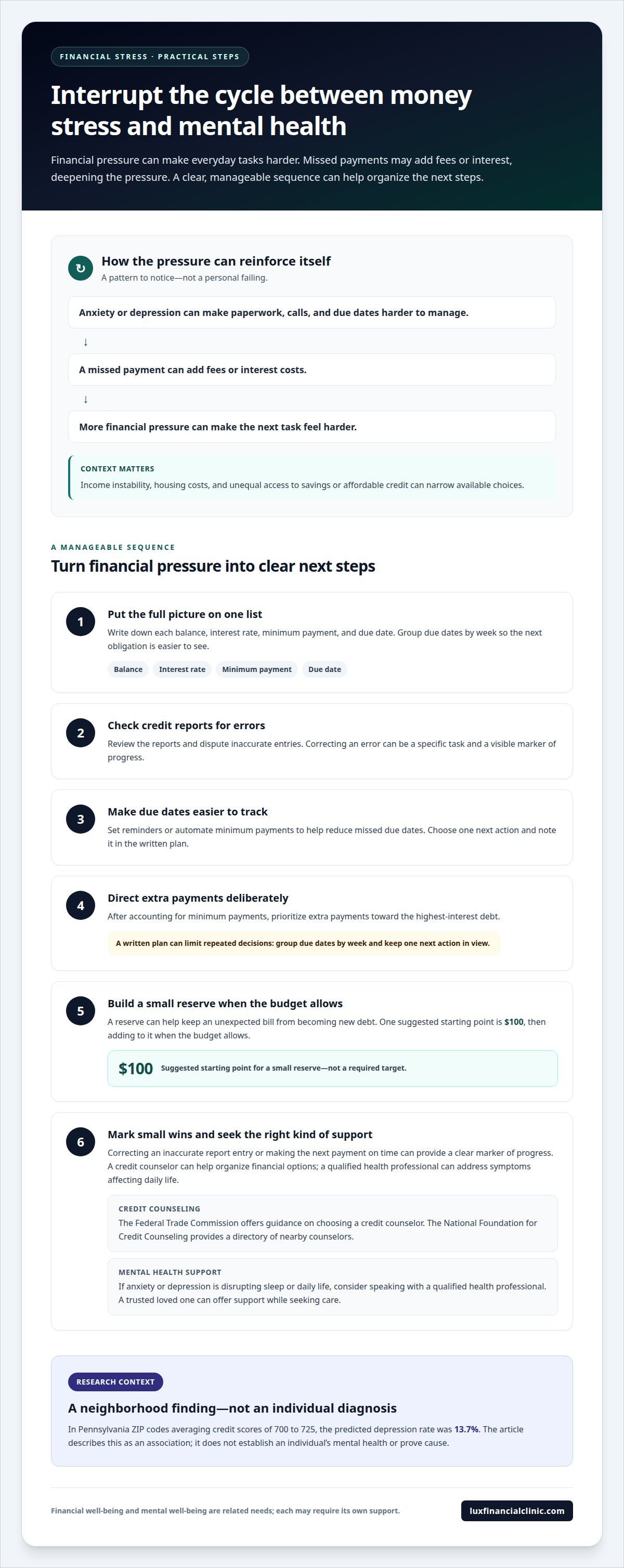
Financial strain and mental health can reinforce each other. Anxiety or depression may make paperwork, calls, and due dates harder to manage. A missed payment can add fees or interest costs, deepening pressure. Income instability and housing costs can limit available choices. Unequal access to savings or affordable credit can narrow them further. A reduced work schedule can make income and payment timing less predictable. In Pennsylvania ZIP codes averaging 700 to 725, the predicted depression rate was 13.7%. This neighborhood finding describes an association, not an individual’s mental health or its cause.
To improve a credit score and reduce financial stress, list each balance, interest rate, minimum payment, and due date. Review credit reports and dispute errors. Set reminders or automate minimum payments to reduce missed due dates. Prioritize extra payments toward the highest-interest debt. A small reserve can keep an unexpected bill from becoming new debt. One suggested starting point is saving $100, then adding when the budget allows. A written plan can also limit repeated decisions: group due dates by week and note one next action. Consistent habits support gradual rebuilding.
Small wins can make a difficult situation feel more manageable. Correcting an inaccurate report entry or making the next payment on time gives you a clear task and a marker of progress. If debt feels unmanageable on your own, the Federal Trade Commission offers guidance on choosing a credit counselor. The National Foundation for Credit Counseling provides a directory of nearby counselors. A trusted loved one can offer support as you seek mental health care. A counselor can help organize financial options, while a clinician can address symptoms affecting daily life.
Policy support matters because personal budgeting cannot resolve every barrier. Counseling, creditor hardship arrangements, and coordinated financial and mental health support can address pressure before it compounds. You can contact creditors to ask whether a modified payment plan is available. The U.S. Trustee Program lists agencies approved to provide pre-bankruptcy counseling, which may be relevant if you’re considering bankruptcy. Seeking support early can help clarify your options and protect your emotional well-being.
Stress-related spending, subscriptions, and gambling
Stress can shape spending in ways that make monthly expenses harder to manage. Someone worried about bills might buy takeout for brief comfort, then use a credit card for groceries. A forgotten streaming subscription can keep charging while essential costs are due. These choices may bring temporary relief, but recurring charges and new balances can add pressure. Track purchases for a short period to see whether spending follows particular feelings, such as loneliness after work or worry before payday.
Gambling can also become a risky response to financial strain when someone hopes to recover losses quickly. A person facing overdue payments, for example, might keep betting after an initial loss and increase the amount owed. The effects can reach beyond account balances, especially if gambling becomes secretive or interferes with household expenses. Setting a clear boundary, such as not gambling with borrowed money, can help interrupt the pattern. If stopping feels difficult, seeking specialized support is a practical step, not a personal failing.
How can bad credit affect relationships and family life? Worry about scores, declined applications, or shared bills may lead someone to hide purchases or avoid conversations. A partner may interpret silence as a lack of trust, while the person under pressure may feel judged. Agreeing on a calm time to review shared expenses, for example, can replace blame with a clearer discussion of priorities and responsibilities.
Try separating necessary expenses from optional subscriptions, then identify one recurring charge to cancel or reconsider. Before an unplanned purchase, pause and ask whether it supports a real need or eases a difficult feeling only briefly. If financial pressure is straining your household and credit concerns need a clearer plan, explore support for credit recovery. A thoughtful review of the underlying credit issues can help make the next financial conversation more specific and constructive.
Lux Financial Clinic
Lux Financial Clinic can help bring structure to credit concerns that are adding pressure to daily life. Its credit repair services use structured dispute protocols to address inaccurate negative items, including collections, charge-offs, and late payments. This may be a useful next step when sorting through credit report concerns feels difficult to do alone.
The Credit Repair - Basic/Repair Package and Credit Repair - Comprehensive/Build Package provide different levels of support. The focus is on reviewing credit issues and addressing inaccuracies, not promising a particular score or result. If you’re unsure where to begin, a Financial Diagnostic Consultation can help clarify which financial concerns to address first.
Contact Lux Financial Clinic to discuss your financial situation and possible next steps.
Choose a Steadier Next Step
The emotional toll of bad credit can make financial decisions feel heavier than they need to. Start by choosing one clear priority, such as understanding inaccurate credit entries or organizing your finances. You don’t have to solve every concern at once. A focused next step can help restore a sense of direction.
Lux Financial Clinic offers the Credit Repair - Basic/Repair Package and Credit Repair - Comprehensive/Build Package for credit repair, as well as Business Funding Consulting for business funding needs. These services address different financial goals, so consider which concern is most pressing for you.
If you’re ready to discuss a practical next step, contact Lux Financial Clinic. A thoughtful conversation can help you approach your financial goals with greater clarity and move forward at a pace that feels manageable.
Frequently Asked Questions
How does financial worry, particularly related to managing debt, affect mental health?
Ongoing money worries can occupy your attention and make ordinary decisions feel demanding. You might postpone opening mail, avoid checking your bank balance, or struggle to plan a family activity. These reactions can increase isolation and allow practical tasks to pile up. Try setting a specific time and place for financial paperwork, then pause when you’re done. Containing the task can keep it from taking over the day.
What Is Debt Stress Syndrome?
“Debt Stress Syndrome” is an informal phrase for emotional and behavioral strain linked to debt, not a diagnosis. It may describe patterns such as repeatedly avoiding account information, feeling overwhelmed by repayment decisions, or arguing about household spending. The phrase doesn’t explain the cause of a person’s symptoms. A health professional can assess mental health concerns, while a financial counselor can help clarify debt-management options.
How does bad credit affect mental health and emotional well-being?
Bad credit can undermine your sense of security about future choices, especially when an application is declined or a planned purchase becomes harder to arrange. The emotional toll of bad credit may include withdrawing from conversations about goals or assuming others will judge your financial history. Separating a credit record from personal identity can help: it reflects reported financial activity, not your character, relationships, or potential.
What emotions do people commonly experience because of bad credit?
Credit difficulties can bring embarrassment, frustration, regret, or a sense of losing control when plans are disrupted. Irritability may also surface in conversations about shared expenses, even when loved ones aren’t responsible for the problem. Naming the feeling can make the conversation more constructive. For example, saying, “I feel uneasy discussing a new application,” gives family members context without assigning blame.
Can bad credit cause anxiety, depression, or sleep problems?
Financial pressure can contribute to anxiety, low mood, and disrupted sleep, but these symptoms can have other causes too. A credit score alone can’t diagnose a mental health condition. If worry is making it hard to function at work, maintain routines, or rest, discuss the symptoms with a qualified health professional. Keeping notes about when symptoms arise can help make that conversation more specific.
How can people cope with the emotional toll of bad credit?
Choose support that fits the difficulty: a trusted person can help reduce isolation, a financial counselor can clarify debt options, and a health professional can address emotional symptoms. Before a difficult conversation with a creditor, write down the question you need answered and the outcome you’re requesting. Preparing this way can make the call feel more manageable and keep the discussion focused on practical choices.


