
Debt shame turns a financial difficulty into a judgment about who you are; guilt focuses on a behavior you may want to change. If you’re feeling ashamed of my credit score, remember that a credit score reflects information in your credit file, not your worth as a person. One missed payment is unlikely to have a significantly detrimental impact on your score, while five or six missed payments are highly likely to have lasting consequences.
It’s understandable to feel anxious or exposed when debt or missed payments seem to tell a story about you. They don’t. Financial setbacks can happen for many reasons, and shame can make it harder to talk about them or take the first step.
This guide explains what debt shame is, how it differs from guilt, and how to find support without judgment. You’ll also find practical ways to make achievable progress and understand how missed payments may affect your credit file.
The goal isn’t to solve everything at once. It’s to replace self-criticism with clarity, then choose one manageable next step.
Key Takeaways
- Separate financial challenges from your identity, and consider a supportive conversation as a first step toward easing the pressure.
- Recognize how shame can keep you from seeking help, then choose a trusted person or professional to speak with.
- Turn a broad money concern into a small, specific goal with a realistic target date.
- Learn how missed payments can affect your credit file and which patterns may call for closer attention.
1. Finding judgment-free emotional and financial support
Debt shame can turn a credit score into a verdict on your character. Your financial situation reflects circumstances, choices, and events, not your worth. Job loss, medical bills, separation, or disrupted income can affect payment habits. Naming the pressure clearly can make the next step feel more manageable.
Try telling one trusted person what you’re facing and what support would help. For example, you might say, “I’m stressed about missed payments. Could you listen while I work out my next step?” A calm conversation can ease isolation and help you feel ready to act. You don’t have to share every detail.
To check your credit score, review a score disclosure from a credit reporting company or a financial account that provides one. In the United States, you can get free credit reports from each of the three nationwide credit reporting companies every 12 months. Reviewing a report can help you understand the information behind your score.
For free or low-cost nonprofit credit counseling, look for nonprofit credit counseling agencies in your community. Ask about fees, what a session covers, and whether a counselor can help organize your debts. A clear conversation about costs and services can help you decide whether that support fits your needs.
Financial stress can also affect mood, sleep, and daily routines. If spending feels difficult to control and leads to shame or other negative outcomes, consider speaking with a therapist. A therapist can help address emotional patterns, while a financial counselor can help you focus on practical money steps. These roles can complement each other.
Debt can feel more overwhelming when credit reports, scores, and payment records seem unfamiliar. Take one learning step: ask a counselor to explain a term or account entry in plain language. Better understanding can replace uncertainty with specific questions and help you discuss your circumstances without treating debt as a personal failing.
2. What is debt shame?
Debt shame is the belief that financial difficulty says something bad about your identity. A credit score or overdue bill becomes, in your mind, proof that you’re irresponsible or incapable. Guilt is different: it focuses on a specific action, such as spending more than your budget allowed. Guilt can guide a change; shame can make you feel fundamentally flawed.
That distinction matters because shame can discourage you from seeking practical help. Someone worried about a credit card balance might avoid opening statements, responding to a creditor, or discussing repayment options. Avoidance can leave account details unclear and make the situation feel harder to address. A useful first step is to name the behavior without labeling yourself: “I missed a payment,” rather than “I’m hopeless with money.”
Debt-related anxiety may show up as worry before checking a balance, difficulty concentrating on bills, or dread when the phone rings. Hopelessness can make any next step seem pointless, even when one account or spending habit could be addressed separately. If money worries affect daily life, write down the specific concern, such as a late bill or rising card balance. A defined problem is easier to discuss than a sweeping judgment about your future.
Debt shaming comes from outside the person: blaming or mocking someone for borrowing, missed payments, or spending. A relative’s comment about a purchase, for example, may intensify embarrassment instead of helping clarify what happened. Shame turns that criticism inward. Neither response explains the full financial situation, which may include disrupted income, an emergency, or unfamiliar credit terms.
Recovery involves separating emotional pain from the practical task. Choose one action, such as opening a statement or listing which payment needs attention, and describe it neutrally. If spending feels difficult to control and creates ongoing distress, consider discussing that pattern with a therapist. The aim isn’t to dismiss consequences; it’s to address them without treating a financial setback as your identity.
3. Making progress with small, achievable steps
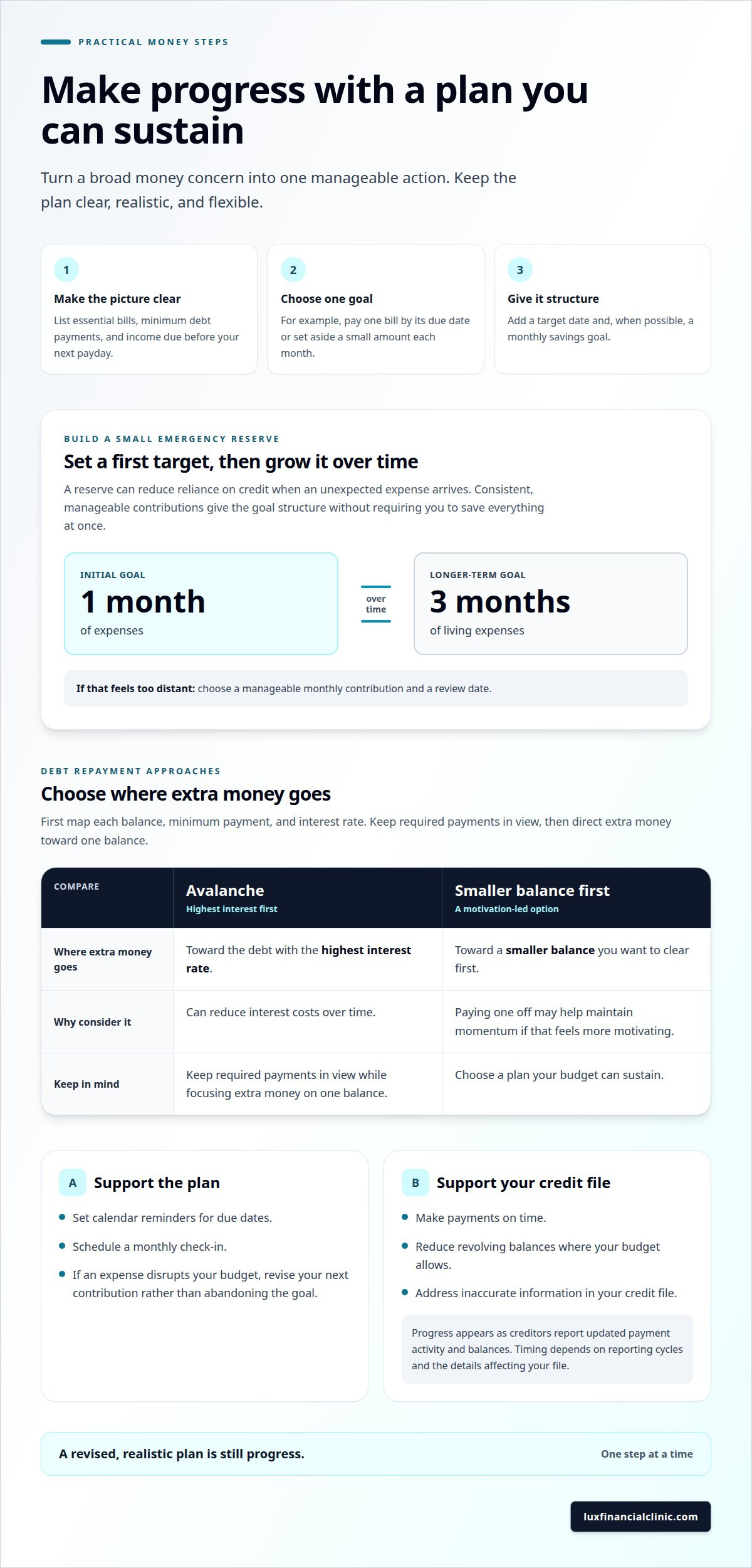
A useful plan turns a broad concern into one action you can repeat. List essential bills, minimum debt payments, and income due before your next payday. Then choose a specific goal, such as paying one bill by its due date or setting aside a small amount each month. Add a target date and monthly savings goal when possible. A financial counselor can help tailor these steps to your available income.
Start with a small emergency reserve to reduce reliance on credit when an unexpected expense arrives. One initial goal is to save an amount equal to one month of expenses. Over time, work toward three months of living expenses. If that feels too distant, set a manageable monthly contribution and a review date. Consistency gives the goal structure without requiring you to save everything at once.
For debt repayment, first map each balance, minimum payment, and interest rate. Keep required payments in view, then direct extra money toward one balance. The avalanche approach targets the debt with the highest interest first, which can reduce interest costs over time. If a smaller balance feels more motivating, paying it off first may help you maintain momentum. Either way, avoid a plan your budget can’t sustain.
What steps can improve a low credit score, and how long do they take? Make payments on time, reduce revolving balances where your budget allows, and address inaccurate information in your credit file. Progress appears as creditors report updated payment activity and balances; timing depends on reporting cycles and the details affecting your file.
Make the plan visible with a calendar reminder for each due date and a monthly check-in. If an expense disrupts your budget, revise your next contribution rather than abandoning the goal. For example, you might briefly pause extra debt payments while covering an urgent essential bill. Small adjustments keep the plan realistic, while repeated, manageable actions can make financial progress feel less daunting.
4. Missed payments and credit file consequences
A missed payment can appear in your payment history and affect how lenders assess your credit profile. One missed payment is unlikely to have a significantly detrimental impact on a credit score. Five or six missed payments are highly likely to have lasting consequences. The effect depends on the broader file, including other payment activity and account balances.
A late credit card payment may also lead to fees or added interest under the account terms. If you can’t cover every bill, identify essential obligations and contact creditors to discuss available payment options. Keeping communication open can help you understand the account’s status. Don’t ignore notices, since that leaves you with less clarity about what may happen next.
How long do late payments, collections, bankruptcies, and other negative items stay on a credit report? There isn’t one shared retention period: the time varies by item type and applicable reporting rules. Review the category and dates shown for each entry, since those details help explain its reporting timeline.
A low score can influence a lender’s assessment of an application and the interest rate offered. Landlords may consider credit information when reviewing rental applications. Insurance use of credit information varies, and employment screening depends on the position and applicable rules. These decisions involve more than a score alone, so understand what information is being considered.
To make a repayment plan, list each debt, its minimum payment, and its interest rate. The avalanche method directs extra money toward the highest-interest balance; the snowball method starts with the smallest balance. Both approaches require keeping up with minimum payments where possible. A public record, such as a bankruptcy, differs from a missed payment and may affect the report differently.
Assess each item separately using its category and the dates shown for that entry.
Lux Financial Clinic
Lux Financial Clinic can help turn credit concerns into a clearer, structured plan. If your credit file includes inaccurate negative items, its credit repair service uses structured dispute protocols to address them. The Basic/Repair Package and Comprehensive/Build Package offer options for credit restoration support.
A Financial Diagnostic Consultation can also help clarify your broader financial picture and identify practical next steps. It may be useful if you’re unsure where to begin, feel overwhelmed by your credit file, or want guidance that treats your circumstances with care. Credit repair addresses credit-file concerns; it isn’t debt settlement, and outcomes aren’t guaranteed.
You can contact Lux Financial Clinic to discuss the support that may fit your situation.
Choose a steady next step
Feeling ashamed of your credit score can make the next decision feel heavier than it needs to be. You don’t have to resolve every financial concern at once. Begin by choosing the kind of support that matches the issue you want to address, then bring your questions into a clear, practical conversation.
Lux Financial Clinic offers Credit Repair - Basic/Repair Package and Credit Repair - Comprehensive/Build Package for credit restoration support. It also offers Business Funding Consulting for business funding needs. These services address different goals, so the most useful starting point depends on what you want to work through.
Progress is built through informed decisions, not self-judgment. A calm conversation can help you consider your options and identify a manageable way forward. Contact Lux Financial Clinic to discuss your financial goals and the support you’re seeking.
Your credit history is one part of your financial life, not a measure of your character. Give yourself permission to take the next step with clarity and patience.
Frequently Asked Questions
What is debt shame?
Debt shame is the feeling that owing money makes you personally unworthy or irresponsible. For example, someone may avoid discussing a past-due account because they fear others will judge their character. The debt is a financial circumstance; the harsh conclusion about personal value is a separate reaction. Naming that difference can help you describe the issue more accurately and decide what kind of support would be useful.
Is it normal to feel ashamed or embarrassed about a low credit score?
Feeling embarrassed about a low score is a common emotional response, but it isn’t proof that you’ve failed. A score summarizes information in a credit file, not your full financial life or character. If your private thought is, “I’m feeling ashamed of my credit score,” try telling one trusted person what support would help, such as listening without criticism or helping you organize questions.
How can I stop feeling anxious or ashamed about my credit score?
You may not be able to switch off anxiety immediately, but you can make the concern more specific. If you’re thinking, “I’m feeling ashamed of my credit score,” write down what worries you most, such as a balance, an unfamiliar account, or an upcoming payment. Then choose one manageable action. If distress affects daily life or spending feels difficult to control, consider talking with a therapist or financial counselor.
How much does paying bills on time and reducing credit utilization affect a credit score?
On-time payment history and the amount of available revolving credit you use can influence a score, but their exact effects vary by scoring model and credit file. For example, carrying a high balance on a credit card may affect your profile differently from using a small share of its available limit. Keep payments current where possible, and avoid taking on unaffordable debt to change utilization.
Can negative credit report information be disputed or removed, and how?
Yes, you can dispute information you believe is inaccurate or incomplete. Identify the specific account entry, explain what appears wrong, and gather documents that support your position, such as a payment confirmation or account statement. Submit the dispute to the credit bureau reporting the item or the company that supplied it. Accurate negative information isn’t removed simply because it is upsetting; dispute errors, not valid history.


