
The first steps to building credit history are simple: open an account that reports to the credit bureaus, use it for purchases you can afford, and pay on time. With a secured credit card, your deposit typically determines the credit limit. Keep the balance low and pay consistently to start building a record of responsible credit use.
If you have little or no credit, it’s natural to wonder which actions actually count. Cash and debit purchases generally don’t create the same reported payment history, so choose a credit account carefully. A steady routine can make the process manageable without taking on debt you can’t comfortably repay.
This guide explains what credit history records, how secured cards work, and how to manage credit utilization. You’ll also find practical habits for making payments, reviewing your credit reports, and building a foundation at a measured pace.
Key Takeaways
- Before choosing a secured card, find out whether the issuer reports account activity to the credit bureaus.
- Use the deposit-based limit thoughtfully, making manageable purchases rather than treating the full limit as a spending target.
- Keep your balance below 30% of your credit limit to help manage credit utilization.
- Build steady habits by paying on time and reviewing your credit reports for errors.
Secured credit cards
In the United States, people can begin building credit at age 18 or younger. A younger person may start as an authorized user if the creditor reports account activity.
- Choose an account that reports. If you have no credit history, consider a secured credit card. You provide a deposit that typically determines the card’s credit limit. Before applying, ask whether the issuer reports payment activity to the credit bureaus. Use the card for a manageable purchase and pay on time. These are practical first steps to building credit history through positive payment activity.
- Compare card types thoughtfully. Student credit cards may suit students who meet the issuer’s requirements. Retail cards may have lower limits, but review their terms and reporting practices before applying. A secured card may be more accessible, though your deposit remains tied up while the account is open. Compare terms before choosing among these first steps to building credit history.
- Consider a savings- or CD-secured loan. This loan is backed by money in a savings account or certificate of deposit. The lender holds the funds while you make fixed monthly payments, which are reported to the credit bureaus. After you complete the payments, the funds are released. Ask whether the lender reports payment activity before committing.
- Review your reports for accuracy. The Federal Trade Commission says consumers can get a free credit report once a year. Review reports from each nationwide credit bureau for unfamiliar accounts or incorrect details. Dispute inaccurate, incomplete, or outdated information in writing with the bureaus. Keep copies of your letters and supporting documents.
- Understand the timeline of negative marks. Bankruptcies can remain on a U.S. credit report for 10 years, according to the Federal Trade Commission. Check that report entries are accurate, and address errors through a written dispute. A secured card supports new positive history, but it doesn’t erase accurate past information.
What is Credit History?
Your credit history records how you’ve managed borrowing, including payment performance, balances, account age, credit types, and applications. The three nationwide credit bureaus maintain credit reports, while FICO and VantageScore are scoring models that use credit information.
- Review what your file records. Check for accounts, collections, defaults, and other reported details. A credit limit shows how much revolving credit is available, while your balance affects utilization. Accurate history helps lenders assess how you’ve handled payment obligations over time.
- Understand credit-builder loans before applying. The lender typically places the loan funds in a savings account while you make scheduled payments. These loans are usually repaid over six to 24 months. After completing payments, you receive the funds and any interest earned. Confirm that payments are reported to credit bureaus.
- Keep student loans current. Paying student loans as agreed can contribute to your credit history. Review the payment schedule and include each due date in your budget. If you have several loans, track each account separately so no payment slips through unnoticed.
- Consider authorized-user status carefully. Can becoming an authorized user help build credit? Yes, if the creditor reports authorized users and the primary account has a positive payment history. Ask how the account is managed, since missed payments or high balances can affect your file, too.
- Check reporting practices on auto loans. Buy-here, pay-here dealers often report negative information, such as late payments, without reporting positive payment activity. Before relying on an auto loan to build history, understand what the lender reports and whether on-time payments appear.
If inaccurate or negative entries complicate your next steps, credit repair support can help you review the information and address errors.
Credit utilization
Credit utilization compares card balances with available credit. Among the first steps to building credit history, managing this ratio helps keep borrowing deliberate and affordable.
Manage Credit Utilization
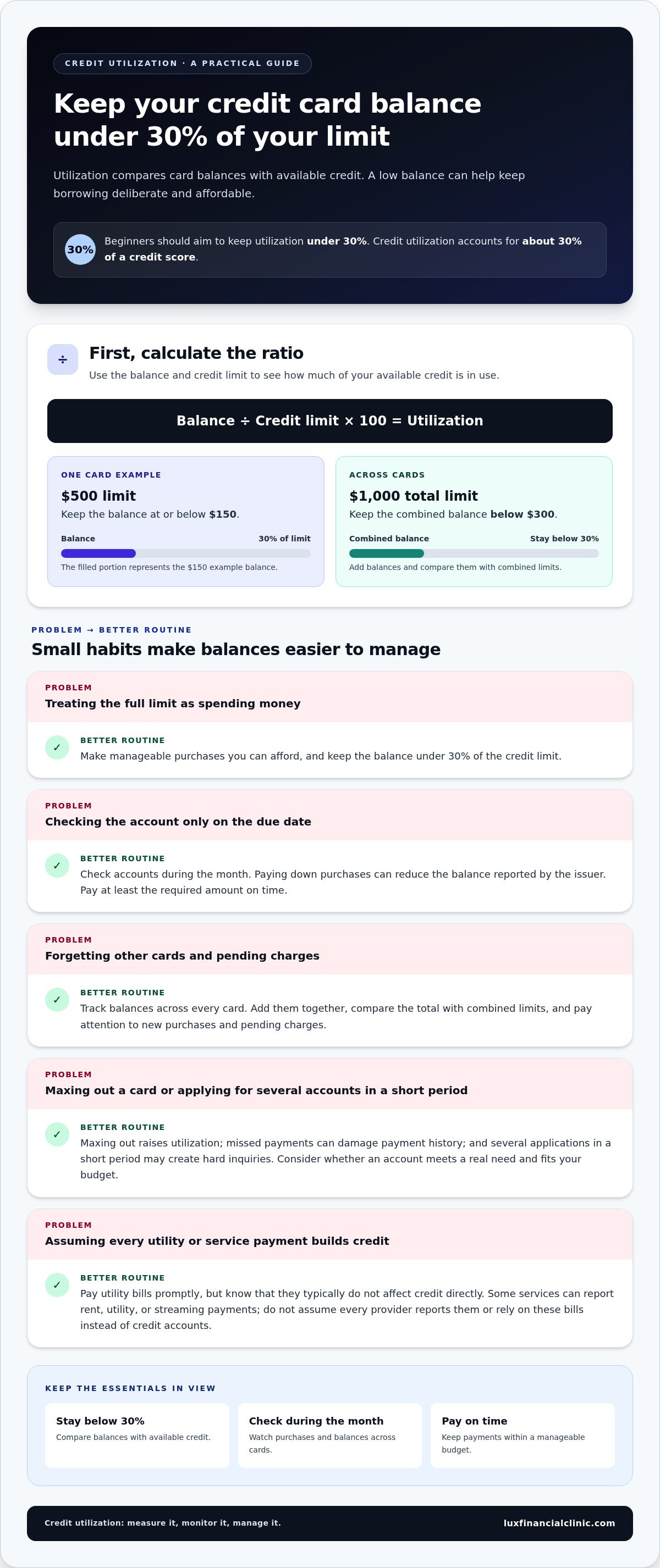
Calculate your ratio before making purchases. Divide your balance by the credit limit, then multiply by 100. Beginners should aim to keep utilization under 30%. For example, with a $500 limit, keep the balance at or below $150. Credit utilization accounts for about 30% of a credit score, so avoid treating the entire limit as spending money.
Keep Credit Utilization Low
Track balances across every card. Add your balances and compare the total with your combined limits. With a $1,000 total limit, keep the balance below $300. Pay attention to new purchases and pending charges, too. A low balance supports a manageable credit profile without requiring you to stop using credit altogether.
- Make payments before balances climb. Check accounts during the month, not just on due dates. Paying down purchases can reduce the balance reported by the issuer. These first steps to building credit history work best when you stay within your budget and pay at least the required amount on time.
- Pay utility bills promptly. Put utility accounts in your name and include their due dates in your payment routine. Utility bills typically don’t affect credit directly, though some services can report rent, utility, or streaming payments. Don’t assume every provider reports them, or rely on these bills instead of credit accounts.
- Avoid habits that can weaken your profile. Maxing out a card raises utilization, while missed payments can damage your payment history. Several credit applications in a short period may also create hard inquiries. Before applying, consider whether the account meets a real need and whether its payments fit your budget.
Building credit with consistent habits
Build repeatable habits rather than occasional bursts of activity. A simple routine for payments, balances, and credit reports helps establish responsible credit use over time.
- Set a payment system you can maintain. Add every card and loan due date to one calendar, then schedule reminders several days ahead. Payment history accounts for about 35% of a credit score, so consistency matters. If a bill becomes difficult to pay, contact the creditor promptly and explain the situation.
- Pay the statement balance each month when possible. This can help you avoid interest charges and keep debt manageable. If you can’t pay the full balance, make at least the required payment on time and plan how to reduce what remains. Don’t treat available credit as money in your budget.
- Review your credit report regularly. Compare account names, balances, and payment records across reports from the credit bureaus. Dispute inaccurate, incomplete, or outdated information in writing, and keep copies of your letters. Check billing statements, too, and notify the card company in writing if you find an error.
- Give your history time to develop. It typically takes about six months to generate a credit score. Review progress over six to 12 months, looking for accurate reporting and steady account management rather than expecting instant change. Keep credit utilization controlled and avoid applying for accounts without a clear reason.
- Preserve useful older accounts. Keeping an older credit card open can help maintain the length of your history, particularly when it has no annual fee. Continue monitoring its statements and protect account access. A forgotten card can still cause problems if charges or errors go unnoticed.
If report errors or negative entries make it difficult to organize your next steps, explore credit report support for a clearer path forward.
Lux Financial Clinic: Credit Repair - Basic/Repair Package
Lux Financial Clinic’s Credit Repair - Basic/Repair Package is for people whose credit reports contain inaccurate negative items. Its structured dispute protocols address items such as collections, charge-offs, and late payments. Reviewing your reports can help you identify information that may need attention before choosing a next step.
If you need a broader credit restoration approach, Lux Financial Clinic also offers the Credit Repair - Comprehensive/Build Package. These services focus on credit report issues, while on-time payments and low balances remain part of your ongoing credit-building plan. Credit repair does not replace responsible account management or promise a particular score.
Contact Lux Financial Clinic to discuss your credit repair needs.
Make Your Next Credit Decision Deliberate
The first steps to building credit history can shape how you approach future borrowing. Before opening another account, consider what you need it to accomplish, how its payments fit your budget, and whether it supports your longer-term plans. A thoughtful choice is more useful than opening credit simply to add another account.
Focus on a routine you can sustain. Review your progress, adjust spending when circumstances change, and give accurate information time to reflect your responsible use. If your credit reports contain negative items that seem inaccurate, incomplete, or outdated, professional guidance can help you understand how to address them. Credit repair doesn’t replace consistent account management, but it can provide a structured way to review report concerns.
For support as you consider your next move, contact Lux Financial Clinic. Continue with patience and clear decisions; each responsible step can help strengthen your financial foundation.
Frequently Asked Questions
How Long Does It Take?
A credit score typically takes about six months of reported activity to generate. Building a stronger profile takes longer because lenders assess patterns across accounts and over time. In some cases, developing a great score can take seven to 10 years. Keep older accounts in good standing and review reports periodically to see whether activity is appearing accurately.
How are credit scores used?
Lenders use credit scores to help assess credit applications and set borrowing terms, including interest rates. A score may also be considered when deciding about housing or service deposits. For example, a prospective borrower may be evaluated based on income, existing obligations, and application details as well. Scores inform decisions, but they are only one part of a broader review.
Why is Building Credit Important?
A positive credit record can make it easier to qualify for loans, credit cards, and housing, and may help you access lower interest rates. It can also make an application review smoother with a landlord or service provider. Building history gives future decision-makers a record of how you’ve handled credit, rather than leaving them with little information to assess.
How do secured credit cards work, and what deposit do they require?
A secured card requires a deposit, which typically determines its credit limit and is generally refundable under the account terms. The deposit amount depends on the issuer’s requirements; an example range is $300 to $3,000. Before applying, confirm how the deposit is held, what conditions govern its return, and whether the issuer reports account activity.
Do credit-builder loans help establish credit, and what do they cost?
A savings- or CD-secured loan can help establish credit if the lender reports your payments to the credit bureaus. The lender typically holds the borrowed funds in savings while you make scheduled payments, then releases the funds after repayment. Total cost depends on the lender’s interest rate and any fees. Review those terms alongside the payment schedule before deciding whether the loan fits your budget.
How do rent, utility, and phone payments get reported to credit bureaus?
Routine rent and utility payments don’t necessarily appear on credit reports. Some reporting services can share rent or utility payment information with credit bureaus, while certain services may include streaming subscriptions. Don’t assume phone bills automatically build credit. Check whether the payment arrangement reports activity and which bureaus receive it.


