
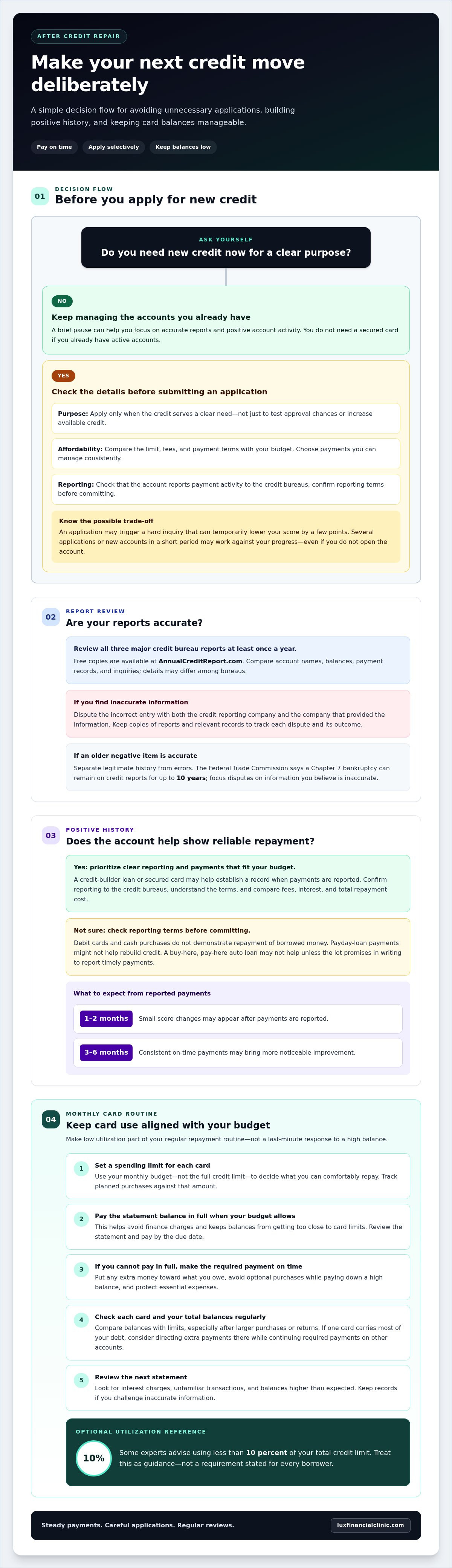
Credit repair is a reset, not the finish line. If you’re deciding what to do after credit repair is done, protect your progress by paying every bill on time, limiting new credit applications, and keeping card balances low. Some experts advise using less than 10 percent of your total credit limit.
It’s natural to hope that correcting errors will resolve every credit concern quickly. After credit repair, consistent habits help build a positive history, while frequent applications and high balances can undermine your progress.
This guide covers how to manage utilization, choose credit-building steps carefully, and monitor your reports over time. You’ll have a practical routine for maintaining progress without taking on credit you don’t need.
Key Takeaways
- Be selective about new credit applications; opening several accounts in a short period can work against your progress.
- Build positive history through consistent, on-time payments and credit accounts that report your payment activity.
- Review your credit reports regularly and address inaccurate information while keeping older negative items in perspective. According to the Federal Trade Commission, a Chapter 7 bankruptcy can remain on credit reports for up to 10 years.
- Manage card balances deliberately and pay in full each month when possible to help avoid finance charges and keep balances from nearing their limits.
Avoiding unnecessary credit applications
After credit repair, make your next credit decisions deliberately. A brief pause can help you focus on accurate reports and positive account activity.
-
Limit New Credit Applications
Apply for a credit card or loan only when it serves a clear purpose. An application may trigger a hard inquiry, which can temporarily lower your score by a few points. Several applications or new accounts in a short period may also work against your progress. Before applying, compare the credit limit, fees, and payment terms with your budget.
A secured card may help build a positive history, but you don’t need one if you already have active accounts. Avoid applying for several cards just to increase your available credit. Focus on accounts you can manage consistently.
- Before applying, ask yourself whether you need new credit now or can continue managing your existing accounts. An application can affect your report even if you don’t open the account, so don’t submit several applications just to test your approval chances. If a lender’s decision depends on your credit profile, review your reports and address errors first.
-
Check Free Credit Reports
Review your reports from major credit bureaus at AnnualCreditReport.com. Consumers can get free copies and are advised to review all reports at least once a year. Compare account names, balances, payment records, and inquiries, since details may differ among bureaus.
What if inaccurate information remains after credit repair? Dispute the incorrect entry with the credit reporting company and the company that provided the information. Keep copies of your report and relevant records so you can track each dispute and its outcome.
- Use report reviews to distinguish errors from accurate older history. In the United States, a Chapter 7 bankruptcy can remain on credit reports for up to 10 years, according to the Federal Trade Commission. A legitimate item may remain even after other corrections, so focus disputes on information you believe is inaccurate.
Building a positive credit history over time
Choose credit-building habits that show a record of reliable payments. Focus on accounts that report activity and fit your budget.
-
Review Credit-Building Methods
Use a credit product only if its payments can help establish credit history. Debit cards and cash purchases don’t demonstrate repayment of borrowed money, while on-time payday loan payments might not help rebuild your credit. A buy-here, pay-here auto loan may also fail to help unless the lot promises in writing to report timely payments. Check reporting terms before committing.
-
Use a Credit-Builder Loan
Consider a credit-builder loan if the regular payments fit your monthly budget. With a share-secured loan, funds are held in a savings account while you make payments, and the money becomes available when the loan is complete. Confirm that payments are reported to credit bureaus.
- Choose a secured card or small loan that reports to all three credit bureaus. What are the best credit cards or credit-builder loans for rebuilding credit? Look for clear reporting, manageable payments, and terms you understand, rather than a particular brand. A secured card can help establish a credit record, though fees and interest rates may be high.
- Compare the costs before opening an account. A credit-builder loan’s cost depends on its interest and fees, so review the total repayment amount. Small score changes may appear within a month or two after reported payments; consistent on-time payments may bring more noticeable improvement within three to six months.
Build these habits steadily, and use credit history guidance when you need help reviewing inaccurate information or planning your next steps.
Keeping credit-card utilization low
If you’re deciding what to do after credit repair is done, make low utilization part of your monthly repayment routine, not a last-minute response to a high balance. A steady process keeps card use aligned with your budget.
- Set a spending limit for each card before making purchases. Use your monthly budget, not the full credit limit, to decide what you can comfortably repay. For example, reserve a card for planned expenses and track purchases against that amount. This helps prevent new charges from accumulating beyond what you can repay.
- Pay the statement balance in full each month when your budget allows. This helps you avoid finance charges and keep your credit use from getting too close to the limit. Set a reminder around your due date, then review the statement for purchases you recognize and can afford.
- If you can’t pay the full balance, make at least the required payment by its due date and put any extra money toward what you owe. Avoid optional purchases while paying down a high balance. A clear repayment plan can gradually reduce utilization without relying on new credit or disrupting essential expenses.
- Check balances and available credit regularly, especially after larger purchases or returns. Compare each card’s balance with its limit, then review your total balances across accounts. If one card carries most of your debt, consider directing extra payments there while continuing required payments on your other accounts.
- Review your next statement after changing your payment routine. Look for interest charges, unfamiliar transactions, and balances that remain higher than expected. If inaccurate negative information appears on your report, get help reviewing the issue and keep records of what you’re challenging. Regular review is an important part of what to do after credit repair is done.
Maintaining low credit utilization
Make low utilization part of your monthly repayment routine, not a last-minute response to a high balance. A steady process helps keep card use aligned with your budget.
- Set a spending limit for each card before making purchases. Use your monthly budget, not the full credit limit, to decide what you can comfortably repay. For example, reserve a card for planned expenses and track purchases against that amount. This helps prevent new charges from accumulating beyond what you can repay.
- Pay the statement balance in full each month when your budget allows. This helps you avoid finance charges and keep your credit use from getting too close to the limit. Set a payment reminder around your due date, then review the statement for purchases you recognize and can afford.
- If you can’t pay the full balance, make at least the required payment by its due date and put any extra money toward what you owe. Avoid optional purchases while paying down a high balance. A clear repayment plan can gradually reduce utilization without relying on new credit or disrupting essential expenses.
- Check balances and available credit regularly, especially after larger purchases or returns. Compare each card’s balance with its limit, then review your total balances across accounts. If one card carries most of your debt, consider directing extra payments there while continuing required payments on your other accounts.
- Review the next statement after making changes to your payment routine. Look for interest charges, unfamiliar transactions, and balances that remain higher than expected. If inaccurate negative information appears on your credit report, get help reviewing credit-report concerns and keep records of the information you’re challenging.
Lux Financial Clinic: Credit Repair - Basic/Repair Package
Lux Financial Clinic offers its Credit Repair - Basic/Repair Package for people who need help addressing inaccurate negative items on their credit reports. Its structured dispute protocols focus on items such as collections, charge-offs, and late payments. This may be a useful next step if you’ve reviewed your reports and still see information you believe is inaccurate.
Credit repair addresses reporting inaccuracies; it doesn’t erase legitimate negative events or replace the ongoing habits covered above. If you’re unsure whether an item is inaccurate or how to proceed with a dispute, a Financial Diagnostic Consultation can help clarify your credit situation. For more extensive support, Lux Financial Clinic also offers its Credit Repair - Comprehensive/Build Package.
Contact Lux Financial Clinic to discuss which credit repair option fits your situation.
Make Your Next Credit Decision With Intention
Knowing what to do after credit repair is done means treating your credit profile as a guide, not simply a score to chase. Let your next financial decision reflect your priorities: maintaining stability, preparing for a future goal, or exploring business options. A deliberate plan can help you focus on habits that support your broader financial direction.
When inaccurate information on your report still needs attention, Lux Financial Clinic offers its Credit Repair - Basic/Repair Package and Credit Repair - Comprehensive/Build Package. For business owners considering funding options, the firm also provides Business Funding Consulting. These services address different needs, so the right next step depends on the question you’re trying to resolve.
If you’d like to discuss a credit repair or business funding need, contact Lux Financial Clinic. Keep moving forward with patience and clear priorities; each thoughtful decision can support a stronger foundation.
Frequently Asked Questions
How can I verify that credit repair changes appear on all three credit reports?
Get separate reports from Equifax, TransUnion, and the third nationwide credit bureau, then compare them with your correction records. Check the account or entry, its current status, and whether inaccurate details remain. An update from one bureau doesn’t confirm that the others have changed. Record when you reviewed each report and follow up on differences with the relevant bureau and information provider.
How do I build credit after credit repair is complete?
Use an account in your name consistently and keep records of payments and statements. For example, choose a recurring expense that fits your budget, pay it with an existing card, and set a reminder before the due date. Review the next statement for accurate activity and payment status. This helps you confirm that your account is being managed as intended.
How can I protect my credit from identity theft after credit repair?
Protect your reports by placing a credit freeze with the three nationwide credit bureaus, then secure the email account connected to your finances with a unique password. Turn on available account alerts and review statements for unfamiliar purchases or inquiries. If you spot suspicious activity, promptly contact the card issuer or lender, change affected login credentials, and keep a record of your actions.
How can I monitor my credit scores and reports for free?
You can get free credit reports through AnnualCreditReport.com and review reports from all three nationwide credit bureaus. For a free score, see whether your bank or credit card issuer provides access through its account dashboard. A score and a report are different: the report shows account information, while a score summarizes information using a scoring model.


