
What if a credit problem affects more than your borrowing options? Financial anxiety and bad credit can make everyday decisions feel heavier, while worries about debt may disrupt sleep, focus, and peace of mind. That strain is real, but it doesn’t have to define your next steps.
It’s understandable to feel unsettled when balances are hard to manage or a credit report doesn’t reflect your records. Getting a clearer picture can make the situation feel more manageable. This article explains how money concerns can affect well-being and why practical steps, such as asking creditors about payment arrangements, reviewing credit reports, and understanding lender criteria, matter.
You’ll also learn how financial anxiety can show up in daily life and when credit repair may help if inaccurate negative items appear on your credit history. The goal is to understand both the emotional impact and the financial decisions in front of you.
Key Takeaways
- Recognize when ongoing money worries are affecting daily life, and use a clear financial picture to identify a practical next step.
- Notice how stress can disrupt money-management habits, and how a structured approach can help interrupt that cycle.
- Prepare to contact creditors with a clear explanation of your situation and a request to discuss a modified payment plan.
- Understand how credit reports inform lender decisions, and why reviewing your credit information can help you plan with greater clarity.
1. What is financial anxiety?
Financial anxiety can involve intense distress about money, debt, or finances. It isn’t a formal mental health diagnosis. Signs can include repeatedly checking balances, avoiding bills, losing sleep, struggling to focus, or finding it hard to enjoy work and hobbies.
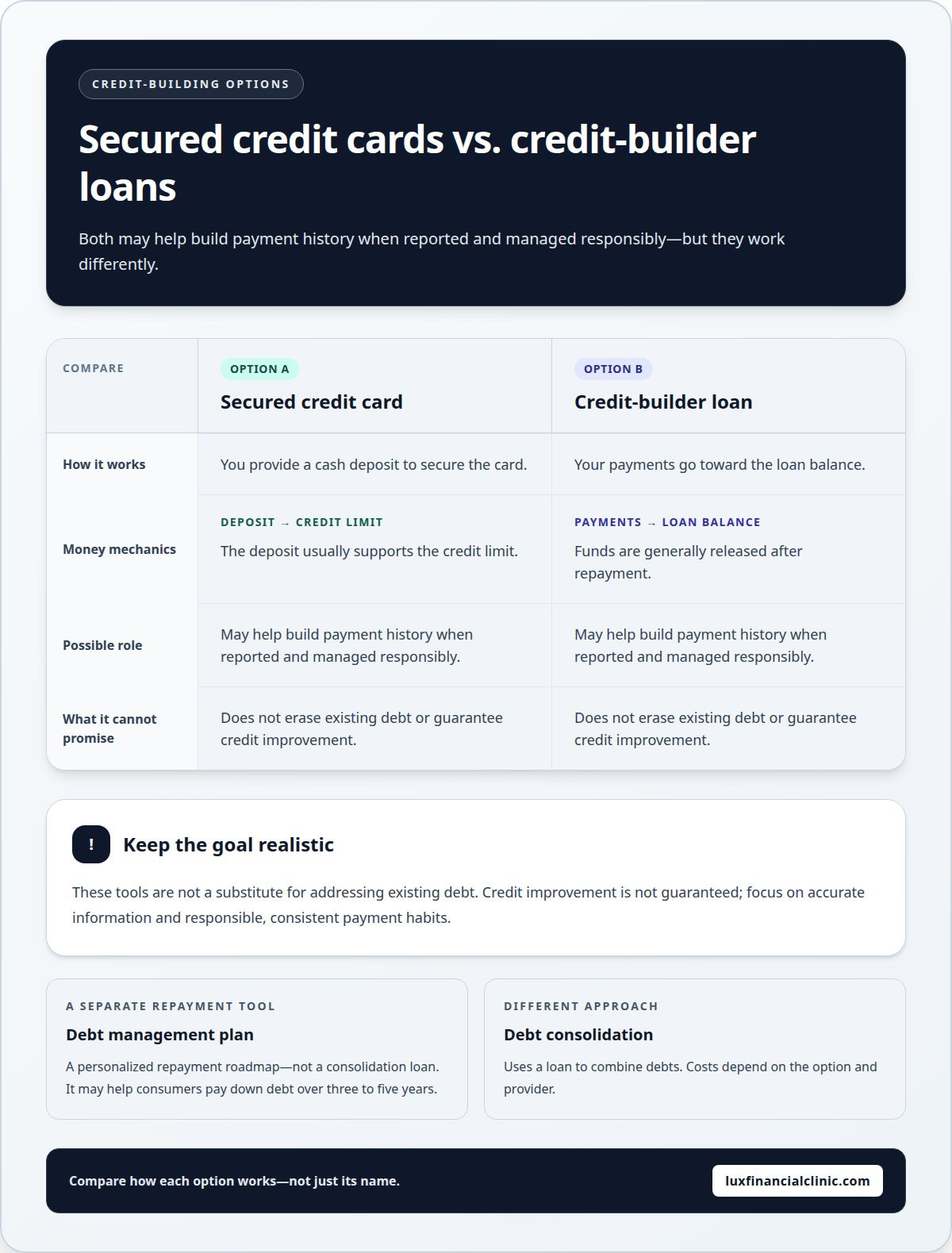
A financial counselor can review income, expenses, debts, and due dates, then help shape a manageable plan. Credit counseling may include a debt management plan, which provides a personalized repayment roadmap rather than a consolidation loan. Such plans can help consumers pay down debt over three to five years.
Debt relief can involve budgeting support, creditor payment arrangements, or a debt management plan. Consolidation is different: it uses a loan to combine debts. Costs depend on the option and provider, and nonprofit or government agencies may offer financial counseling. Be wary of anyone promising to erase debt overnight or demanding payment before providing assistance.
Secured credit cards require a cash deposit that usually supports the credit limit. Credit-builder loans direct payments toward a loan balance, with funds generally released after repayment. Both may help build payment history when reported and managed responsibly, but neither erases existing debt or guarantees credit improvement.
For free or low-cost support, nonprofit and local or state government agencies may provide financial counseling. The Federal Trade Commission offers guidance on choosing a credit counselor. The Financial Therapy Association may help locate a therapist or counselor who works with financial anxiety; the U.S. Trustee Program lists agencies approved for pre-bankruptcy counseling.
When bad credit adds strain, begin with one practical step: list debts, interest rates, minimum payments, and due dates. Build a budget using monthly income and essential expenses, including housing, groceries, transportation, and minimum debt payments. Prioritize essentials and required minimums, then discuss a realistic repayment strategy with a counselor. A clear list can make money management less overwhelming and help you make calmer decisions.
2. How Can Debt and Money Issues Impact Your Mental Health?
Financial anxiety and bad credit can make every money decision feel more consequential. A lender’s refusal or an unexpectedly high borrowing cost may intensify worries about future bills. That stress can lead to avoidance, such as putting off account reviews, making it harder to respond early when expenses change.
This cycle can work in both directions. Money strain can contribute to prolonged stress, anxiety, or depression, while mental health challenges may make planning, focusing, and managing payments more difficult. For example, someone overwhelmed by a bill might delay opening it, increasing uncertainty about its status and what to do next.
Stress can also affect the body. Money worries may contribute to trouble sleeping, appetite changes, and difficulty concentrating at work. At the other extreme, excessive frugality may lead someone to delay a needed home repair or healthcare. That can create further strain if a minor issue becomes harder to manage.
Support can address both sides of the cycle. A therapist or counselor can help with emotional responses and coping strategies; the Financial Therapy Association may help locate a professional with relevant experience. A financial counselor can help organize debts, due dates, and realistic payment priorities, so emotional support and money planning work alongside each other.
A credit score is a lending factor, not a measure of personal worth. Mental health and financial progress can follow different timelines, so treat them as related but distinct goals. For credit recovery, focus on accurate information and consistent payment habits rather than tying your emotional well-being to an immediate score change.
Choose one manageable action today, such as identifying a delayed repair or arranging a conversation with a counselor. A financial diagnostic consultation can help clarify credit-related concerns and organize practical next steps.
3. Contacting creditors about payment plans
If a bill feels difficult to manage, contact the creditor before the next payment becomes harder to make. Explain what has changed, such as reduced income or rising expenses, and ask whether a modified payment plan is available. For a credit card, have the account details and a realistic payment amount ready before the conversation.
First, prepare a brief picture of your finances. Note monthly income, essential expenses, minimum payments, and the amount left for each creditor. This helps you discuss an amount grounded in your budget rather than agreeing under pressure. Ask what the proposed arrangement changes, how payments will be made, and whether the creditor can provide the terms in writing.
Keep the conversation focused. You might say, “My income has changed, and I want to discuss a payment amount I can manage.” Listen, take notes, and clarify the next due date and payment instructions. If the representative can’t explain available options, ask which department handles payment arrangements.
On-time payments account for 35% of a consumer’s credit score in the FICO formula. Paying bills on time is a recommended first step toward repairing credit, but a payment arrangement should fit your actual capacity. If you can’t meet the current minimum, contact the creditor rather than silently missing a payment. A missed or late payment may affect payment history, so confirm how the arrangement will be handled.
After the call, record the date, representative’s name, agreed amount, and due date. Keep any written confirmation with your account records, then set a calendar reminder for each agreed payment. If your budget changes again, contact the creditor promptly rather than assuming the original arrangement still works. Good records reduce uncertainty and give you a clear reference while managing payments.
4. Credit reporting agencies and lender criteria
Credit reports collect information about credit accounts and payment history. Lenders may use a credit score to decide whether to lend, how much to offer, and what interest rate to charge. Their criteria can also include income, existing obligations, and application details, so a score alone doesn’t explain every lending decision.
In the United States, people can obtain free annual credit reports from the three nationwide consumer reporting agencies through AnnualCreditReport.com. Review each report for unfamiliar accounts, incorrect balances, or payment details that don’t match your records. If you spot a possible error, note the account and the information that appears inaccurate before taking action.
Reviewing reports can help you distinguish a reporting concern from a lender’s decision. A credit report and a credit score are related, but they aren’t the same. Lenders may weigh information differently, and interest-rate offers can vary. Improving a score therefore doesn’t lead to a fixed amount of savings: the effect depends on the lender’s rate, the amount borrowed, and the repayment term.
Employment screening is separate from applying for a loan or credit card. If an employer asks for credit information, clarify whether it wants a report or a score and how it will use that information. Don’t assume a lender’s decision or a credit score directly describes your suitability for a job.
For a calm review, set aside time to examine reports from all three agencies, then record questions beside the relevant accounts. This organized approach can make follow-up more focused and reduce uncertainty about spending, borrowing, and future interest costs. Credit-report concerns may also be addressed through support for credit report concerns.
Lux Financial Clinic
Lux Financial Clinic can help bring structure to credit concerns that add pressure to your financial life. Its credit repair services use structured dispute protocols to address inaccurate negative items, such as collections, charge-offs, and late payments. This may be a useful next step if you’ve identified possible reporting errors and want support understanding the credit repair process.
A Financial Diagnostic Consultation can help clarify your financial concerns and identify practical priorities. For credit repair support, Lux Financial Clinic offers the Basic/Repair Package and Comprehensive/Build Package, with options suited to different needs. These services focus on credit restoration, not debt settlement or guaranteed score outcomes.
If money worries and credit concerns are affecting your next decisions, contact Lux Financial Clinic to discuss a considered path forward.
Take a Steady Next Step Toward Financial Clarity
Progress can start with one focused decision: identify the financial concern that needs attention first, then choose support suited to it. If inaccurate negative credit information is part of the strain, Lux Financial Clinic offers the Credit Repair – Basic/Repair Package and Credit Repair – Comprehensive/Build Package. For business funding questions, its Business Funding Consulting can help clarify that part of your planning.
Financial anxiety and bad credit can feel closely linked, but they don’t have to define every choice ahead. A measured plan can make room for practical financial steps while you also seek appropriate support for your emotional well-being. Credit repair does not replace mental health care, and it cannot promise a particular score or lending outcome. Start by discussing the concern you want to address and the support that may fit.
Contact Lux Financial Clinic today to begin a thoughtful conversation about your financial priorities. You can move forward one clear decision at a time.
Frequently Asked Questions
How Can Debt and Money Issues Impact Your Mental Health?
Debt can make ordinary decisions, such as opening a bill or planning a purchase, feel loaded with pressure. That strain may spill into work, relationships, and leisure, while stress can make focused money management harder. Notice patterns such as avoiding account notifications or shopping for short-lived relief. If worry affects daily functioning, consider seeking mental health support alongside practical financial guidance.
How can you be better with money?
Build a routine that makes money decisions visible and repeatable. Review income and spending regularly, group expenses by purpose, and schedule reminders for bill due dates. Before a nonessential purchase, pause and decide whether it fits your priorities for the month. If the numbers feel difficult to organize, a counselor can help you find a manageable approach without judgment.
What Is Debt Stress Syndrome?
People may use “debt stress syndrome” informally to describe emotional strain connected with owing money, but the phrase itself doesn’t explain what someone is experiencing. Notice specific changes, such as persistent worry, difficulty concentrating, or withdrawing from activities. A mental health professional can help assess distress and discuss support, while financial counseling can address the practical concerns contributing to it.
What is financial anxiety?
Financial anxiety is intense, ongoing distress centered on money and financial responsibilities. It can show up as repeatedly checking balances, dreading bills, or struggling to concentrate on other parts of life. The term describes an experience, not a formal mental health diagnosis. Tracking when worries arise and how they affect daily routines can help you explain the pattern when seeking support.
Why are credit ratings confusing?
A credit rating can feel unclear because it condenses account information into a score, while a credit report contains the underlying details. Lenders may use scores to inform lending decisions, but their criteria and offered terms can differ. For example, one lender’s decision doesn’t automatically predict another’s. Reviewing the report behind a score can make the information easier to understand.
How can I check my credit reports and dispute errors for free in the United States?
In the United States, you can obtain free annual credit reports from the three nationwide consumer reporting agencies through AnnualCreditReport.com. Review each report for unfamiliar accounts or details that appear inaccurate. If you find an error, gather the account information and supporting records, then submit a dispute to the reporting agency showing it. Keep copies of your submission and related correspondence.


