
Seventy-one percent of Americans feel stressed about money, according to the American Psychological Association’s Stress in America 2026 report. Financial stress can affect wellbeing and make it harder to plan, prioritize, or decide what to do next. A path to overcoming financial stress and shame starts by recognizing that money struggles are not a measure of your worth.
It’s understandable to focus on the numbers when bills, debt, or past decisions feel overwhelming. But numbers alone don’t explain the emotions behind them, the pressures that shaped your situation, or why taking a practical next step can feel difficult.
This article explores how financial stress and shame can affect well-being and decision-making, why your financial circumstances deserve more context than a balance or score, and how to approach money with greater clarity and less judgment. You’ll find a steadier way to understand what’s happening and consider a next step that fits your needs.
Key Takeaways
- Notice how money worries may shape your wellbeing and choices, not just your budget.
- Separate financial setbacks from your sense of identity to make room for more constructive next steps.
- When a money task feels overwhelming, begin by looking at one item without pressuring yourself to solve everything at once.
- Use financial numbers as part of the picture, while also considering the circumstances and emotions behind them.
1. Why does financial stress affect more than just my finances?
Money worries can affect emotional well-being, relationships, and the sense of security that comes from meeting basic needs. A late bill or growing balance may trigger self-blame, but a financial decision is an action, not your identity. Overcoming financial stress and shame starts with looking at the situation with curiosity: what happened, what changed, and what needs attention now?
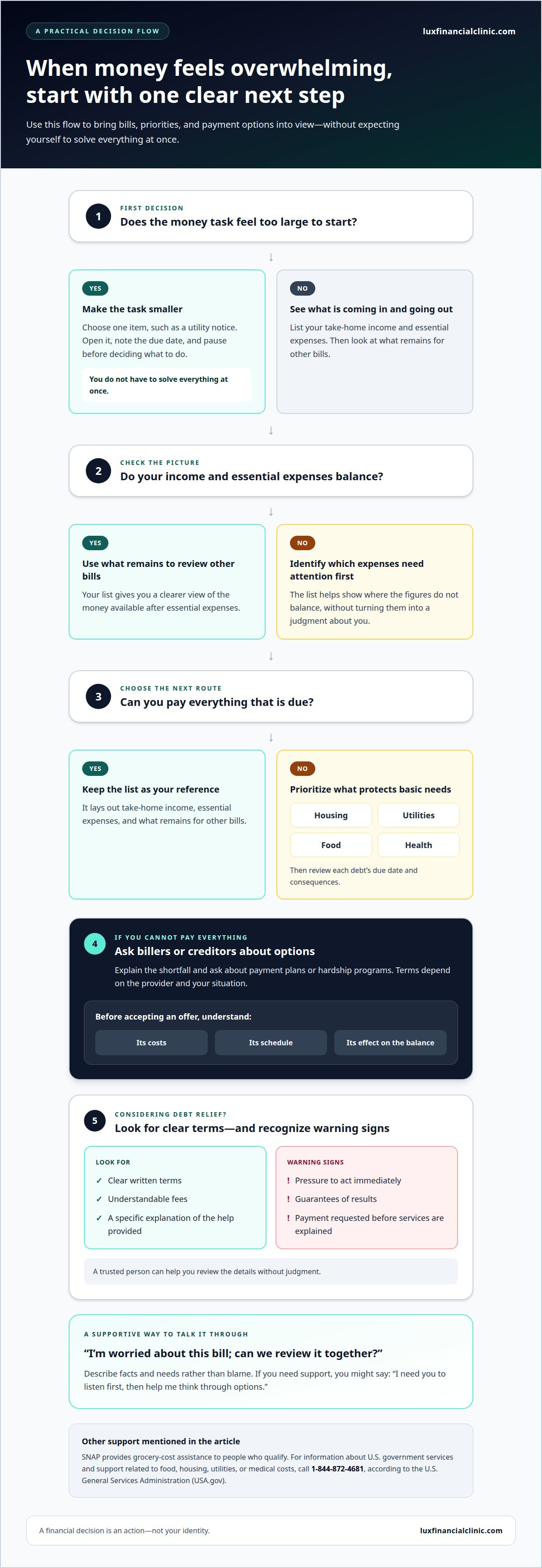
Try one small step: open a bill, note its due date, and pause before deciding what to do. You don’t have to solve everything at once. To make a realistic budget when money is tight, list your take-home income and essential expenses, then see what remains for other bills. If the figures don’t balance, use the list to identify which expenses need attention first.
When you can’t pay everything, prioritize essentials that protect housing, utilities, food, and health, then review each debt’s due date and consequences. Contact billers or creditors to explain the shortfall and ask about payment plans or hardship programs. Terms depend on the provider and your situation. Before accepting an offer, understand its costs, schedule, and effect on the balance.
For debt relief, look for clear written terms, understandable fees, and a specific explanation of the help provided. Treat pressure to act immediately, guarantees of results, or requests for payment before services are explained as warning signs. A trusted person can help you review the details without judgment. You might say, “I need you to listen first, then help me think through options.”
Talking about money works better when you describe facts and needs rather than blame: “I’m worried about this bill; can we review it together?” If stress makes a task feel too large, review one item, such as a utility notice. For food, SNAP provides grocery-cost assistance to people who qualify. For information about U.S. government services and support related to food, housing, utilities, or medical costs, call 1-844-872-4681, according to the U.S. General Services Administration (USA.gov).
2. How financial stress affects mental and physical health
Financial strain can occupy your attention long after you open a bill or make a payment. Common signs include persistent worry, difficulty concentrating, irritability, or avoiding account notices. Causes may include debt, unstable income, rising expenses, or uncertainty about upcoming payments. These reactions signal pressure, not failure.
A 2026 systematic review of research conducted over nearly four decades found that people with higher debt levels consistently reported greater psychological distress, especially depressive symptoms. That connection matters because distress can make ordinary routines feel harder to manage. If money worries are affecting sleep, relationships, work, or your ability to function, consider talking with a mental health professional. A Certified Financial Therapist or Accredited Financial Counselor may also help you work through the emotional and practical sides of money concerns.
Support your wellbeing with manageable actions rather than an all-or-nothing plan. For stress relief, aim for 30 minutes of exercise on most days, splitting the time into shorter sessions if needed. A walk around the block or a brief movement break can make the goal feel more approachable. For meals, choose simple, nourishing options that fit your budget and routine; consistency matters more than elaborate preparation.
It can help to separate emotional support from financial problem-solving. A trusted person can listen while you describe what feels most pressing, without trying to judge your choices. If you want structured help understanding how money concerns connect with your financial decisions, a financial diagnostic consultation can offer a practical starting point. Mental health support remains important when distress feels persistent or disrupts daily life.
3. Limits of focusing only on financial numbers
Monthly income, an account balance, or a credit score offers a snapshot, not a complete explanation. These figures can’t show whether expenses are unpredictable, caregiving takes time, or a recent setback disrupted your plans. Two people with similar balances may have different responsibilities and options. For example, one person may support relatives while another manages the same income alone. Numbers describe a financial position, but they don’t measure the effort required to maintain it.
Financial circumstances can also reflect factors beyond individual choices, including intergenerational wealth, limited financial education, and employment discrimination. Someone who wasn’t taught how interest works may face different choices from someone who learned those skills early. Employment barriers can shape income and access to stability. Recognizing these influences doesn’t remove personal agency; it puts the numbers in context and helps identify practical actions now.
A high income or inherited wealth doesn’t automatically provide financial knowledge or lead to a healthier relationship with money. Someone with substantial resources may still feel anxious about spending, avoid reviewing accounts, or lack confidence in making a plan. Conversely, a modest income doesn’t reveal someone’s ability to make thoughtful choices. A balance sheet can show assets and obligations, but not whether financial decisions align with someone’s priorities or feel emotionally safe.
To understand your situation more fully, pair each number with a useful question. For monthly income, ask how predictable it is; for debt, note its terms and payment demands; for savings, consider which near-term needs it must cover. Then identify one goal, such as reducing uncertainty about upcoming expenses. This turns numbers into information for a decision, rather than a verdict on your character. It also helps distinguish a temporary constraint from a longer-term pattern that may need different support.
4. How financial shame and stress affect decision-making
Financial stress can make a decision feel urgent, even when waiting would allow clearer thinking. Chronic stress can interfere with planning, prioritizing, and decision-making. For example, someone worried about a credit card balance might avoid opening a statement, then miss useful information about the next payment. Avoidance may briefly ease discomfort, but it can make the underlying task harder to address.
This pattern is sometimes called “emotional math”: avoiding the discomfort of stress or shame, even when avoidance conflicts with financial logic. Someone might delay contacting a biller because the conversation feels embarrassing, despite needing information about payment options. Shame can also make past actions feel like proof of personal failure. That belief can prevent change and keep unwanted financial cycles going.
Try separating the feeling from the decision. Before acting, name the pressure, such as “I’m afraid of seeing the balance,” then identify the next fact you need. You might review one statement, write down its due date, or list questions to ask. This brief pause makes room to choose based on priorities rather than immediate relief. It doesn’t erase the emotion; it helps keep the emotion from deciding for you.
For a difficult choice, describe the trade-off plainly. Paying one expense may mean delaying another, so consider the immediate need, possible consequences, and what information is still missing. A trusted person can listen while you talk through the options without assigning blame. If you’d like structured support understanding your financial situation and next steps, explore financial decision support.
Lux Financial Clinic
Lux Financial Clinic can help you bring structure to financial tasks that feel difficult to face alone. If credit concerns are adding pressure, its Credit Repair - Basic/Repair Package and Credit Repair - Comprehensive/Build Package address credit repair needs. For self-employed readers, Self-Employed / 1099 Tax Preparation can support an important part of managing financial records. Business Funding Consulting is available when funding questions are part of a business’s financial picture. These services offer practical support with specific financial matters; they are not a substitute for mental health care when distress is affecting your wellbeing. Choose the area that best matches the challenge you want to address, and take the next step at a pace that feels manageable. Contact Lux Financial Clinic to discuss your needs.
Choose a next step that reflects your priorities
Progress doesn’t require solving every money concern at once. Choose one decision you can influence now and define a useful next step. That might mean gathering information, setting a time to review a concern, or deciding what support would make the process more manageable.
Overcoming financial stress and shame becomes more manageable when your next move reflects your priorities, not self-criticism. Let your financial choices support the life you want to build, while recognizing that emotional well-being may need its own support. A thoughtful plan can begin with one clear question.
If you’re ready to talk through a financial concern and consider a practical way forward, contact Lux Financial Clinic. You can take the next step with care, at a pace that feels right for you.
Frequently Asked Questions
Why does financial stress affect more than just my finances?
Money concerns can affect your sense of security, relationships, and everyday choices. For example, someone worried about shared expenses may avoid social plans or feel tense discussing household decisions. The strain can extend beyond account balances because financial worries often involve needs, expectations, and responsibilities. Noticing what weighs most, such as uncertainty about rent or family pressure, can clarify what support would help.
How can you reduce financial stress when you feel overwhelmed?
Ease the immediate pressure by choosing one manageable task and setting a time to do it. For example, gather relevant account notices in one place, then review them during a short, planned session instead of checking repeatedly throughout the day. Write down questions as they arise so you can address them deliberately. A simple routine can bring clarity without requiring you to solve every concern at once.
How can you cope with shame or embarrassment about debt and money problems?
Use neutral, factual language to describe the situation, and remind yourself that debt is a financial obligation, not a measure of character. You might write, “I have a balance I’m working to understand,” instead of calling yourself irresponsible. Share only what feels appropriate with someone you trust. If a conversation becomes judgmental, pause it and choose a safer time or another form of support.
When should financial stress lead someone to seek mental health support?
Consider mental health support when money worries persist or interfere with sleep, work, relationships, or daily responsibilities. For example, ongoing panic about opening mail or distress that makes routine tasks difficult deserves attention. A licensed mental health professional can help address emotional effects, while a financial professional can help with practical money questions. If you’re at immediate risk of harm, seek urgent assistance through emergency services or crisis support in your area.


