
A credit report error is best challenged with a clear explanation and supporting evidence. Disputing inaccurate information on a credit report means identifying the specific item, explaining why it’s wrong, and sending the dispute to both the credit reporting company and the business that supplied the information. A credit reporting company generally has 30 days to investigate.
It’s understandable to want an error corrected quickly, especially when it could affect a loan or rental application. A professional can help organize the dispute, prepare supporting documents, and explain what options remain if the report isn’t changed. This guide explains when information may warrant a dispute, which records can support your case, and how the investigation and next steps work, so you can approach the process with greater clarity.
Key Takeaways
- A professional can help organize a dispute around the specific information that appears inaccurate or incomplete.
- The most useful supporting documents depend on the item being challenged, so a focused evidence file can make the explanation clearer.
- If an investigation leaves the information unchanged, you may have options to add context and pursue further review.
- Not every negative entry is an error; identifying what is inaccurate, incomplete, or unfamiliar helps determine when a dispute is appropriate.
How can a professional help you dispute an error on your credit report?
A professional can organize your evidence, prepare a focused dispute, and track the response. The process is clearest when each challenged entry has a specific explanation and relevant supporting records.
-
How a Professional Files a Dispute with the Credit Reporting Company
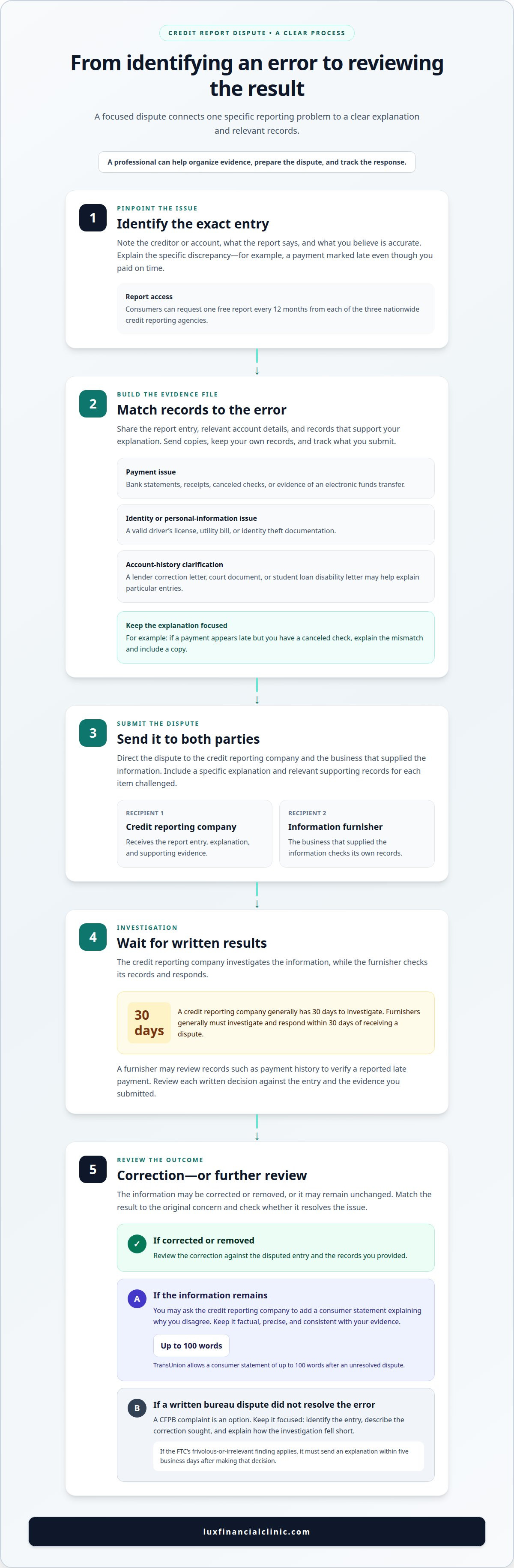
Provide your credit report and identify the entry you believe is wrong. Explain the issue, such as a credit card payment marked late even though you paid on time, and share records that support your account. A professional can direct the dispute to the credit bureau and the company that supplied the information, with a specific explanation for each item.
A professional can also help you access reports to review for errors. The Federal Trade Commission says consumers can request one free report every 12 months from each of the three nationwide credit reporting agencies.
-
Reviewing the Investigation and Verification Results with a Professional
Review the bureau’s written results with the professional and match each decision to the item disputed. The bureau investigates the information, while the furnisher checks its own records and responds. According to the Consumer Financial Protection Bureau, furnishers generally must investigate and respond to a credit reporting dispute within 30 days of receiving it.
For example, a company that supplied the information may review payment records to verify a reported late payment. The investigation may result in a correction or removal, or the information may remain unchanged. A professional can help you understand what the decision addresses and whether it resolves your original concern.
-
Reviewing Furnisher Corrections or Getting Help with a CFPB Complaint
Ask the professional to review any correction against the disputed entry and the documents submitted. If the bureau’s investigation does not fix the error, a professional can help organize the dispute history and supporting records for a complaint to the Consumer Financial Protection Bureau. Consumers can file a CFPB complaint when a written dispute with the credit reporting bureau does not resolve the error.
Keep the complaint focused: identify the entry, describe the correction sought, and explain how the investigation fell short. If the Federal Trade Commission’s frivolous-or-irrelevant finding applies, it must send an explanation within five business days after making that decision.
Preparing Supporting Documents for a Professional Credit Report Dispute
Share your report, the specific entry you dispute, and why you believe it is inaccurate or incomplete. Include relevant account details and correspondence. Clear records connect your concern to evidence when disputing inaccurate information on credit report entries.
- Identify the entry and describe the specific problem. Note the creditor or account name, what the report shows, and what you believe is accurate. For example, if a payment appears late but you have a canceled check, explain the discrepancy and provide a copy. A focused explanation helps the credit bureau review the precise issue.
- Match supporting records to the type of error. A payment dispute may call for bank statements, receipts, canceled checks, or evidence of an electronic funds transfer. An identity or personal-information issue may call for a valid driver’s license, utility bill, or identity theft documentation. Equifax lists these as examples of documents that may support a dispute.
- Include records that clarify the account’s history. A lender correction letter, court document, or student loan disability letter may help explain particular entries. Send copies rather than relying on an unsupported statement, and keep a separate record of what you provide. These materials can show why you believe the reported details are inaccurate.
- Submit additional documents through the dispute channel when they address the issue. Label each copy with the account or entry it supports, and keep a dated record of the submission and response. This helps track what the bureau received and identify missing evidence. For the work of disputing inaccurate information on credit report entries, organized documentation gives a professional a clearer basis for assessing the dispute. Structured professional credit repair support can help keep the records and explanation aligned.
Adding a Statement When a Professional Dispute Does Not Change a Report
If the company that supplied the information determines it is accurate, the report may remain unchanged. A professional can help you request a consumer statement that explains your position and makes the unresolved issue clear.
- Review the investigation result with the professional before deciding what to do next. Identify which entry remains and what the furnisher said it verified. If the disputed late payment was not removed, for example, separate the bureau’s finding from the records supporting your disagreement. This helps keep the next letter focused on the unresolved point.
- Ask the credit reporting company to add a consumer statement explaining the dispute. The statement gives context about why you disagree with information that remains on your file. Work with the professional to describe the issue precisely, such as a payment date you believe was recorded incorrectly. Keep the wording factual and consistent with the evidence already submitted.
- Prepare a concise statement that identifies the account and explains the disagreement without introducing unrelated claims. TransUnion allows a consumer statement of up to 100 words after an unresolved dispute. A professional can help use that limited space carefully, clarify what you believe is accurate, and avoid language that obscures the specific reporting issue.
- Keep copies of the investigation results, the statement request, and any later update to your report. These records help track what the bureau received and whether the statement was added. If the company that supplied the information later responds with details supporting a correction, the documentation can guide a renewed review. A statement explains your position; it does not itself change or remove the disputed entry.
When to dispute inaccurate or incomplete information
- Compare each entry with your own account records and identify a specific mismatch. An incorrect name or address on an account, or a payment date that differs from your records, may point to an error. A professional can help assess whether the information is inaccurate or incomplete and connect your concern to evidence, rather than treating every negative entry as incorrect.
- Flag an account you don’t recognize for prompt review. In the United States, an account you didn’t open may indicate identity theft. Identify the entry that concerns you and share relevant identity theft documentation, if available. Focus the review on the account details and why they don’t appear to belong to you, rather than making assumptions about who opened it.
- Dispute a payment history or balance when you can identify what appears wrong. For example, if a report shows a late payment but your records show a different payment date, explain the discrepancy and provide supporting documents. A professional can help distinguish a reporting error from information you simply disagree with, then direct the dispute to the bureau and the company that supplied the information.
- Review bankruptcy entries for incorrect details, such as a filing that isn’t yours or information that doesn’t match your court records. Apply the same approach to collections, charge-offs, and other negative items: identify the exact detail you believe is inaccurate or incomplete. A focused explanation gives the investigation a clear issue to examine.
- Consider a professional review when an unfamiliar identity detail, account, or payment entry needs careful assessment. TransUnion, like other credit bureaus, maintains credit information supplied by lenders and creditors, so an error may require attention to both the report and its source. Dispute specific, supportable inaccuracies, not accurate information solely because it is unfavorable.
Lux Financial Clinic
Lux Financial Clinic can help when a credit report entry is inaccurate or incomplete and needs a structured dispute. Its credit repair services use organized dispute protocols to address inaccurate negative items, including collections, charge-offs, and late payments. This support can help you assess an entry, organize relevant documents, and pursue a clear correction request.
The right next step depends on the issue and the records available. A professional review can help distinguish information that appears inaccurate from negative information that is correctly reported, then shape a focused approach without promising a particular outcome. Lux Financial Clinic offers Credit Repair - Basic/Repair Package and Credit Repair - Comprehensive/Build Package for credit restoration.
Contact Lux Financial Clinic for help reviewing a credit report dispute.
Make Your Next Credit Decision With Clarity
Take a deliberate next step: focus on the specific information that is wrong, then choose support that fits your needs. Disputing inaccurate information on a credit report is not about removing every negative entry; it is about addressing information that does not reflect the facts. A clear plan can help you move forward with greater confidence.
Lux Financial Clinic offers Credit Repair - Basic/Repair Package and Credit Repair - Comprehensive/Build Package for credit restoration. The firm also provides Business Funding Consulting, a separate service for business funding needs. Start by identifying your circumstances and the kind of guidance you are seeking.
If professional support would help you take your next step, contact Lux Financial Clinic for help. A thoughtful start can bring more structure to your financial goals.
Frequently Asked Questions
When does filing a dispute make sense for you?
File a dispute when you can identify information that appears inaccurate or incomplete. Examples include an incorrect name or address on an account, or a payment date that conflicts with your records. An account you don’t recognize may also warrant review because it could indicate identity theft. A negative item alone isn’t necessarily an error; focus on what is wrong and why.
Are disputes free?
Yes, consumers can dispute credit report information for free. TransUnion says its dispute process has no charge. This applies to filing a dispute with a credit reporting company, not necessarily to hiring professional assistance. If you choose professional support, clarify the service arrangement and consider what help you need, such as organizing records or preparing a focused dispute.
Can I dispute a collection charge?
Yes, you can dispute a collection entry if you believe it contains inaccurate or incomplete information. For example, you might challenge an account that doesn’t belong to you or a payment detail that conflicts with your records. Identify the specific issue and provide relevant documentation. A collection entry isn’t automatically an error simply because it is stressful or unfavorable.
Can I dispute an inquiry?
You can dispute an inquiry if you believe it is inaccurate or unfamiliar. Businesses with a permissible purpose may review credit information, so an inquiry you recognize may have a valid explanation. An unfamiliar hard inquiry could also prompt a closer review for possible identity theft. Hard inquiries can remain on a credit report for up to two years.
Can I dispute an item more than once?
You can submit another dispute when you have new evidence or a distinct reason to believe the information remains inaccurate or incomplete. For instance, a newly located payment record may strengthen a previous challenge. Keep the follow-up focused on what has changed or what the earlier review did not address, and retain copies of the prior decision and new documents.
Can information from my credit report be removed?
Yes, information may be corrected or removed if an investigation finds it inaccurate or incomplete. Removal isn’t automatic just because an entry is negative. If information is changed or deleted, it can’t be put back unless the company that supplied it verifies that it is correct. The outcome depends on the investigation and the records available to support the reported details.


