
A credit score is only one part of your credit picture. If you’re wondering what to look for on my credit report, start with the accounts, payment history, balances, and inquiries listed in your file. In the United States, you can get a free credit report each year from the three credit reporting agencies.
Reviewing your credit reports can help you spot unfamiliar accounts, incorrect details, or activity that deserves a closer look. Checking your own report doesn’t hurt your FICO Scores: soft inquiries don’t affect them, while hard inquiries may cause a score to dip.
This guide explains how to request free reports, what to review, and how to understand the information you find. It also covers specialty consumer reports, which can contain details beyond the major credit reports and are often available free every 12 months. With a calm, step-by-step review, you can build a clearer picture of your credit and decide what to do next.
Key Takeaways
- Use your right to obtain free reports from the three credit reporting agencies, then review them for details that seem unfamiliar or inaccurate.
- Checking your own credit report is a soft inquiry and doesn’t affect your FICO Scores; hard inquiries may affect them.
- Review account history, balances, public records, and inquiries to understand what appears in your file and spot activity that needs attention.
- Specialty consumer reporting companies hold separate types of information, and most provide a free report every 12 months.
Will checking my credit report or score hurt my credit scores?
Checking your own credit report won’t lower your credit score. A personal review is a soft inquiry, which doesn’t affect FICO Scores. You can request reports from the three credit reporting agencies and review them without the effect of a lender’s application review. Checking a score through a personal account is also different from applying for new credit.
Hard inquiries happen when a lender reviews your credit after you apply. They may indicate higher risk and can cause a FICO Score to dip. Check the inquiry section for lender names you recognize and applications you remember. If you see an unfamiliar inquiry, note its date and company before deciding what needs follow-up.
While reviewing your report, focus on payment history and debt management. Check that each account’s payment record is accurate and its balance matches your records. For example, a payment marked late despite your confirmation receipt may need closer review. Credit account information makes up the majority of a FICO Score calculation, so inaccurate payment or balance details can matter. A valid late payment or high reported balance may also affect scores.
How long does a credit report dispute take, and what documents should I provide? The time depends on the investigation and the information involved. Provide a clear explanation and supporting records, such as an account statement or payment confirmation, showing why the entry is inaccurate.
Errors and negative items can affect a credit score if they change account history, balances, or payment records. An unfamiliar collection account, for example, may reflect inaccurate reporting or activity you don’t recognize. Review each agency’s report separately, because their files may differ.
For a practical review, list each questionable item, the agency reporting it, and why it appears incorrect. Keep copies of relevant statements or confirmations with your list. This organized record makes it easier to explain the issue if you submit a dispute. A routine personal report check remains a soft inquiry.
What information is included in a credit report?
A U.S. credit report can show personal details, account history, inquiries, and public records. Review these sections together to identify unfamiliar activity or entries that don’t match your records.
Verifying Personal and Account Details
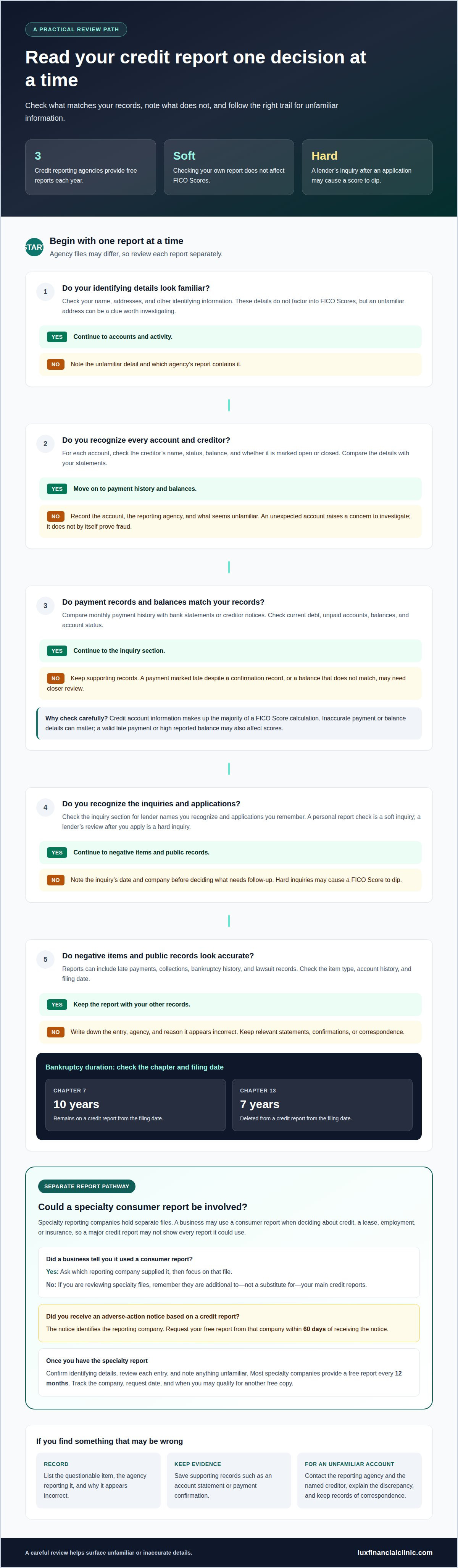
Confirm that your name, addresses, and other identifying details look familiar. Personally identifiable information doesn’t factor into FICO Scores, but an unfamiliar address can be a clue worth investigating. For each account, review the creditor’s name, status, balance, and whether it’s marked open or closed. Compare these details with your statements and note any account you don’t recognize.
Reviewing Payment History and Unpaid Accounts
Account entries can show payment history, current debt, and unpaid accounts. Compare the monthly payment record with bank statements or creditor notices. A payment marked late despite a confirmation record may indicate an error. For unpaid accounts, note the creditor, balance, and status, then distinguish accounts you recognize from those needing further investigation. Reports can also include bankruptcy history and lawsuit records.
Spotting Unfamiliar Accounts and Suspicious Activity
Look for accounts you didn’t open, unfamiliar creditors, or activity that doesn’t fit your records. An unexpected account or address may raise concern about identity theft, but investigate it rather than assuming it proves fraud. If you find a suspicious entry, record the agency reporting it and contact that agency and the named creditor. Keep copies of relevant account records and correspondence.
What should you do if you find signs of identity theft? Contact the reporting agency and creditor connected to the unfamiliar account, explain the discrepancy, and keep the records that support your report.
Checking Negative Items and Their Duration
Negative information may include late payments, collections, or bankruptcies, and its effect depends on the item and account history. Chapter 7 bankruptcy remains on a credit report for 10 years from the filing date; Chapter 13 bankruptcy is deleted 7 years from the filing date. Check the filing date and item type before assessing an entry. For support reviewing inaccurate entries, consider a structured credit-report review.
Reports from specialty consumer reporting companies
Major credit reporting agencies aren't the only companies holding consumer reports. Specialty consumer reporting companies maintain separate files, so a review of a major credit report may not show every report a business could use when you wonder what to look for on my credit report. Most specialty companies provide a free report every 12 months. Treat these files as an additional part of your review, not a substitute for your main credit reports.
Start by identifying the decision you want to understand. A lender or another business may use a report when deciding whether someone qualifies for credit, a lease, employment, or insurance. If a business tells you it used a consumer report, ask which reporting company supplied it. That name helps you focus your request on the relevant file instead of assuming a major agency holds all the information.
If you receive an adverse-action notice based on a credit report, it identifies the reporting company. You must request your free report from that company within 60 days of receiving the notice. Once you have the file, confirm identifying details, review each entry, and note information you don't recognize. Record the company name and the specific detail that raises concern.
Keep the report and any supporting records together. A simple tracking note can include the reporting company, the date you requested the file, and the next date you may qualify for another free copy. At Lux Financial Clinic, we recommend tracking these details carefully. The 12-month period applies to most specialty consumer reporting companies, not necessarily every company. This organized approach helps you follow up on the relevant file and maintain a clearer record of your review.
How can I verify personal information and account details on my credit report?
Use the same review method for each report from the credit reporting agencies. Under the Fair Credit Reporting Act (FCRA), consumers have the right to know what appears in their credit reports. Knowing what to look for on my credit report means comparing each entry with your records and noting details that don’t match.
Begin with identifying information. Check your name, current and former addresses, and other personal details for unfamiliar entries or misspellings. A variation may be harmless, but an address you don’t recognize deserves attention. Record the exact wording and agency name so you can clearly describe the discrepancy.
- Match each creditor name and account status to statements or account records.
- Compare listed balances and payment history with your own records.
- Review inquiries from the past two years, noting unfamiliar company names and dates.
For each account, confirm that it belongs to you, whether it’s open or closed, and whether its balance and payment details match your records. For example, a closed account shown as open is a specific discrepancy to document. Note the report section and entry alongside the record that supports your comparison. This gives you a clear reference if you need to explain the concern.
A focused review of what to look for on my credit report also means keeping each agency’s records separate. If the same account appears on reports from multiple agencies, assess and document each entry independently. One agency’s information doesn’t establish what another report contains. If a detail appears wrong, note the exact entry, reporting agency, and correction you believe is needed.
Gather relevant records, such as account statements or payment confirmations, and retain copies of your report and correspondence. A structured review can help clarify which items warrant attention. For guidance with inaccurate or negative credit entries, get support reviewing credit-report concerns.
Lux Financial Clinic
Lux Financial Clinic can help if reviewing your reports reveals inaccurate negative items or leaves you unsure how to proceed. Its credit repair services use structured dispute protocols to address inaccurate collections, charge-offs, and late payments. The focus is on the accuracy of reported information, not promising a particular score or outcome.
Consider getting support when you’ve identified entries that appear incorrect and want help organizing the dispute process. If your questions involve broader financial planning, the clinic also offers a Financial Diagnostic Consultation. The right starting point depends on the concern, whether it’s a specific credit-report item or a wider financial review.
For a measured next step, contact Lux Financial Clinic to discuss your credit-report concerns.
Turn your review into a clear next step
A credit report can be a reference point for decisions you make over time, not a judgment about your financial future. Once you understand what to look for on my credit report, use that clarity to decide which concern needs attention first. You might organize documents for an inaccurate entry, track a question about an account, or keep your records ready for a future application.
If inaccurate negative items are your concern, Lux Financial Clinic offers Credit Repair - Basic/Repair Package and Credit Repair - Comprehensive/Build Package. For business financing, its Business Funding Consulting may be relevant. The next step depends on the question you want to address, so bring that focus into a conversation rather than feeling you must solve everything at once.
Contact Lux Financial Clinic to discuss a thoughtful next step for your financial goals. Each clear decision can help you move forward with greater confidence.
Frequently Asked Questions
How do I get a free copy of my credit reports?
Request free annual reports from the three credit reporting agencies through the U.S. Annual Credit Report service. You can also mail the request form to Annual Credit Report Request Service, PO Box 105281, Atlanta, GA 30348-5281. Before submitting, gather the identifying information requested on the form and keep a note of which agency reports you requested. Each agency maintains its own file.
What information appears on a U.S. credit report?
A U.S. credit report can include identifying details, credit accounts, payment history, current debt, inquiries, bankruptcy history, and lawsuit records. It usually doesn’t include a credit score, so don’t assume the report itself will show one. For example, a report may show a card balance and payment record, while a separate score service provides a score based on credit-file information.
How do I spot accounts or inquiries I don't recognize on my credit report?
Compare each account and inquiry with your own records, including lender names, account dates, and applications you remember making. An unfamiliar lender name may belong to a company operating under a different name, so record the entry before drawing conclusions. If an account still seems unrelated to you, contact the reporting agency and named creditor, and keep notes of both conversations.
How can I check for late payments, collections, charge-offs, or bankruptcies reported incorrectly?
Compare each negative entry with records showing its status and timing, such as account statements, payment confirmations, or court paperwork. Check whether a late payment matches your records and whether a collection or charge-off belongs to the listed account. For bankruptcy entries, compare the chapter and filing date with your documents. Write down the exact discrepancy before disputing it.
How do I dispute an error on my credit report with a credit bureau or lender?
Send a clear dispute identifying the specific entry, why you believe it’s wrong, and the correction you’re seeking. Include copies of relevant supporting documents, such as a statement or payment confirmation, and keep a copy of everything submitted. You can contact the reporting agency and the lender or creditor connected to the entry. If more than one agency reports it, submit a separate dispute to each.


