
In an FTC study, 26% of participants found at least one credit report error that could make them appear riskier to lenders. The common credit report errors to find include unfamiliar accounts, incorrect late payments, duplicate debts, wrong balances, and personal information that doesn’t belong to you. An account may also be reported as open when it’s closed, or as yours when you’re only an authorized user.
It’s unsettling to see an account or payment history that doesn’t match your records. Errors can happen when information about people with similar names gets mixed, or when a creditor or collector reports details incorrectly. Start by reviewing the entry carefully, then dispute the specific information so the credit reporting company and the business that supplied it can investigate.
This guide explains how to spot common credit report errors, how incorrect accounts can appear, and what happens during an investigation. You’ll also learn what records can support a dispute and how the result may lead to a correction, removal, or explanation.
Key Takeaways
- Learn how professional dispute support organizes evidence and communicates with credit reporting agencies and information providers.
- Understand how identity mix-ups and reporting mistakes can place unfamiliar accounts on a credit file.
- Recognize the personal, payment, and account-history details that deserve careful review.
- Know what happens during an investigation and how the findings can shape the next step.
How professionals dispute errors with credit reporting agencies and information providers
A professional can help obtain free reports from Equifax, Experian, and TransUnion, then organize a dispute. The Federal Trade Commission says consumers can check reports from each bureau for free once a week.
-
Obtain and review free credit reports with professional help
Ask a professional to help gather reports from Equifax, Experian, and TransUnion. The review compares how each bureau reports the same account, including its status, balance, payment history, and account ownership. A difference between reports can help identify which bureau records incorrect information. Provide accurate identifying details and relevant records, and avoid disputing an entry solely because it appears unfamiliar.
-
Have a professional dispute errors with credit reporting companies
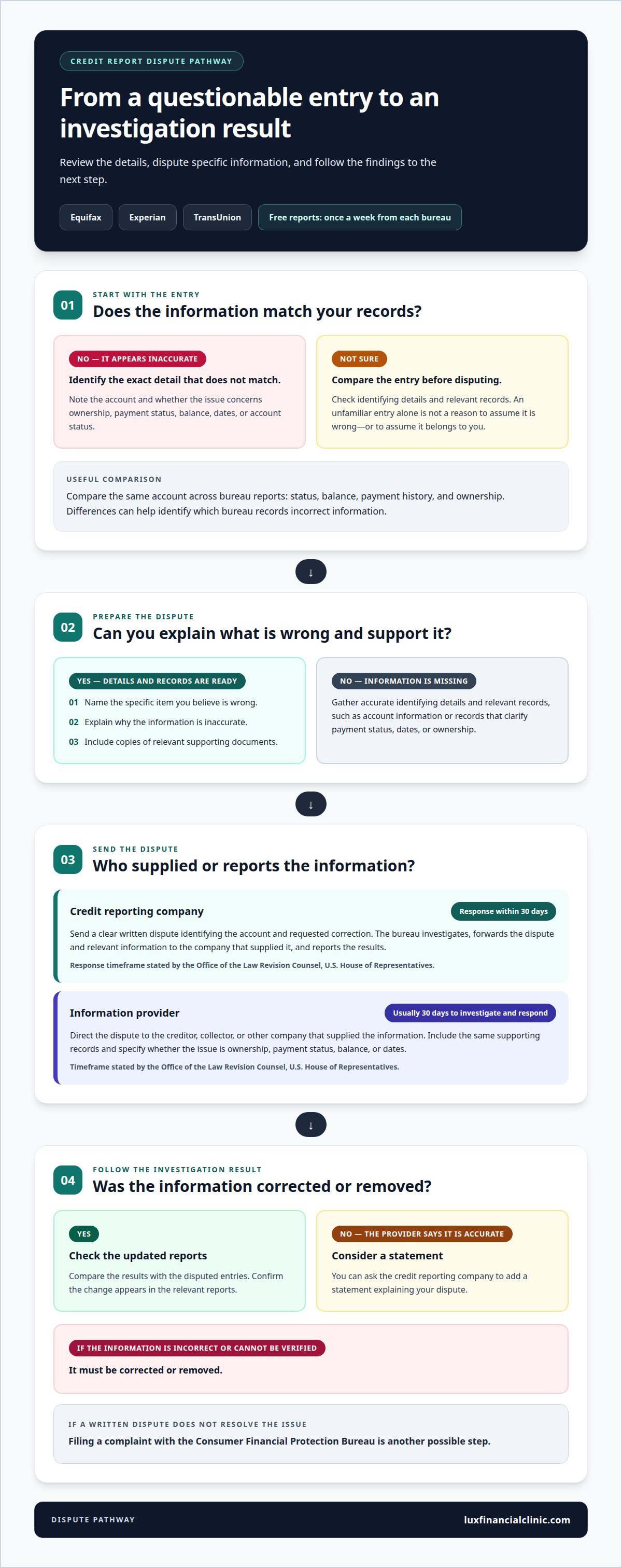
Provide the professional with the item you believe is wrong, why it is inaccurate, and copies of supporting documents. The professional can prepare a clear written dispute for the credit reporting company, identifying the account and requested correction. The bureau must investigate, forward the dispute and relevant information to the company that provided the information, and report the results. Credit reporting agencies must respond to a dispute within 30 days, according to the Office of the Law Revision Counsel, U.S. House of Representatives.
-
Have a professional dispute errors with information providers
Ask the professional to direct a dispute to the creditor, collector, or other company that supplied the disputed account information. Include the same supporting records and explain whether the issue concerns ownership, payment status, balance, or dates. Credit furnishers usually have 30 days to investigate and respond to a disputed error, according to the Office of the Law Revision Counsel, U.S. House of Representatives. If information is incorrect or cannot be verified, it must be corrected or removed.
-
Review the investigation and correction with professional guidance
When you receive the investigation results, compare any updated reports with the entries you disputed. Check whether the account was corrected or removed and whether the change appears in the relevant reports. If the information provider says the entry is accurate, you can ask the credit reporting company to add a statement explaining your dispute. If a written dispute does not resolve the issue, filing a complaint with the Consumer Financial Protection Bureau is another possible step.
How can incorrect accounts appear on my credit report?
Unfamiliar entries can stem from identity mix-ups, reporting mistakes, or accounts opened without your knowledge. Check account ownership and compare the details with your records to distinguish common credit report errors from information that accurately reflects your credit history.
-
Have a professional identify accounts that do not belong to you
Compare unfamiliar accounts with your identity information. A mixed file may combine records belonging to people with similar names, while identity theft may result in accounts you never opened. Check the listed name, address, and account ownership; a Social Security number mismatch may also warrant attention. Don’t assume an unfamiliar account is yours just because it appears on your report.
-
Have a professional check for missing accounts and payment history errors
Compare reported accounts and payment histories with your records. A positive credit card account may be missing, or an on-time payment may appear late. Payment dates, account identifiers, and creditor records can help clarify discrepancies. An authorized user may also be incorrectly listed as the account owner, so review the relationship rather than inferring it from the account name alone.
-
Have a professional review account status reporting
Have a professional assess whether each account’s opening, closing, and delinquency details match available records. For example, a closed account might still appear open, or a payment could be reported late despite records showing otherwise. Review the status alongside the dates and account history, rather than relying on a single label. This comparison helps pinpoint the specific information that needs investigation by the company that supplied it.
-
Have a professional compare duplicate accounts and balances
Ask the professional to identify repeated listings and compare balances with creditor records. A single debt may appear more than once, or a paid account may still show an amount due. Misapplied payments can also leave an inaccurate balance or payment status. These are common credit report errors to find through a careful comparison of statements, payment confirmations, and report entries. Professional review can help organize those discrepancies for assessment.
What are common credit report errors that I should look for on my credit report?
A careful review can flag duplicate debts, inaccurate authorized-user status, discharged debts, and outdated negative entries. To assess outdated information, compare each item’s type and reported dates with applicable reporting periods.
-
Have a professional check duplicate debts and authorized-user reporting
Ask a professional to compare repeated debt entries and clarify whether you’re an account owner or authorized user. A single debt listed by both a creditor and collector may need careful review to determine whether the entries describe one obligation or separate accounts. Check the account details and the company that provided each entry. Don’t assume two similar listings are duplicates based on names alone.
-
Have a professional review discharged debts and bankruptcy errors
Provide bankruptcy or discharge records so a professional can compare them with the account status shown. A discharged debt that still appears as due, or a bankruptcy entry with inaccurate details, may warrant a dispute. The Consumer Financial Protection Bureau says bankruptcies should be removed from a U.S. credit report after 10 years. Review the filing information and dates before challenging an entry.
-
Have a professional check debts linked to a former spouse
Check whether accounts are listed individually, jointly, or with authorized-user status. For example, a former spouse’s credit card may remain on a report if the records still identify you as responsible or connected. Review account statements or other relevant records. A divorce-related document may help explain the circumstances, but the reported account details still need to be examined.
-
Have a professional find outdated negative information
Request a date-focused review of negative entries, including late payments, collections, charge-offs, judgments, tax liens, and closed accounts. The Consumer Financial Protection Bureau says these items should be removed from a U.S. credit report after 7 years. Bankruptcy follows a different reporting period. If an entry appears older than its applicable period, a professional can identify the item and prepare a focused complaint or dispute for the company that provided it.
Credit reporting company investigation
A dispute needs a specific claim, supporting records, and a clear explanation of the correction you’re requesting. The investigation then determines whether the information in the credit bureau’s file can be verified.
- Identify the disputed entry and provide copies of records that explain the problem. A letter should name the account, describe what appears inaccurate, and explain why. For example, a payment receipt can help clarify a payment reported as missed. Specific details help credit reporting companies focus on the entry rather than treating the dispute as a general objection to your report.
- Have the professional organize the dispute for the credit reporting company that lists the entry. The company must investigate, forward the dispute and relevant information to the business that supplied the data, then report its results. This process connects the consumer’s explanation with the company that provided the information. Keep copies of the letter and records together, so the result can be compared with the original claim.
- Review the investigation outcome when the credit reporting company responds. The result should explain whether the disputed information was changed, removed, or left as reported. If the information provider finds the information incorrect or cannot verify it, the information must be corrected or removed, with notice sent to all three credit bureaus. Check a later report to see whether the correction appears in the relevant file.
- Consider the next step if the response doesn’t resolve the specific error. A consumer may ask the credit reporting company to add a statement explaining an unresolved dispute. If a written dispute fails to correct the issue, a complaint to the Consumer Financial Protection Bureau is another option. The Bureau forwards the complaint to the company, provides a tracking number, and shares status updates. For structured support, get professional credit repair assistance with preparing and tracking disputed information.
Lux Financial Clinic
Lux Financial Clinic helps people address inaccurate negative items through structured credit dispute support. If an unfamiliar account, incorrect payment history, or duplicate debt appears on your reports, the clinic can help organize the dispute and supporting records. The Credit Repair - Basic/Repair Package and Credit Repair - Comprehensive/Build Package offer options for different credit repair needs. The right next step depends on the items involved and the support you’re looking for.
Bring the specific report entries and relevant documents to the conversation so the issue is clear. Credit repair support addresses inaccurate information, not a promised credit score or the removal of accurate entries. Contact Lux Financial Clinic to discuss your credit report concerns and the support you need.
Make your next credit decision with greater clarity
A clear credit file can support more informed decisions about borrowing and other financial goals. Knowing which common credit report errors to find is a useful start; next, determine whether you have enough supporting information for a focused review.
Keep your records organized and note which details need attention. If the issue feels complex, professional guidance can help structure the review and clarify how to proceed. Credit repair addresses inaccurate information, not accurate details or a promised score.
Lux Financial Clinic provides credit repair support for people disputing negative items. Discuss your concerns with the clinic to identify the support that fits your situation.
Contact Lux Financial Clinic to talk through your credit report concerns and take a considered next step toward greater financial clarity.
Frequently Asked Questions
How can inaccurate information on a credit report affect me?
Incorrect negative information can influence how lenders assess an application and may affect access to credit or housing. For example, a late payment mistakenly attached to your file could give a lender an incomplete picture of your repayment history. An inaccurate balance may also change how your existing debt appears. Consider disputed entries in context, since their effect depends on the information and the decision being made.
How will disputes affect your FICO® Score?
Filing a dispute doesn’t automatically remove an account or guarantee a score increase. The effect depends on whether the investigation changes information used in a scoring decision. Correcting a wrongly reported late payment, for example, may change the information considered, while an unchanged entry may leave the score unaffected. Scores can also differ between scoring models and lenders’ review processes.
When can a professional handle creditor contact on your behalf?
If you want structured help disputing information, organize your communication with the creditor around the specific issue. Share the account details, your explanation, and relevant records. For example, if a lender’s records show a payment differently from your statement, that discrepancy can guide your message. Credit repair support can help prepare and manage dispute communications.
What are the most common errors on credit reports?
Common errors include incorrect personal details, unfamiliar accounts, inaccurate late payments, balances that don’t match account records, duplicate debts, and closed accounts shown as open. A paid loan may still appear unpaid, or a debt may be incorrectly listed as in collections. Review the complete account entry rather than relying on its label alone; one incorrect detail can make an otherwise familiar account look inaccurate.
How can a professional spot incorrect personal information on a credit report?
Compare the identifying details reported by each bureau with your own information. Look for a misspelled name, an unfamiliar phone number, or an address that isn’t yours. Differences may point to a mixed file, where details from another consumer have been combined with yours. Explain what’s incorrect and provide records supporting your correction request.
How can a professional identify accounts or loans you do not recognize on your credit report?
Review account names, lenders, reported dates, ownership, and payment details to understand why an entry looks unfamiliar. Consider whether it may relate to identity theft, a mixed file, or authorized-user status. For example, a card might be connected to you as an authorized user rather than an account owner. The information source and your records can help guide a focused review.


