
Your bank balance is not a measure of your worth. To understand how to feel in control of your finances, focus on practical steps: build emergency savings, address high-interest debt, and give your spending clear categories. An emergency fund is commonly planned to cover three to six months of expenses, though building toward that goal can happen gradually.
It’s understandable to feel unsettled when bills, debt, and unexpected costs compete for your attention. You don’t have to resolve everything at once to make progress. This article explains how to set a manageable savings goal, prioritize costly debt, and separate essential from discretionary spending, while keeping your self-worth distinct from your financial circumstances. These steps can clarify where your money is going and help you choose a realistic next move.
Key Takeaways
- Choose a realistic first step toward emergency savings, then build a routine that helps you stay consistent.
- Give high-interest debt a clear place in your repayment priorities so you can make steady progress.
- Sort expenses into essentials and discretionary spending to see where your choices can better support your goals.
- Separate financial setbacks from your sense of self-worth and use them as information for your next decision.
1. Building an emergency fund
Open a separate savings account for emergencies and choose a regular contribution your income can support. Ideally, an emergency fund covers three to six months of expenses. Treat that as a longer-term goal, not a reason to put off starting. If you can save only a little right now, make the first deposit and increase it when your budget allows. Keeping the money apart from everyday spending can help reserve it for unexpected needs.
Build contributions into a realistic, flexible budget. List essentials such as housing, utilities, food, and minimum debt payments, then account for irregular costs. If a car repair or annual bill is coming up, set money aside for it before deciding how much you can save. Review your plan when income or expenses change. A budget should reflect your priorities and real circumstances. A credit card can cover a shortfall, but relying on one for every surprise can add repayment pressure.
How much should you save for retirement at different ages? A general goal is to save at least 10% of gross salary each year, while the amount that feels manageable depends on income, existing savings, and time until retirement. Starting earlier gives contributions more time to accumulate, so begin with a sustainable amount and revisit it as your circumstances change.
Make money management a routine, not a crisis response. Set aside time each week to review account balances, upcoming bills, and savings progress. Automate a transfer if it fits your cash flow. These habits can help you spot problems before missing a payment. To feel more in control of your finances, pause before using emergency savings for a non-urgent purchase. Be cautious of unsolicited requests for account credentials or urgent payment demands. Don’t share private information or send money under pressure; verify requests through a trusted channel first.
2. Paying down high-interest debt
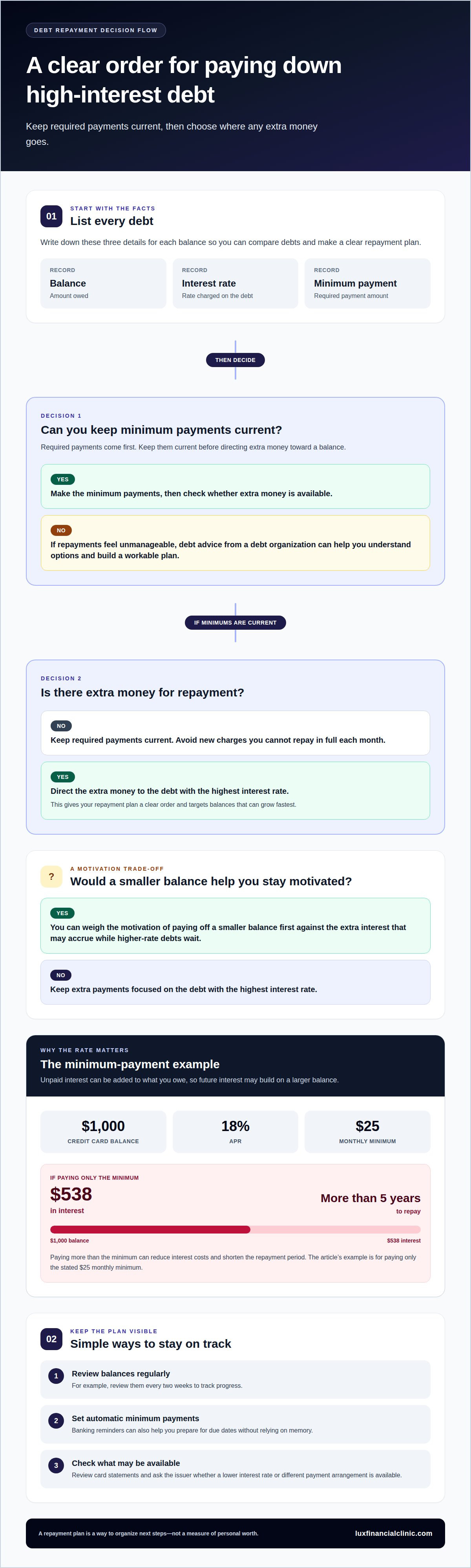
List each debt’s balance, interest rate, and minimum payment. Then keep minimum payments current and direct extra money to the debt with the highest interest rate. This targets balances that can grow fastest and gives your repayment plan a clear order. Review your balances regularly, for example every two weeks, to track progress toward your goals.
Interest compounds when unpaid interest is added to the amount owed, allowing future interest to build on a larger balance. For example, paying only the $25 minimum monthly payment on a $1,000 credit card balance at 18 percent APR would accrue $538 in interest and take more than five years to repay. Paying more than the minimum can reduce interest costs and shorten the repayment period.
How can you pay off debt and choose a repayment strategy? Keep required payments current, then put any extra money toward the debt with the highest interest rate. If paying off a smaller balance first would help you stay motivated, weigh that benefit against the extra interest that may accrue while higher-rate debts wait.
Review your card statements and ask the issuer whether a lower interest rate or different payment arrangement is available. Avoid new charges you can’t repay in full each month. Set automatic payments for at least the minimum due, and schedule an automatic savings transfer that suits your cash flow. Banking reminders can help you prepare for due dates without relying on memory.
Compound interest can support saving, too: a savings account holding $1,000 at 3 percent annual interest earns $2.50 in its first month, assuming a monthly rate of 0.25 percent. If repayments feel unmanageable, debt advice from a debt organization can help you understand available options and build a workable plan.
3. Categorizing essential and discretionary spending
Start with three categories: essentials, useful extras, and discretionary spending. Essentials include housing, food, utilities, and necessary transportation. Useful extras might include a phone upgrade or a streaming service, while discretionary purchases can be paused without affecting basic needs. The 50/30/20 budgeting rule offers one starting framework: 50% of income for needs, 30% for wants, and 20% for savings and debt repayment. Treat it as a guide, then adjust the categories to fit actual expenses.
To understand your current financial situation, record income and household spending for 30 days. Include recurring bills, small purchases, and payments shared with another household member. A notebook, spreadsheet, or basic budgeting app can show patterns without requiring complex tools. Check your bank balance regularly and compare it with your records; this helps reveal whether spending is tracking with your plan or creating stress.
Set short-term goals, such as saving for a vehicle, and long-term goals, such as retirement. Give each a clear purpose, record your contributions, and review progress at least once a year. Keep money intended for investment goals separate from funds for near-term spending. A simple spreadsheet can track dates, amounts, and changes in priorities.
Mood can influence spending, so create a pause between an impulse and a purchase. Wait at least one night before buying a tempting nonessential item, and note what you were feeling when the urge arose. If stress prompts an online order, try a planned alternative, such as taking a walk or revisiting your spending plan. Cash can also make limits more visible; people who shop with cash typically spend 20% less. Use categories to guide choices, not to judge yourself when a purchase falls outside the plan.
A household budget can track spending and save on household expenses. Someone can set aside $50 or $100 in a monthly budget for discretionary spending.
4. Separating self-worth from financial circumstances
A missed payment is information about your financial situation, not a measure of your personal value. If a mortgage payment or utility bill is late, identify what changed: income may have shifted, expenses may have risen, or an unexpected cost may have arrived. Learning how to feel in control of your finances can start with naming the cause and choosing a practical next step, such as reviewing payment dates or adjusting a budget category.
Separate facts from judgments when reviewing your accounts. For each credit card, write down the balance, due date, and minimum payment, then note the next action without labeling yourself “irresponsible.” For example, “I’ll schedule the minimum payment and review the remaining balance on Friday” is more useful than treating debt as a judgment about your character. A clear record gives you something practical to work with.
Comparing your finances with someone else’s can distort how your progress feels. A friend’s new car or a family member’s home purchase doesn’t reveal their income, expenses, mortgage terms, or other obligations. Instead, compare your current position with your own earlier records: are bills more manageable, are balances moving in the right direction, or is your emergency fund growing? These measures show financial progress without defining your worth.
Set aside a brief time each month to recognize progress and decide what needs attention. Note one action you completed, such as reducing a credit card balance, and one priority for the coming month. If an unexpected expense interrupts your plan, update the numbers and resume with a manageable step. One practical way to feel in control of your finances is to focus on consistent choices, not perfect accounts or a life without setbacks. Your circumstances can change; your dignity doesn’t depend on a balance, credit score, or purchase.
Lux Financial Clinic
Lux Financial Clinic can help bring structure to financial decisions when credit concerns or business planning make progress harder to organize. Its credit repair offerings address inaccurate negative items, while Business Funding Consulting and Self-Employed / 1099 Tax Preparation support specific business and tax needs. The right next step depends on the challenge you’re facing: credit repair may fit when inaccurate negative items need attention, while funding consulting or tax preparation may be relevant to self-employed financial planning.
For a broader view of your priorities, a Financial Diagnostic Consultation can help clarify which financial issues to address first. This support complements personal steps such as budgeting, building savings, and making a debt repayment plan. Contact Lux Financial Clinic to discuss the financial support that fits your situation.
Choose a next step that fits your priorities
Financial confidence grows when your decisions reflect your actual needs, not someone else’s timeline. Choose one priority for the coming month and decide what support would make it easier to address. The answer to how to feel in control of your finances isn’t a perfect plan; it’s a clear direction you can return to when circumstances shift.
If inaccurate negative items are affecting your credit plans, Lux Financial Clinic offers the Credit Repair - Basic/Repair Package and Credit Repair - Comprehensive/Build Package. For business funding needs, its Business Funding Consulting may be a fit. These services address different concerns, so focus on the one that matches your current goal.
When you’re ready to discuss a practical next step, Contact Lux Financial Clinic today. Progress can begin with one considered decision, made at a pace that respects your circumstances.
Frequently Asked Questions
How do I create a realistic monthly budget?
Build your budget around money you can reliably use and the dates your bills are due. If your income varies, plan core expenses around a lower, dependable month, then assign extra income after it arrives. For less frequent costs, such as annual renewals, set aside part of the expected amount each month. This can keep predictable bills from disrupting everyday spending.
What budgeting methods work best for managing personal finances?
The best budgeting method is one you understand and can maintain. A zero-based budget gives each dollar of expected income a purpose, while a pay-yourself-first approach sets aside planned savings before discretionary spending. You can combine the two: reserve money for bills and goals, then set clear limits for what remains. Choose the approach that suits your preference for detailed planning or a simpler routine.
How much should I save for an emergency fund?
A common goal is to save enough to cover three to six months of expenses. Estimate essential costs such as housing, food, utilities, and insurance rather than using your full income. If your income changes often or others depend on you, consider building a larger cushion over time. Keep the fund accessible for genuine unexpected needs, not routine purchases.
How can I reduce monthly expenses without sacrificing essentials?
Prioritize housing, food, utilities, healthcare, and transportation. Then look for changes to flexible spending that preserve what matters, such as planning meals around groceries you already have or combining errands to avoid unnecessary trips. Review recurring charges for services you no longer use, and consider whether a lower-cost plan meets your needs. Make one change at a time and observe the effect.


