
A 500 credit score doesn’t automatically rule out an apartment, even if you’re applying without a cosigner. There’s no universal minimum credit score for renting in the United States, and landlords may weigh income, rental history, and other application details alongside credit. Learning how to get an apartment with bad credit and no cosigner starts with finding a landlord whose screening approach fits your situation and presenting a clear case for your ability to pay.
It’s understandable to expect a low score to close every door. This guide explains what a 500 score may mean, how proof of income and references can strengthen an application, and where no-credit-check rentals fit into your search. You’ll also learn what landlords may consider and how to prepare your application with care, so you can pursue a suitable home without relying on a cosigner.
Key Takeaways
- Strengthen your application with recent pay records or bank statements, stable employment, and a reference from a previous landlord.
- A 500 credit score can make approval more challenging, but income, rental history, and a suitable roommate may help support your case.
- There’s no universal credit-score minimum for renting; landlords weigh credit alongside other details in your application.
- Explore no-credit-check rentals, including properties with smaller landlords, and learn how their screening process may differ.
1. Proof of income and references
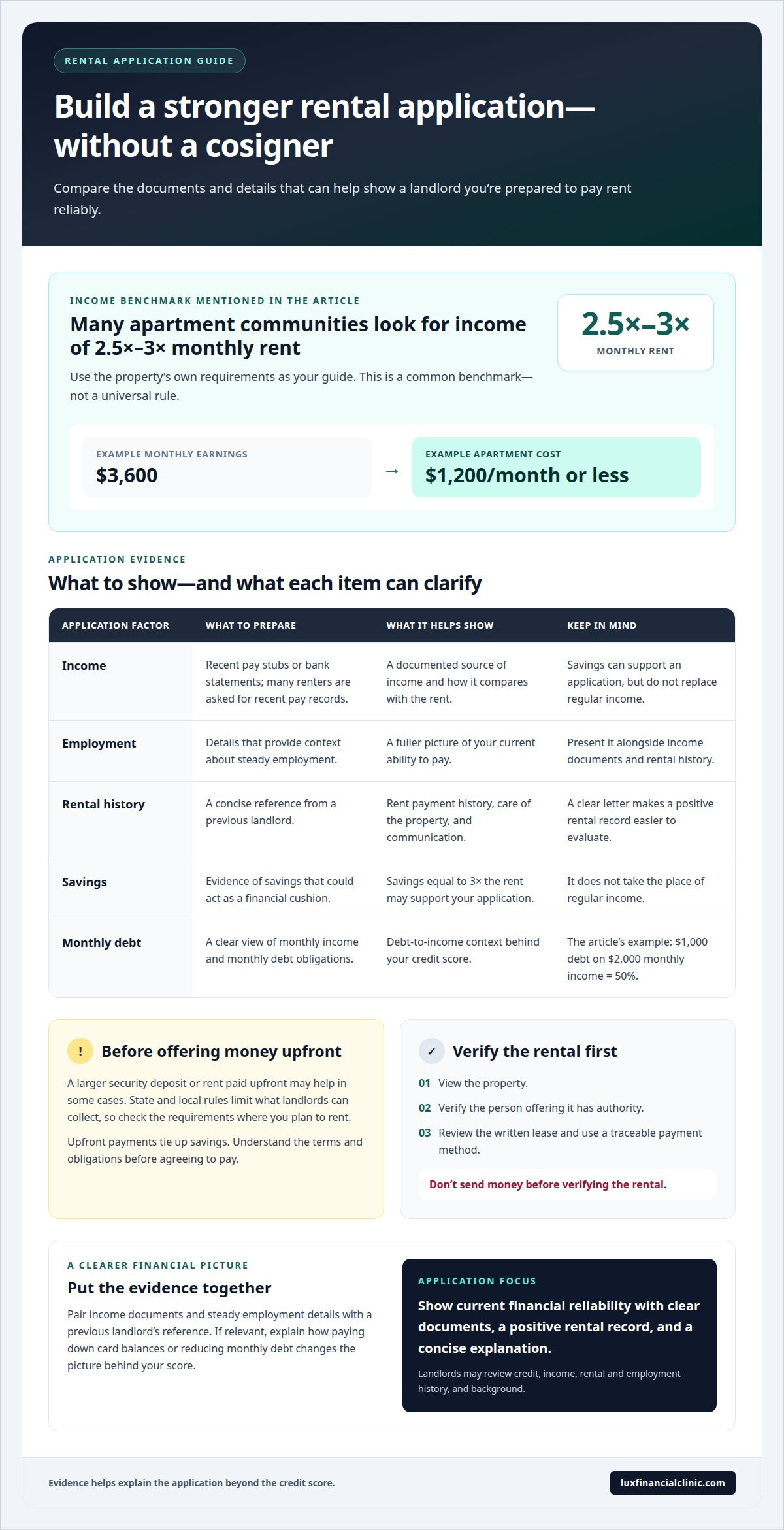
A strong plan for how to get an apartment with bad credit and no cosigner starts with evidence that you can pay rent. Landlords may review your credit, income, rental and employment history, and background. Recent pay stubs or bank statements can document income, while steady employment adds context. Many prospective renters are asked to provide recent pay records.
Compare rent with earnings before applying. Many apartment communities look for income of 2.5x-3x monthly rent. For example, someone earning $3,600 per month could focus on apartments costing $1,200 per month or less. Savings can also support an application: showing savings equal to three times the rent may demonstrate a financial cushion, though it doesn’t replace regular income.
Ask a previous landlord for a reference that describes your rent payment history, care of the property, and communication. A concise letter can make a positive rental record easier to evaluate. Offering a larger security deposit or rent upfront may help in some cases, but state and local rules limit what landlords can collect. Check the requirements that apply where you plan to rent before paying.
Bad credit can prompt closer review of late payments, collections, and other negative items. Paying down card balances can lower credit utilization, while reducing monthly debt can improve your debt-to-income ratio. For example, $2,000 in monthly income and $1,000 in monthly debt equals a 50 percent ratio. These details help explain the financial picture behind your score.
Before agreeing to pay rent upfront or use a rental guarantor service, understand the terms and obligations. Upfront payments tie up savings, while a guarantor arrangement can create additional financial responsibility. If you’re considering how to get an apartment with bad credit and no cosigner, protect your application and money: view the property, verify that the person offering it has authority, review the written lease, and use a traceable payment method. Don’t send money before verifying the rental.
2. Can I get an apartment with a 500 credit score?
Yes. A 500 credit score can make approval more difficult, but it doesn’t automatically prevent you from renting. Some landlords may consider other parts of your application, including income and rental history. A no-credit-check rental or a roommate with stronger credit or income may provide another option. Focus your search on housing where the landlord considers more than the score alone.
Applying with a roommate may strengthen the application if they have a higher credit score, steady income, or positive rental history. Both applicants should understand whose names will be on the lease and who is responsible for rent. Before applying, agree on how to divide rent and utilities, handle missed payments, and manage the security deposit. A roommate’s stronger profile may support the household application, but it won’t erase your credit history.
Alternative housing options may include shared rentals or properties where the owner reviews applications individually. Prepare a clear application with income documents, rental references, and a concise explanation of past credit problems. If you’re considering a lease guarantor service instead of a personal cosigner, understand its terms and obligations. A cosigner who doesn’t live in the apartment may be responsible for rent if you fall behind, so discuss that commitment carefully.
Ask a prospective roommate to provide complete income and rental records alongside yours. Be direct about your 500 score, then support your application with evidence of current financial reliability. A roommate with higher income or stronger credit may help show that the household can cover rent. The landlord still reviews the full application, including each applicant’s history and ability to meet lease obligations, so make sure responsibilities are clear before signing.
3. Credit score requirements for renting
There’s no universal credit-score minimum for renting an apartment in the United States. Landlord requirements vary by property, location, and screening criteria. Many landlords look for scores around 600 to 670, while some prefer applicants at 670 or higher. These are common screening ranges, not a single nationwide approval rule.
For context, the FICO Score 8 model runs from 300 to 850, and a good FICO score starts at 670. A good VantageScore starts at 661. A score below 600 may require compensating factors, such as stable income, positive rental history, or savings. A 500 score is considered poor and signals higher risk to many landlords, but it doesn’t by itself make renting impossible.
Why might an apartment require a cosigner? A landlord may view low scores, missed payments, collections, or significant debt as signs of greater payment risk. Screening may also consider income and rental history. A cosigner or guarantor accepts responsibility if the renter defaults, so a landlord may request one when the application doesn’t meet the property’s criteria. Cosigning can also carry financial risk and strain relationships.
Are private landlords more flexible than large apartment management companies? Smaller landlords may be less likely to use a standard screening checklist, leaving more room to consider an applicant’s circumstances. Still, landlords differ in how they weigh credit, income, and rental history.
If you’re explaining poor credit, keep your letter brief and specific. Identify the relevant event, explain what has changed, and describe how you’re prepared to pay rent reliably now. For example, mention steady employment or a record of on-time rent, then attach supporting evidence. Avoid blaming others or promising a score increase. A clear explanation helps the landlord assess your current ability to meet the lease, not just your past credit problems.
4. Finding no-credit-check rentals
A “no-credit-check” listing may mean the landlord uses a different screening approach, not that there is no screening. Smaller landlords or property owners may be less likely than large companies to use a standard checklist. They may still assess income, rental history, references, and ability to pay. Ask what documents the application requires before paying a fee or sharing sensitive information.
Treat these listings as leads, not promises of approval. Search for terms such as “no credit check” or “flexible screening,” then contact the property owner directly. Keep a record of the application terms and who provided them. A landlord may review your circumstances individually but could still verify income or consider background information.
Prepare a focused application packet before viewing properties. Include recent bank statements or pay records, a rental reference, and a concise explanation of relevant credit issues. If a roommate will share the lease, ask whether the landlord assesses each tenant separately or reviews the household as a whole. When applying without a cosigner, consistent income and reliable payment history can help show that you can meet rent obligations.
Be careful before sending money or personal details. Visit the rental, confirm the person’s authority to offer it, and review the written lease before paying. Be cautious if someone demands immediate payment but avoids a viewing or refuses to provide documentation. Keep message records and use a traceable payment method. These steps can help you pursue flexible screening while protecting your information and funds.
If inaccurate negative items are complicating your rental search, review credit repair support as a separate step toward clearer applications.
Lux Financial Clinic: Credit Repair - Basic/Repair Package
Lux Financial Clinic’s Credit Repair - Basic/Repair Package may help if inaccurate negative items are affecting rental applications. The service uses structured dispute protocols to address inaccurate collections, charge-offs, and late payments. Correcting errors can help present a clearer credit history, though it doesn’t guarantee a particular score or apartment approval.
Consider credit repair if you’ve identified inaccurate information and want support addressing it, rather than relying only on alternative rental options. If you need broader support rebuilding your credit profile, the Credit Repair - Comprehensive/Build Package is another option. The right focus depends on the items affecting your report and your financial goals.
Contact Lux Financial Clinic to discuss your credit repair needs and identify a suitable next step.
Take Your Next Step With a Clear Plan
Your next move can focus on two priorities: pursuing housing that fits your circumstances and building a stronger financial foundation over time. Treat each application as an opportunity to present your situation clearly, and keep your housing plans grounded in what you can afford. You don’t have to resolve every credit concern before you start looking.
If you’re considering how to get an apartment with bad credit and no cosigner, approach the process with patience and a plan for both immediate housing needs and longer-term goals. Credit concerns can feel personal, but they’re practical matters you can address thoughtfully. A conversation about your credit profile can help you identify a constructive next step without promising a particular score or rental decision.
Contact Lux Financial Clinic to discuss your credit repair needs and explore a path forward. You can take the next step with care and confidence.
Frequently Asked Questions
Can I get an apartment with a 500 credit score?
Yes, you can still apply with a 500 credit score, though landlords may view it as a higher-risk signal. There’s no nationwide minimum score for renting. Focus on properties with screening that considers your overall application, and make sure each submitted detail is accurate and consistent. A score alone doesn’t determine whether you can rent.
Can You Get Approved Without a Cosigner Later?
Yes, you can apply for a future rental without a cosigner. Paying rent on time during your current tenancy can help demonstrate reliability, while updated income documents and references can support a later application. Approval depends on the property’s screening criteria and your full application. Each application is assessed on its own details.
Do All Apartments Require a Cosigner?
No, there’s no universal rule requiring every renter to have a cosigner. Each landlord or property sets its own screening criteria, and some applicants qualify based on their financial and rental profiles. Before applying, ask whether a cosigner is required for everyone or only when an application doesn’t meet particular income, credit, or rental-history standards.
Do landlords care more about income or credit?
Landlords can consider both, and neither carries the same weight at every property. Income helps show that rent fits your current budget; credit history can reveal past payment patterns and debt. For example, consistent income may strengthen an application with limited credit history, while significant debt may raise questions even when earnings are steady.
Is it possible to rent with no credit check?
Yes, some rental listings advertise no-credit-check screening, particularly those from smaller property owners. That phrase doesn’t necessarily mean there are no application requirements. A landlord may still assess income, rental references, employment stability, or background information. Clarify the screening process before applying so you can prepare the relevant documents and understand how prospective tenants are evaluated.
What do landlords look for on a credit report?
Landlords may review payment history, total debt, types of debt, missed payments, and periods of delinquency. They may also notice collections, defaults, charge-offs, bankruptcies, repossessions, or foreclosures. The overall pattern matters: isolated difficulties may look different from repeated missed obligations. Be prepared to explain relevant circumstances accurately and briefly.


