
A repaired credit report doesn’t erase every accurate negative entry overnight. Late payments generally remain for 7 years, while collection accounts can stay for up to seven years, according to the Federal Trade Commission. Maintaining a good credit score after repair means building a stronger recent record as older negative information gradually has less influence.
It’s understandable to want your progress to last, especially after working to address problems on your credit report. The habits that support a good score are straightforward: pay on time, keep credit card balances low, and give positive account history time to build.
This guide covers how long common negative entries may remain, how to manage utilization and payments, and why patience matters. You’ll also learn when reviewing your credit report can help you spot inaccurate items and choose a practical next step.
Key Takeaways
- Review your credit reports for inaccurate information and understand that accurate negative entries may remain for years.
- Keep card balances well below their limits; the article explains how utilization can affect your score.
- Pay your balances in full and make sure payments reach the card issuer by the due date.
- Build steady habits over time, and consider Lux Financial Clinic’s Credit Repair - Basic/Repair Package if you need support addressing inaccurate negative items.
How long does negative information generally stay on your credit report?
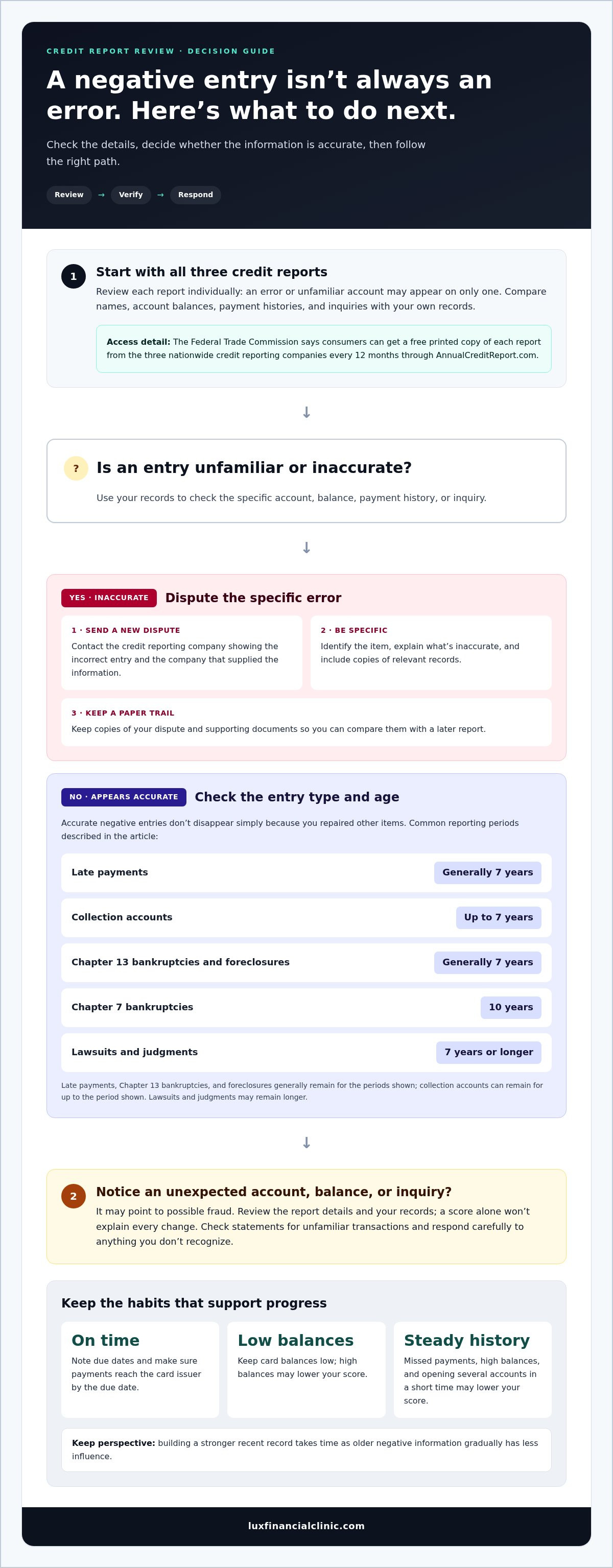
- Record each entry’s type and age. Late payments generally remain on U.S. credit reports for 7 years. Collection accounts can remain for up to seven years, according to the Federal Trade Commission. Chapter 13 bankruptcies and foreclosures generally remain for 7 years; Chapter 7 bankruptcies, 10 years. Lawsuits and judgments may stay for 7 years or longer. Accurate negative entries don’t disappear simply because you repaired other items.
- Compare reports from all three bureaus. Review each report individually because an error or unfamiliar account might appear on only one. According to the Federal Trade Commission, consumers can get a free printed copy of each report from the three nationwide credit reporting companies every 12 months through AnnualCreditReport.com. Compare names, account balances, payment histories, and inquiries with your own records.
- Dispute errors that reappear. Send a new dispute to the credit reporting company showing the incorrect entry, and contact the company that supplied the information. Identify the specific item, explain what’s inaccurate, and include copies of relevant records. Keep copies of your dispute and supporting documents so you can compare them with a later report.
- Monitor reports and score access for warning signs. Review free score access through your bank or card issuer, if offered, and compare reports for unfamiliar accounts or inquiries. An unexpected account, balance, or inquiry may point to possible fraud. A score alone won’t explain every change, so review the report details when you notice something unusual.
- Protect the habits supporting your progress. Missed payments, high card balances, and opening several new accounts in a short time may lower your score. Review statements for unfamiliar transactions, note due dates, and avoid applying for multiple accounts without a clear need. These habits help you spot potential problems early and respond carefully.
Keeping credit card utilization low
Credit utilization compares card balances with available credit. Track it across accounts and lower balances strategically to help protect your repaired credit profile.
-
Assess Credit Utilization
Gather the current balance and credit limit for each card, then calculate each balance as a share of its limit. Check the combined balances against combined limits too, since utilization reflects both individual accounts and total available credit. Using more than roughly 30% of a credit limit can lower scores. The goal isn’t to rely on one card’s number alone.
-
Reduce Credit Utilization
Pay down the cards with the highest balance-to-limit ratios first, while continuing to manage every account. Utilization of 10% or less on all accounts is typical among people with outstanding credit scores. Treat that as a useful reference, not a promised outcome. Avoid adding purchases to a card just because another balance has fallen.
- Limit new charges as balances fall. Set a practical spending limit for each card and keep new purchases within it. If a necessary expense raises one card’s balance, consider whether you can pay it down before adding optional charges. This helps prevent new spending from offsetting a temporary reduction.
- Review your progress and adjust. Recheck balances and limits on your statements, then update your utilization calculation. If one card remains much higher than the others, direct extra payments there when your budget allows. Keep paying every account as agreed, rather than focusing on utilization and overlooking payment obligations.
Lower utilization is one part of a broader credit profile. If inaccurate negative items also need attention, credit repair support may help address that separate concern.
Paying credit card balances in full
Make payment timing and balance management part of one routine. These steps can help keep card accounts current and limit avoidable charges.
- Schedule each card payment before its due date. In the United States, a credit card payment counts as on time when it reaches the company by the bill’s due date. Set a calendar reminder or use a payment reminder from your card issuer. Leave enough time for processing, and review the account afterward to ensure the payment was credited. A missed payment reported as at least 30 days overdue can hurt your score.
- Pay the statement balance in full each month when possible. Paying the full balance can help avoid finance charges and keep spending from climbing too close to the credit limit. Review the statement when it arrives, compare purchases with your budget, and schedule payment for the amount due. If you can’t pay the full balance, pay as much as your budget allows and keep the account current.
- Review collection accounts before making a payment. Match the account details to your records and keep copies of statements and payment confirmations. Paying a collection doesn’t necessarily remove its history from a credit report. Newer versions of FICO and VantageScore ignore paid collection accounts, but scoring models differ. Focus on accurate reporting, and remember that paying an account and removing an entry are separate outcomes.
- Track payments and balances together. Use a simple monthly checklist with each card’s due date, statement balance, and payment status. If your income timing makes a due date difficult, ask the card issuer whether a different date is available. Don’t assume a scheduled payment has cleared; confirm it in your account activity. This routine can help you catch a missed payment or unexpected charge early.
Allowing time for credit improvement
Credit recovery comes from consistent account history, not a single repair. Recent negative information generally affects a score more than older information, so dependable current activity can gradually strengthen your profile. To maintain a good credit score after repair, focus on sustainable habits rather than expecting one action to change your entire credit picture.
- Set a consistent review schedule. Choose a regular time to review your credit reports and score, then record changes in one place. Compare each update with earlier entries instead of reacting to every movement. This helps you recognize trends, catch inaccurate information, and check whether your account habits remain steady.
- Set expectations based on your credit history. Meaningful score improvement may appear within a few months of starting sound credit practices. Major credit damage, especially after bankruptcy or foreclosure, may take several years to repair. Timelines vary with credit history, so a short-term change doesn’t tell the whole story.
- Keep attention on the newest activity you control. Pay accounts as agreed, manage card balances carefully, and avoid opening credit accounts without a clear need. Recent negative information generally has more effect than older information, making a dependable current record important. Maintaining a good credit score after repair means continuing habits that support a stable history, even when progress feels gradual.
- Use progress markers to stay consistent. At each review, note whether your account activity matches your plan and whether report details remain accurate. If your score moves slowly, stick with your routine instead of making abrupt credit decisions. Compare patterns over time, particularly after major events such as bankruptcy or foreclosure, rather than judging progress from one update.
If inaccurate negative items still need attention while you build new habits, explore credit repair support.
Lux Financial Clinic: Credit Repair - Basic/Repair Package
Lux Financial Clinic’s Credit Repair - Basic/Repair Package can help address inaccurate negative items on your credit report. Its structured dispute protocols focus on items such as collections, charge-offs, and late payments that may be inaccurate. Disputing report errors is separate from building positive credit habits, so continue making timely payments and managing balances as your history develops.
Consider this support if you’ve identified questionable entries and want help organizing the dispute process. Accurate negative information and ongoing credit behavior require different approaches, so a dispute isn’t a substitute for consistent account habits. The package offers a practical next step for addressing report inaccuracies as you continue your credit recovery.
Contact Lux Financial Clinic to discuss credit repair support.
Choose your next step with intention
Your next financial goal can give your credit habits a clear purpose. Whether you’re preparing for a major application or seeking greater stability, choose a manageable routine and review it regularly. Maintaining a good credit score after repair is an ongoing practice shaped by the choices you make from here.
If inaccurate negative entries need attention, Lux Financial Clinic offers its Credit Repair - Basic/Repair Package and Credit Repair - Comprehensive/Build Package. For a separate business goal, its Business Funding Consulting may be relevant. The right next step depends on what you’re working toward, not on chasing a quick score change.
For guidance on your credit repair needs, contact Lux Financial Clinic. A considered plan can help you move forward with greater clarity and confidence.
Frequently Asked Questions
What habits help maintain a good credit score after credit repair?
Build a routine around account activity, not occasional score checks. Set reminders for due dates, review transactions after each statement, and pause before applying for credit you don’t need. Keep a simple record of payments and balances so you can spot a missed payment or unfamiliar charge early. Consistency helps you see what’s working and what needs attention.
How much of your credit limit should you use to maintain a good credit score?
Keep balances low compared with each card’s limit. Using more than roughly 30% of a limit can lower scores, while utilization of 10% or less across accounts is common among people with outstanding scores. For example, if one card is close to its limit, focus on reducing that balance rather than spreading new purchases across cards without a repayment plan.
How often should you check your credit reports after credit repair?
Review your reports at least annually, and look sooner if you notice unfamiliar activity or prepare for an important credit application. The Federal Trade Commission says consumers can get a free printed copy of each report from the three nationwide credit reporting companies annually, every 12 months. Compare the reports individually, since an account or inquiry may appear on one report but not another.
How do on-time payments affect your credit score after repair?
On-time payments build a dependable recent record, while missed payments can damage progress. A payment counts as on time when it reaches the card company by the due date. If a paycheck arrives close to a due date, schedule payment ahead or set a reminder rather than waiting until the last moment. Check account activity afterward to catch processing problems.
Should you keep old credit cards open after repairing your credit?
Don’t close an older card automatically. First consider whether you can manage it responsibly and whether carrying a balance on other cards would raise their utilization. Keeping an account open can preserve available credit, but an unused card still needs monitoring for unfamiliar charges. Review its terms and activity, then decide based on your spending habits and account security.
How many new credit accounts should you open after credit repair?
Open only accounts that meet a clear need and fit your budget, rather than aiming for a set number. Applying for or opening many accounts in a short time may lower your score. Before applying, consider whether you can manage another due date and balance. If your current accounts meet your needs, managing them responsibly may be wiser than adding credit without a purpose.


