
A smoother tax return often begins before you open a form. Tax preparation can feel uncertain when you’re sorting through unfamiliar documents, checking whether a deduction or credit applies, and deciding whether to file on your own or seek help. A clear process can make those decisions more manageable.
You don’t need to know every tax rule before you begin. You do need a reliable way to gather records, identify details that may affect your return, and review the information before filing. This guide explains what to organize, how a return moves from records to review, and how to choose a filing approach that fits your circumstances.
We’ll cover common income documents, deductions and credits to verify, and additional records that may come with self-employment or small-business income. You’ll also learn when self-preparation may suit a straightforward return and when professional support could bring structure to a more complex one. Lux Financial Clinic offers individual, self-employed, and small-business tax preparation, with remote service and e-file delivery available nationally.
Key Takeaways
- Understand how tax preparation moves from organizing records to preparing and reviewing a return, and how that differs from filing or paying.
- Use a clear sequence to keep your documents aligned with the correct tax year and filing requirements.
- Compare filing on your own, using tax software, or working with a tax professional based on your return’s complexity, the time you have, and the support you want.
- Organize income, expenses, family changes, payments, and prior-year records to identify items worth checking under current rules.
- Before choosing professional support, ask which return types are handled, what documents are needed, how e-filing works, and how fees are explained.
What Tax Preparation Involves, and Why an Accurate Return Starts With Good Records
Tax preparation is the process of organizing financial information, applying relevant tax rules, and completing a return for review and filing. You can prepare a return yourself, use tax software, or work with a professional. The right approach depends on your circumstances and comfort with the process. For a broader overview of the roles involved, see Tax preparation in the United States.
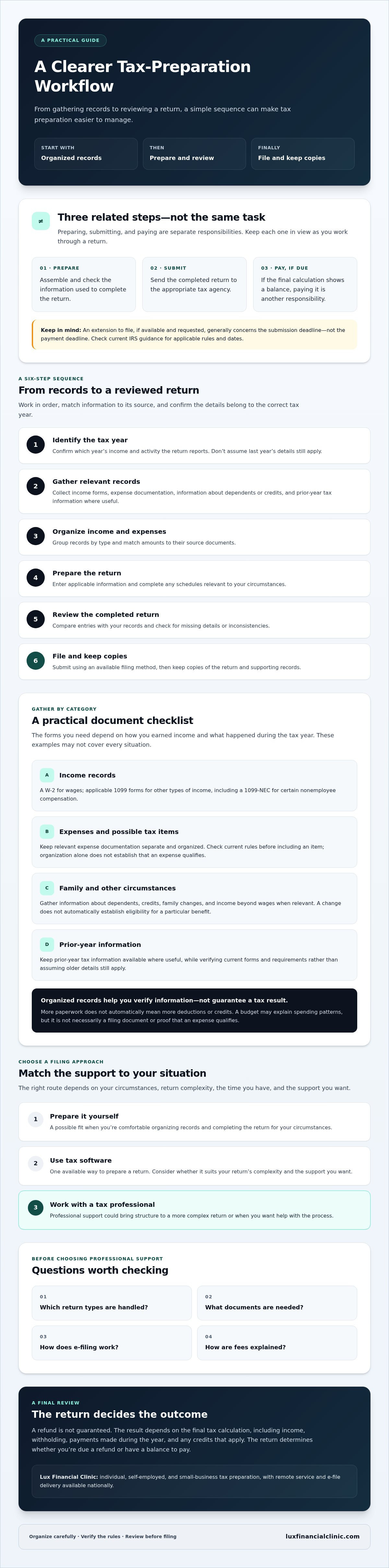
Preparation, submission, and payment are related, but they are separate steps. Preparing means assembling and checking the information used to complete a return. Submitting means sending the completed return to the appropriate tax agency. If the final calculation shows a balance due, paying that amount is another responsibility. An extension to file, if available and requested, generally concerns the submission deadline, not the payment deadline. Check current IRS guidance for applicable rules and dates.
A refund isn’t guaranteed. The result depends on the final tax calculation, including income, withholding, payments made during the year, and any credits that apply. The return determines whether you’re due a refund or have a balance to pay.
What information goes into a tax return?
Income records provide a starting point. These may include a W-2 from an employer and applicable 1099 forms for other types of income. Which forms you need depends on how you earned income and what happened during the tax year.
Deductions, credits, dependents, and other details also depend on your circumstances. A change in family situation or income beyond wages may affect what information you need to report, but it doesn’t automatically establish eligibility for a particular tax benefit. Check current IRS guidance to confirm which forms and requirements apply.
Why organized tax records matter
Complete, clearly grouped records help you report information accurately and make the return easier to review. If a form or figure raises a question, keeping the related documentation together can help you verify what belongs on the return instead of relying on memory. Organization supports careful preparation, but it doesn’t change the tax treatment of an expense or guarantee a credit or deduction.
Keep tax documents distinct from personal budgeting records. A budget may help explain spending patterns, but it isn’t necessarily a filing document or proof that an expense qualifies for tax treatment. Gather records related to your income and circumstances, then check the rules before including an item. More paperwork alone doesn’t mean more deductions or credits.
How Tax Preparation Works: From Document Gathering to a Reviewed Return
A dependable process moves from records to a checked return, with each step helping ensure the information belongs to the right tax year. For a return prepared in 2026, confirm the applicable tax year, forms, deadlines, and filing requirements using current IRS guidance. Don’t assume last year’s details still apply.
In brief, tax preparation moves from identifying the tax year and gathering records to organizing information, preparing the return, reviewing it, and filing it.
- Identify the tax year. Confirm which year’s income and activity the return reports.
- Gather records. Collect relevant income forms, expense documentation, information about dependents or credits, and prior-year tax information where useful.
- Organize income and expenses. Group records by type and match amounts to their source documents.
- Prepare the return. Enter applicable information and complete any schedules relevant to your circumstances.
- Review the completed return. Compare entries with the records and check for missing details or inconsistencies.
- File the return. Submit it using an available filing method, then keep copies of the return and supporting records.
Which tax documents should you gather first?
Start with income records, such as a W-2 for wages or a 1099-NEC for certain nonemployee compensation. You may receive different forms depending on your income and activities, so these examples may not cover every situation. As relevant, organize records for potentially deductible expenses, credits, dependents, and prior-year information in separate groups.
Before preparing the return, check whether you’ve received the forms you expect. An account statement or personal note may help you track information, but it may not replace an official tax document. The IRS’s Get ready to file your taxes guidance can help you review current preparation steps and records.
What should you review before filing?
Check names and identifying details carefully, then compare income entries with the source forms. Verify bank information if you provide it, and make sure applicable schedules are included. For example, Schedule C may apply to some business or self-employment income, but whether it applies depends on your circumstances and current requirements.
A deliberate review can catch a missing form, an entry that doesn’t match its source, or information that needs clarification. Keep a copy of the filed return and relevant records, and confirm current IRS guidance on how long to retain them. If you’d value help organizing a more involved return, individual tax preparation support is one option to consider.
DIY, Tax Software, or a Tax Preparer: Which Tax Preparation Route Fits?
There isn’t one right filing method for everyone. Your choice can depend on how many income sources and tax details you need to report, how confident you feel applying current requirements, how much time you can set aside, and whether you want personal support. A straightforward, well-documented situation may call for less assistance, while self-employment or mixed income sources can make closer review valuable.
You don’t automatically need a professional to prepare a return. Consider the work involved and the guidance you want, then compare the options:
| Route | Best-fit situation | Your responsibilities | Support level |
|---|---|---|---|
| Self-preparation | You’re comfortable working through the forms and instructions that apply. | Gather records, determine applicable forms, complete the return, and check it carefully. | Primarily your own research and review. |
| Tax software | You want prompts and calculations to guide you through preparation. | Confirm the software supports your forms and situation, enter accurate information, and review the completed return. | Guided steps, with help varying by provider and option. |
| Tax preparer | You want assistance organizing or preparing a return involving more moving parts. | Provide complete records, clarify your circumstances, and review the return before it’s filed. | Personal assistance, with scope varying by provider. |
When may self-preparation be a reasonable fit?
If your financial situation is well-documented and the forms involved are familiar to you, preparing the return yourself may feel manageable. That’s a starting point, not a universal rule. What seems simple can depend on individual details. If you use software, check its eligibility criteria, supported forms, and current filing requirements before relying on it. You’re still responsible for reviewing information submitted on your behalf, including names, income, and payment details.
When might professional tax preparation help?
Multiple income types, self-employment, business activity, or unfamiliar tax questions may make it useful to discuss your return with a preparer. Before choosing one, ask about experience with your type of return, how documents are handled, what the service includes, and how fees are explained. The IRS offers Tips for choosing a tax professional to help you decide what to ask. Professional assistance doesn’t guarantee a particular refund or remove your role in reviewing the return before filing.
How to Prepare Your Tax Documents and Reduce Avoidable Filing Problems
A practical checklist helps you gather relevant records without assuming every document applies to every return. Tax preparation is more orderly when you group records by purpose, note what’s missing, and confirm questions against current IRS guidance. Deductions and credits depend on your circumstances, supporting documentation, and the rules for the tax year. Collecting a document alone doesn’t establish eligibility.
- Income: Gather applicable W-2s, 1099 forms, and other records of income. Note any expected forms that haven’t arrived.
- Expenses: Set aside receipts, statements, or other records related to expenses that may be relevant. Check current rules before treating an expense as deductible.
- Family changes: Note changes such as a new dependent or a change in marital status, then confirm what details and documentation the return requires.
- Payments: Collect records of tax payments and withholding, and carefully verify bank details if you provide them for a refund or payment.
- Prior-year information: Keep the previous return and related records available when they help clarify carryover items or changes. Confirm current instructions before relying on prior-year treatment.
Before you begin, compare your checklist with the forms you expect to receive. Missing paperwork, entering the same amount twice, claiming a deduction or credit without adequate support, and mistyping direct-deposit details can all create avoidable problems. For example, compare each income entry with its source form and check that you haven’t entered the same form twice. Flag uncertainties instead of filling gaps with guesses. For forms, deadlines, and current eligibility details, use IRS resources, including the instructions for the tax year you’re filing.
How should self-employed and small-business records be handled?
If you have self-employment or business income, keep income and expense records organized separately from personal spending where practical. Depending on your activity and current requirements, Schedule C may apply, but don’t assume it fits every situation. Verify the form and instructions for the year involved. Readers with business records may also benefit from focused guidance in separate small-business or self-employed tax guides.
What if a tax document is missing or information changes?
Contact the organization that should issue the missing document and ask about its status or a replacement. Official IRS account resources may also help you check certain tax information. A change in income or family circumstances can affect what details your return needs, so pause and confirm the relevant instructions before filing. Consult current IRS guidance for next steps rather than guessing how to correct or update a return.
If you’d like help organizing records for an individual, self-employed, or small-business return, explore Lux Financial Clinic tax preparation.
Choosing Tax Preparation Support and Taking Your Next Step
Choosing help is easier when you know what the service includes and how the process works. Before sharing documents or agreeing to begin, clarify whether the provider handles your type of return, what you’ll need to provide, and how you’ll review the completed filing. Clear expectations can help you choose support that fits your circumstances without assuming every return requires the same level of assistance.
What should you ask a tax preparer before working together?
Use an initial conversation to understand both the scope of the work and your role in it. Consider asking:
- Return types: Do you prepare returns involving my income sources and circumstances, such as employment, self-employment, or small-business activity?
- Documents: What records will you need, and how should I provide them?
- Scope: Which preparation and review steps are included? Are there circumstances or forms that fall outside the service?
- Communication: How can I ask questions, and how will I receive updates or requests for clarification?
- Review and filing: How will I review the return before filing, how will it be delivered, and is e-file available for my return?
- Fees: How are fees explained before work begins, and could the scope change if the return involves additional details?
Fees and services vary according to the provider and the complexity of the return, so ask for a clear explanation before proceeding. Professional help can bring structure to a more involved filing, but it doesn’t guarantee a particular refund or remove the value of reviewing your return carefully.
How can Lux Financial Clinic support your filing process?
Lux Financial Clinic offers individual tax preparation, preparation for self-employed people and 1099 earners, and small-business tax preparation. Its service is available remotely across the United States, with e-file delivery. These options may suit people seeking assistance organizing a return with multiple income sources or business records. A conversation about your filing needs can help clarify which type of support may fit, without requiring an immediate commitment.
If you’re ready to discuss your circumstances and the records you have, discuss your tax preparation needs with Lux Financial Clinic.
Take the Next Step With Greater Clarity
A well-prepared return starts with records that match the correct tax year, continues with careful entry and review, and ends with filing through an approach suited to your circumstances. Organized documents can help you check income and relevant details, while confirming current IRS requirements helps you avoid relying on assumptions. The right level of support depends on your return’s complexity, your confidence, and how much guidance you want.
Thoughtful tax preparation doesn’t guarantee a particular refund, but it can bring structure to the filing process. Lux Financial Clinic offers preparation for individual, 1099 self-employed, and small-business returns, with remote service across the United States and e-file delivery.
If you’d like to discuss which support may fit your situation, explore tax preparation support from Lux Financial Clinic. A clear next step can make filing feel more manageable, and you can move forward at a pace that feels right for you.
Frequently Asked Questions
What is tax preparation, and how is it different from filing taxes?
Tax preparation is organizing financial information, applying relevant tax rules, and completing a return for review. Filing is the separate step of submitting that return to the tax agency. Paying any balance due is separate, too. You can prepare a return yourself, use software, or work with a preparer. Whichever method you choose, review the finished return and confirm current filing and payment requirements.
What documents do I need for tax preparation?
Gather documents that reflect your income and circumstances. These may include W-2 forms for wages, applicable 1099 forms, records of tax payments, and documents related to dependents or expenses that may be relevant. Keep your prior-year return available if it helps clarify information. Not every form applies to every taxpayer, and having a document doesn’t automatically mean an expense qualifies for a deduction. Check current IRS guidance for the forms you need.
Can I prepare my own tax return, or should I hire a tax preparer?
You may be comfortable preparing your own return if your records are organized and you understand the forms and rules involved. Software can provide guided steps, while a tax preparer may help organize a return with multiple income sources, self-employment, or unfamiliar questions. There’s no single approach for everyone. Compare complexity, time, confidence, and the support you want, and review the return before it’s filed regardless of who prepares it.
How much does tax preparation cost?
Tax preparation fees vary by provider and the complexity and scope of the return, so there isn’t one price that applies to everyone. A return with multiple income sources or business activity may involve different work than a more straightforward filing. Before agreeing to proceed, ask what services are included, how fees are determined, and whether the amount could change if additional forms or details are required. Request a clear explanation before work begins.
Is tax preparation different for self-employed people?
It can involve additional records because self-employed taxpayers may need to organize business income and expenses as well as other tax information. Schedule C may apply to some business or self-employment activity, but the correct forms depend on individual circumstances and current IRS requirements. Keep business records organized separately from personal records where practical, and verify which forms and rules apply. A preparer familiar with self-employed returns may help clarify a more involved filing.
What happens if I find a mistake after filing my tax return?
First, identify the specific error and compare it with your source documents. Then check current IRS instructions for what to do. The appropriate next step depends on the type of mistake and the status of your return. Don’t submit another return or make a correction based on guesswork. Keep relevant records and any IRS correspondence together. If the issue is complex, consider asking a qualified tax professional to help you understand your options.
When should I start preparing my 2025 tax return in 2026?
Ideally, begin organizing records as tax documents arrive so you have time to check for missing forms and review your return. The IRS began accepting 2025 returns on January 26, 2026, and the federal filing deadline was April 15, 2026. If you requested an extension, the filing deadline is October 15, 2026, but taxes owed were still due April 15. Check IRS guidance for your situation and any current updates.


