
Before pursuing a business goal, it helps to understand which parts of your financial profile may matter. Personal credit, business credit, inaccurate report details, and funding strategy are different concerns, and each calls for a different next step. Credit repair for women entrepreneurs is most useful when it addresses a specific credit-report concern, not when it’s treated as a solution to every financing question.
If a collection, late payment, or unfamiliar inquiry may be inaccurately reported, start by comparing the entry with your records. It’s also important to distinguish a reporting issue from the work of building financial habits or deciding whether funding suits your business. A dispute can address information you believe is inaccurate or incomplete, but it can’t guarantee a score change or financing outcome.
This guide explains how to review the credit information connected to your goal, identify details that may warrant a dispute, and distinguish credit repair from broader financial guidance and funding consulting. Use the practical steps to organize your records and choose a next move based on the question you need to answer.
Key Takeaways
- Credit repair for women entrepreneurs is most relevant when a specific report item may be inaccurate or incomplete, not as a fix for every business-finance concern.
- Use a goal-led review: identify your objective, examine your reports, note the details in question, and organize relevant records.
- Credit repair, broader financial guidance, and funding advice address different needs. Match the support to the question you’re trying to answer.
- Keep personal and business records distinct so you can see which information relates to your goal.
- Lux Financial Clinic offers basic and comprehensive credit repair packages. The comprehensive option includes a personalized credit-building roadmap and dedicated strategist support.
Credit repair for women entrepreneurs: what it can, and cannot, address
A financial setback is something to assess, not a judgment of your ability to build or lead a business. A late payment, collection, or unfamiliar inquiry on a credit report may need a closer look. It doesn’t define your skills, the value of your work, or your business’s potential.
Credit repair generally involves reviewing credit reports and disputing information you believe is inaccurate or incomplete. Examples include an account that doesn’t belong to you, a payment reported incorrectly, or an item appearing more than once. The process focuses on the accuracy of reported information, not on removing every negative entry. This Credit Repair Overview offers general background. For a practical review, focus on the specific information connected to your goal.
Why an entrepreneur might review personal credit
Your business goal can help determine which records to review. If you’re considering financing, the application’s requirements may make personal credit, business credit, or both relevant. Requirements vary, so no particular score can promise approval. Personal financial history and business-credit information are separate; they may inform different parts of a decision and aren’t interchangeable.
For example, if you’re exploring financing, first identify which credit information the application considers. If your priority is improving business recordkeeping, organizing accounts and obligations may be more useful. Reviewing personal credit can help in either situation, but it isn’t automatically the main task for every entrepreneur or funding path. Let the goal guide the review.
What credit repair does not promise
A dispute asks for information you believe is inaccurate or incomplete to be reviewed. It isn’t a request to erase a legitimate debt because it’s difficult to manage, or to remove accurate negative information without a factual basis. Credit repair also can’t guarantee a specific score change or funding decision. The result depends on the information in the reports and how it is reviewed. A separate financing decision depends on its own criteria.
As you begin, separate what you know from what you need to verify:
- Identify the item. Note the account, inquiry, balance, or payment detail that concerns you.
- Compare the facts. Check the entry against your records and note any specific discrepancy.
- Define the goal. Decide whether you’re seeking accurate reporting, better financial organization, or information relevant to exploring funding.
This distinction is central to credit repair for women entrepreneurs: the aim is a clearer, more accurate understanding of the report, not a promised result. With that clarity, you can decide whether a specific item warrants attention or whether another kind of financial support better fits your immediate need.
How a structured credit repair process works, from reports to disputes
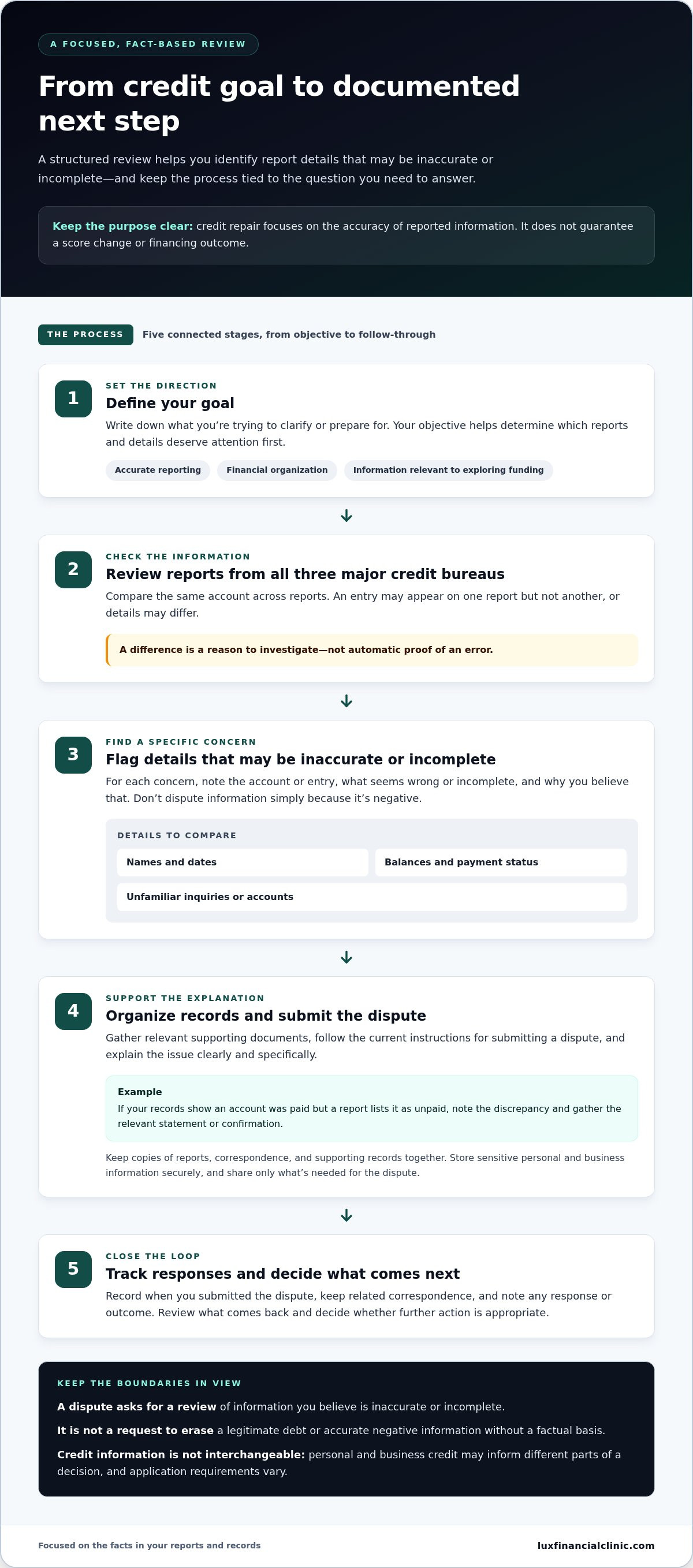
A useful dispute process starts with a clear objective, not a stack of letters sent without context. Your goal might be to understand a particular account before exploring funding or to correct a payment history that doesn’t match your records. A methodical review keeps the effort focused on facts relevant to that goal.
- Define the goal. Write down what you’re trying to clarify or prepare for. This helps you decide which reports and details deserve attention first.
- Review your reports. Examine information from all three major credit bureaus. An entry may appear on one report but not another, or details such as the balance or payment status may differ. A difference is a reason to investigate, not automatic proof of an error.
- Flag specific concerns. Note the account or entry, what seems incorrect or incomplete, and why you believe that. Don’t dispute information simply because it’s negative.
- Organize records and submit the dispute. Gather relevant supporting documents and follow the current instructions for submitting a dispute. Explain the issue clearly and specifically.
- Track responses and next steps. Record when you submitted the dispute, keep related correspondence, and note any response or outcome. Review what comes back and decide whether further action is appropriate.
Review reports and document the concern
Compare the same account across reports. Check names, dates, balances, payment status, and unfamiliar inquiries. For example, if your records show an account was paid but a report lists it as unpaid, write down that discrepancy and gather the relevant statement or confirmation. Keep copies of reports, correspondence, and supporting records in one organized file. Store sensitive personal and business information securely, and share only what’s needed for the dispute.
For each concern, record which report and account are involved, the detail you’re questioning, why it may be inaccurate or incomplete, and which documents support your explanation. This makes it easier to stay consistent if you revisit the issue. A three-bureau credit dispute guide can also help you understand how a coordinated review may work across the bureaus.
Submit clearly and follow through
Each dispute should identify the information being challenged and explain the factual basis for your concern. Asking for a potentially inaccurate entry to be investigated is different from asking for accurate information to be removed. Keep copies of what you submit and any replies, and record dates so the history is easy to follow. Procedures can change, so consult current credit-report dispute guidance from the Consumer Financial Protection Bureau or the Federal Trade Commission.
If you want structured help organizing disputes about inaccurate negative items, Lux Financial Clinic’s credit repair support can be part of a deliberate review plan.
Credit repair, credit counseling, and funding advice: which support fits?
The right support depends on the question you’re trying to answer. If a report contains a detail that appears wrong, a dispute-focused review may fit. If your main challenge is managing cash flow or building financial habits, broader financial education may be more relevant. If you’re considering capital, funding consulting can help you think through opportunities and preparation, without promising approval.
| Type of support | Purpose and typical focus | Question it can help clarify |
|---|---|---|
| Credit repair | Reviewing credit reports and disputing potentially inaccurate or incomplete information. | Does a specific entry appear inconsistent with my records? |
| Credit counseling | Broader financial education or guidance, often centered on budgeting, spending patterns, and managing obligations. | How can I organize my finances and make a workable plan? |
| Funding advice | Exploring funding opportunities and considering how a business might prepare for an application. | What funding paths might fit my business, and what should I understand before applying? |
When credit repair may be relevant
Suppose you find a collection account you don’t recognize or a payment status that conflicts with your records. Compare the report with relevant documents and identify exactly what appears inaccurate or incomplete. That gives you a factual basis for deciding whether to dispute the entry. A score concern alone doesn’t show that a reporting error exists; other factors may be involved.
Credit repair for women entrepreneurs is most relevant when there’s a specific report concern to investigate, rather than a general wish to raise a score. Keep the questions narrow: Which entry concerns me? What do my records show? Which detail needs clarification? This focus helps distinguish a reporting issue from a need for budgeting support or funding guidance.
When broader guidance may be more relevant
If your main concern is balancing business and personal expenses, planning around irregular income, or understanding day-to-day financial habits, broader financial education may better match the need. That work is different from disputing report information. If you’re weighing capital for a defined business purpose, Lux Financial Clinic’s funding consulting can help you examine potential opportunities and preparation needs. It can’t guarantee that a lender will approve an application or offer particular terms.
Before pursuing funding, clarify what the capital would support, which records you need to organize, and what questions you have about eligibility. A credit readiness for business funding guide can help you think through preparation as a separate step from disputing report information.
If the right path isn’t immediately clear, write down the main issue in one sentence. “I need to question an unfamiliar account” points toward a credit-report review. “I need a more manageable budget” signals a broader financial-education need. “I’m assessing capital for a business expense” calls for funding-focused preparation. Starting with the question can bring clarity before you choose your next step.
A practical credit-readiness checklist for women building businesses
Readiness doesn’t require solving every financial question at once. Start with one goal that matters to your business now, such as improving financial organization or preparing to explore funding. A defined aim helps you decide what information to gather and which next step is useful, rather than reacting to a score or deadline without context.
Questions to clarify before taking action
Consider the decision or milestone you hope to prepare for over the coming months. Is your concern about the accuracy of a report, your financial habits, or your readiness to explore funding? Write down relevant deadlines, the records you already have, and unanswered questions. Separating these topics helps you identify whether the next step is a report review, better organization, or a funding-focused conversation.
- Define the objective. Describe the outcome you’re preparing for in practical terms, such as organizing finances before considering a business funding application.
- Separate personal and business information. Keep personal reports, account statements, and obligations apart from business accounts, records, and obligations. Note which questions relate to each category.
- Gather useful records. Collect relevant statements, account details, and other documents in a secure place. Keep a short list of what’s missing so you can follow up without searching through unrelated files.
- Set a manageable review routine. Choose a recurring time to review relevant reports and account statements. Consistent recordkeeping supports a clearer picture, but it doesn’t guarantee a particular score or financing result.
Small habits that support a clearer financial picture
Make the routine sustainable. For example, review personal account statements separately from business cash flow, then note any questions that need attention. Separating the records makes it easier to see which obligations belong to you personally and which are associated with the business. Revisit your plan when income patterns, business priorities, or upcoming decisions change.
Credit readiness isn’t the same as pursuing a score target at any cost. Avoid taking on new debt solely to try to reach a particular score or because someone suggests borrowing will guarantee access to funding. Instead, assess whether a financial step serves a clear business purpose, fits your circumstances, and aligns with the records you’re organizing. Keep funding preparation distinct from addressing a specific report concern.
Use this brief check-in whenever you review your plan:
- Is my next goal still relevant to the business?
- Do I understand which personal or business records relate to it?
- Are my questions about report accuracy, financial habits, or funding readiness?
- What is one practical action I can take without overextending myself?
These habits create a steadier foundation for decisions, without treating credit as a measure of your worth or business ability. For tailored support reviewing credit concerns and planning next steps, explore a financial diagnostic consultation with Lux Financial Clinic.
How Lux Financial Clinic supports a deliberate credit-repair plan
A considered credit-repair plan begins with the information on your reports and the goal you’re working toward. Lux Financial Clinic uses structured dispute protocols to address inaccurate negative items across the three major credit bureaus. The focus is on reviewing specific entries and supporting disputes where information is believed to be inaccurate, not on promising that every challenged item will be changed or removed.
What a structured, individualized approach can include
Negative items for review may include collections, charge-offs, late payments, and hard inquiries. A focused review looks at the details of each entry and whether there’s a factual concern to address. For example, if an account’s reported status appears inconsistent with your records, that discrepancy can be considered as part of a dispute. Accurate information isn’t automatically removable simply because it affects your credit profile.
Lux offers a basic repair package and a comprehensive package. The comprehensive option includes a personalized credit-building roadmap and dedicated strategist support. The right level of support depends on your needs and the scope of guidance you’re seeking. Credit review can also sit alongside practical business goals and financial organization as part of a broader financial plan.
For credit repair for women entrepreneurs, define what you want from support before choosing a path. Are you seeking help with specific report concerns, or do you also want a broader roadmap for building your credit profile over time? A clear answer helps distinguish addressing inaccurate information from pursuing ongoing credit-building guidance.
Choose a next step with clarity
Credit repair and funding consulting serve different purposes. Credit repair focuses on potentially inaccurate report information. Funding consulting is a separate discussion about funding opportunities and preparation; it doesn’t promise approval or determine a lender’s decision. If your immediate question is about credit, start with the report concern. If you’re exploring capital for a business goal, focus on the funding question and the records relevant to it.
You don’t need to resolve every financial consideration at once. A financial diagnostic consultation can help bring your goals and questions into clearer focus. From there, consider what type of support aligns with your priorities, without treating credit repair as a guaranteed route to a particular score or funding outcome.
For structured support focused on inaccurate negative items and a plan aligned with your needs, explore Lux Financial Clinic’s credit repair support.
Choose a next step that supports your business vision
Your financial picture can evolve as your business does. Rather than trying to address every concern at once, choose one decision you want to feel better prepared to make. A focused next step can organize your questions and help you move forward without treating credit as a measure of your entrepreneurial ability.
For credit repair for women entrepreneurs, progress begins with an approach that fits the need in front of you. Lux Financial Clinic’s structured dispute support and comprehensive package, which includes a personalized credit-building roadmap, are options to consider as you shape that approach. Thoughtful preparation is a meaningful step in itself.
Take a practical next step with Lux Financial Clinic: explore credit repair and financial support options and choose the support that aligns with your business goals.
Frequently Asked Questions
Can credit repair help women entrepreneurs prepare for business funding?
Credit repair for women entrepreneurs may help address inaccurate information that could be relevant during preparation, but it doesn’t determine whether a lender will approve an application. Requirements vary by lender and funding product, and approval is never assured. If you’re preparing to apply, identify which records the application considers, then review those records for factual issues. Keep credit-report work separate from estimating eligibility or choosing a funding option.
Does credit repair remove accurate negative information from a credit report?
No. Accurate negative information isn’t automatically removable through a dispute. Disputes are for details you believe are inaccurate or incomplete, such as an account status that conflicts with your records. If an entry is accurate, focus on managing accounts going forward. Don’t rely on promises to erase legitimate debts or accurate reporting simply because an item affects your credit profile.
Should entrepreneurs focus on personal credit or business credit first?
Start with the type of credit information connected to your immediate goal. Personal and business credit are distinct, so review them separately rather than assuming one stands in for the other. If you’re preparing for a business application, determine what information the application requests. If you’re organizing personal finances, begin with your own accounts and reports. This goal-based approach keeps the review relevant without assuming every lender weighs credit the same way.
Is credit repair the same as credit counseling?
No. Credit repair focuses on reviewing credit reports and disputing information believed to be inaccurate or incomplete. Credit counseling is broader financial education or guidance, which may address budgeting, spending choices, or managing obligations. Consider the question you need answered: a possible reporting error points toward a dispute review, while difficulty creating a workable household or business budget may call for broader financial guidance.
How do I know whether an item on my credit report may be inaccurate?
Compare the entry with your records and look for a specific factual mismatch. Check whether the account is familiar and whether its dates, balance, or status align with statements or payment confirmations. Write down the detail that concerns you and gather relevant documents before responding. A confusing or negative entry alone doesn’t prove an error. For current dispute steps, consult official guidance from the Consumer Financial Protection Bureau or Federal Trade Commission.
Can a credit repair service guarantee a higher credit score?
No service should promise a specific score change. A dispute may lead to a correction if information is found to be inaccurate or incomplete, but the result depends on the report details and how they’re reviewed. A score can also reflect information beyond the item you’re questioning. Be cautious about treating a particular score increase as certain, especially when making business plans that depend on financing decisions made by others.
What should I organize before starting a credit review?
Gather the reports you plan to review, statements or account records relevant to any concern, and correspondence about those accounts. Write down your goal and the questions you want answered, such as whether a balance or payment status matches your records. Keep personal and business documents in separate, secure files, and avoid sharing unrelated sensitive details. A simple folder and a dated notes document can make follow-up easier and more orderly.


