
The closest tax preparer isn’t always the best fit for a 1099 return. If you’re searching for a self employed tax preparer near me, you may be weighing convenience against the need for someone who understands income from multiple clients, business expenses, and your personal filing details.
Tax software offers a self-guided route. A preparer-led service gives you more opportunity to discuss your income mix and the records you provide. The right choice depends on how complex your records are, how comfortable you are preparing a return, and how much guidance you want.
This article explains how to compare filing options, what self-employed tax preparation should cover, and which information to organize before you begin. Lux Financial Clinic provides remote self-employed and 1099 tax preparation across the United States, with e-file delivery and a focus on compliant filing. Organized records can help you approach your return with more clarity, without assuming a particular refund or outcome.
Key Takeaways
- Choose a filing approach based on the complexity of your self-employment income and how much guidance you want.
- Compare DIY software, software with professional review, and preparer-led filing by considering your involvement, recordkeeping, and need for explanations.
- Searching for a self employed tax preparer near me is one option. Remote tax preparation can also connect you with support from across the United States.
- Before filing, gather income records, business expense documentation, your prior-year return, and relevant personal tax information.
- Lux Financial Clinic provides self-employed, individual, and small-business tax preparation to support a more organized filing process.
Self-Employed Tax Preparer Near Me: What Support Do You Actually Need?
Start with the decision that matters most: how much help do you want preparing a return that includes self-employment income? A self-employed tax preparer helps organize information and prepare and file applicable returns. The role is to make the process clearer, not to promise a particular refund or tax result.
A search for a self employed tax preparer near me may reflect a preference for personal guidance and a chance to discuss questions. But proximity isn’t the only way to get support. Remote tax preparation may suit people who prefer working from home or want professional help without an in-person appointment. Lux Financial Clinic provides remote tax preparation across the United States, with e-file delivery.
When does self-employment make tax preparation feel more complex?
Freelancers, independent contractors, and sole proprietors may earn income from one client or several, sometimes alongside wages or other personal income. For example, a graphic designer might receive payments from several clients while also earning income from a part-time job. Each source adds records to organize and details to account for when preparing a return.
Incomplete invoices, scattered payment records, or business purchases mixed with personal spending can make it harder to see the full picture. The tax treatment of income and expenses depends on the details and current rules, so don’t assume that a form alone explains how an item should be handled. For general background, the Self-employment tax overview provides context about self-employment in the United States. Check current IRS guidance for specific filing requirements.
What should a self-employed preparer help you understand?
Useful preparation starts with bringing the relevant information together: income records from clients and payment platforms, business expense information, and personal tax details that may affect the return. A preparer can help identify what information is relevant, flag gaps that need clarification, and explain what’s being requested in plain language.
A self-employed tax preparer helps organize income, expense, and personal tax information to prepare and file applicable returns with greater clarity.
You should also understand the steps ahead: which records are needed, what questions remain, and how the information you provide is used to prepare the return. Clear explanations make it easier to take part in the process, whether your income comes from one contract or several sources.
How to Compare Self-Employed Tax Preparers and Filing Options
The best filing approach depends on the complexity of your records and how much responsibility you want to manage yourself. A preparer-led service isn’t automatically necessary. More support may be useful if you have income from several sources, unclear expense records, or questions you’d rather discuss with a professional.
Tax software, professional review, or full-service preparation?
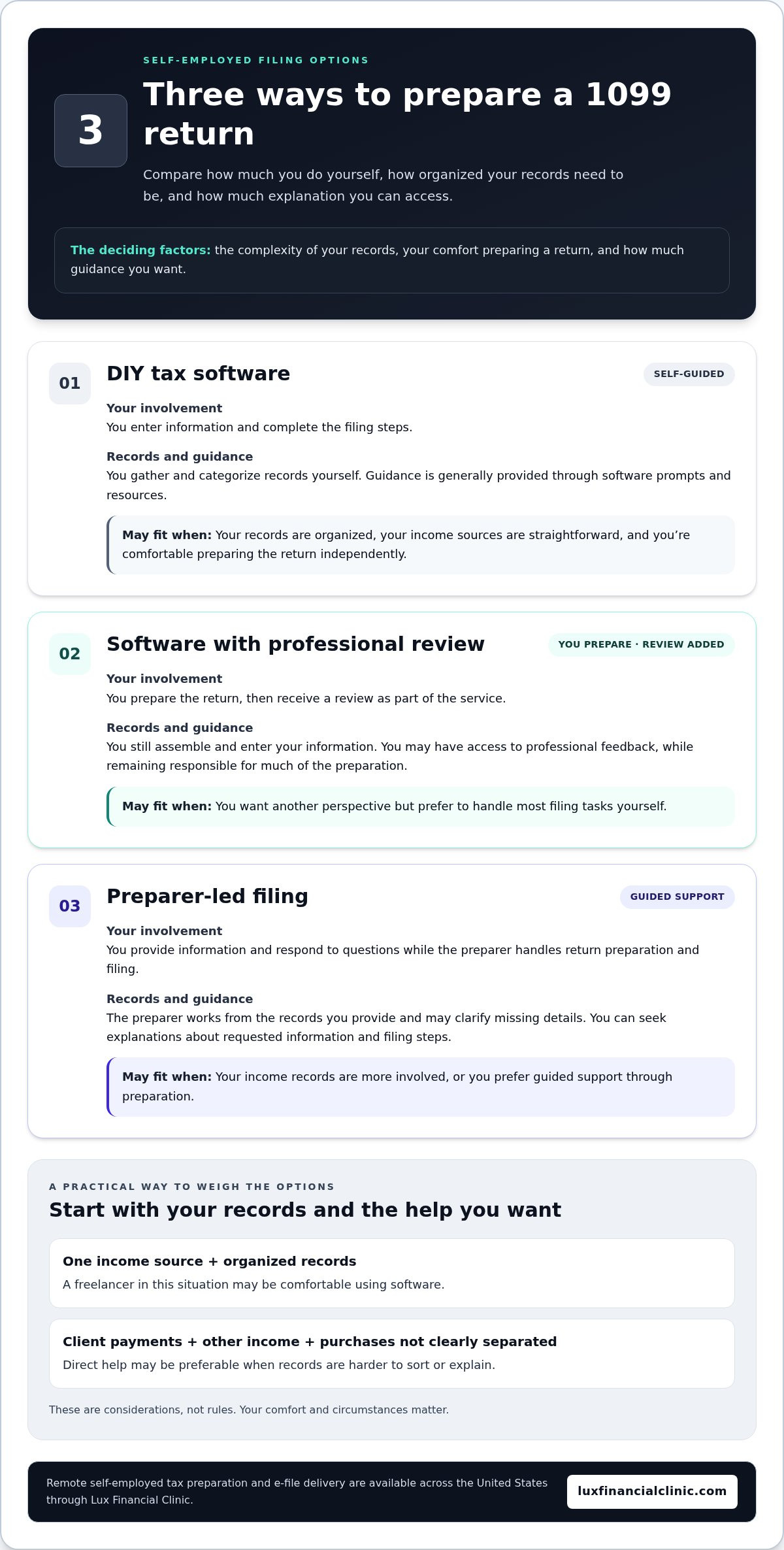
Use this comparison to decide how involved you want to be. The same option won’t suit every self-employed filer.
| Filing option | Your involvement | Document organization | Access to explanations | May fit when |
|---|---|---|---|---|
| DIY tax software | You enter information and complete the filing steps. | You gather and categorize records yourself. | Guidance is generally provided through the software’s prompts and resources. | Your records are organized, your income sources are straightforward, and you’re comfortable preparing the return independently. |
| Software with professional review | You prepare the return, then receive a review as part of the service. | You still assemble and enter your information. | You may have access to professional feedback, while remaining responsible for much of the preparation. | You want another perspective but prefer to handle most filing tasks yourself. |
| Preparer-led filing | You provide information and respond to questions while the preparer handles return preparation and filing. | The preparer works from the records you provide and may clarify missing details. | You can seek explanations about requested information and filing steps. | Your income records are more involved, or you prefer guided support through preparation. |
For example, a freelancer with one income source and organized records may be comfortable using software. Someone managing client payments, other income, and business purchases that aren’t clearly separated may prefer direct help. These are considerations, not rules. Your comfort and circumstances matter.
Which qualities matter when comparing professional support?
Look for a process that clearly explains what information you’ll provide, how questions are handled, and how the return moves toward filing. Relevant experience with self-employment income matters, as does clear communication about records that need explanation. The IRS Self-Employed Individuals Tax Center is a useful reference for general filing information. For a broader overview of personal filing, see this 2026 personal tax preparation guide.
Lux Financial Clinic provides self-employed tax preparation remotely across the United States, with e-file delivery. Review self-employed tax preparation support to learn about a guided option for organizing your filing process.
Does a Self-Employed Tax Preparer Make Sense for Your Situation?
Hiring a tax professional is a choice, not an automatic requirement for everyone with 1099 income. Preparing your own return may feel manageable if your records are orderly and you’re comfortable following filing instructions. Professional support may help if you want to organize details, discuss questions, or coordinate self-employment income with your personal tax information. Neither approach guarantees a particular tax result.
When might professional preparation be helpful?
Consider guided preparation if you receive income from several clients, have business activity alongside personal income, or aren’t sure how to sort your records. You might have invoices in one system, payment records in another, and business purchases mixed with personal transactions. A preparer can help bring those details into a clearer filing picture and explain what information is needed. Reporting and tax treatment depend on your circumstances and current IRS guidance, so don’t assume that a form or expense is handled the same way in every case.
If you’re searching for a self employed tax preparer near me, focus on the help you want, not location alone. A preference for direct conversation may point you toward professional support, while remote preparation can also provide a guided process. The IRS offers general considerations for choosing a tax professional, including questions to consider as you assess whether a preparer’s approach fits your needs.
When might a self-directed filing approach be enough?
Preparing your own return may suit you if you understand your income sources, keep business records consistently, and feel comfortable working through software prompts. For example, a freelancer with a well-maintained record of client payments and clearly documented business activity may prefer to enter information and review each step independently.
Before deciding, consider these practical questions:
- Can you identify and organize the income records you’ll use?
- Are your business and personal details easy to distinguish?
- Do you understand the questions the filing process asks, or know how to find reliable guidance?
- Would you rather manage each step yourself, or have someone help explain the process?
Your answers can help clarify the right level of support. Record quality, return complexity, and your confidence with filing all matter. Choosing professional preparation doesn’t mean you’re unable to file independently, and choosing software doesn’t mean you have to ignore uncertainty. The goal is a process that helps you provide complete information and understand how your return is prepared.
What to Prepare Before Working With a Self-Employed Tax Preparer
Organizing records before tax preparation begins can make it easier to explain how you earned income and what documents you have. You don’t need to anticipate every question. Gather the documents that apply to you, group them by tax year, and make a note of anything you’re unsure about.
Which records should self-employed filers gather?
Start with income and business records, then add personal tax information relevant to your circumstances. Not every item applies to every filer, and forms or requirements can change. Verify current filing guidance with the IRS or your preparer.
- Income records: Applicable Forms 1099, invoices, payment statements, and other records of money received. Not all income arrives on a 1099, so include records of other business income as well.
- Business activity and expense records: Receipts, purchase records, and, if relevant to your work, mileage logs or other records that help explain business activity. Whether an expense qualifies for a particular tax treatment depends on current rules and your circumstances.
- Prior-year filing documents: A copy of your previous tax return and related records can provide useful context, if available.
- Personal tax information: Relevant details about your personal filing situation, such as information about other income or life changes that may affect the return.
- Estimated-payment information: If you made estimated tax payments, gather the dates and records of those payments. Verify applicable forms, deduction treatment, and payment guidance using current IRS information.
How can you make the preparation process smoother?
Use a consistent filing system, even if it’s simple. Separate records by tax year, then group them by income source or business activity. For example, keep client payment records together and organize receipts separately instead of relying on one mixed folder. If an item is missing or unclear, make a note rather than guessing.
Before discussing your return, write down changes since your last filing, questions about your records, and anything you’re unsure how to handle. This gives you a focused starting point and helps bring important context into the preparation process. For broader filing context, see the 2026 tax preparation guide.
If you’re looking for a self employed tax preparer near me and prefer guided support, Lux Financial Clinic provides remote self-employed tax preparation across the United States, with e-file delivery. Learn more about self-employed tax preparation and the records that can help you get organized.
How Lux Financial Clinic Supports Self-Employed Tax Preparation
Self-employment income can make a personal tax return feel connected to several parts of your financial life. Lux Financial Clinic prepares taxes for self-employed and 1099 filers, individuals, and small businesses, bringing relevant income, expense, and personal filing information into an organized return. The focus is clear, compliant preparation based on the details you provide.
What does Lux Financial Clinic’s tax preparation support cover?
Lux Financial Clinic provides self-employed and 1099 tax preparation, as well as individual and small-business returns. Organizing income and expense information is an important part of preparing a return. Records help establish the activity to report and provide context for items that may need clarification. The information relevant to your filing depends on your circumstances, so keep questions and uncertainties visible instead of making assumptions.
Lux Financial Clinic focuses on compliant filing and maximizing refunds where appropriate. A refund depends on the facts of an individual return, and no particular refund or outcome is promised. Clear preparation means working from the information available and helping you understand the process, not relying on unsupported expectations.
How can you begin a more organized filing process?
Before starting, gather the records you have and arrange them by tax year and category. Keep income documents together, separate business expense information, and include relevant personal tax records. If a document is missing or an item is unclear, make a note so it can be addressed during preparation. You don’t need to resolve every question on your own before beginning.
Remote service gives you a way to work with Lux Financial Clinic from across the United States. E-file delivery supports a remote filing process, so searching for a self employed tax preparer near me doesn’t mean support has to be limited to an in-person appointment. Start by identifying the filing help you need and gathering records that reflect your income and circumstances.
To get started, explore tax preparation support with Lux Financial Clinic.
Choose Filing Support That Fits Your Next Step
The right filing approach depends on your records, income mix, and comfort managing the process yourself. Organized filers with straightforward needs may prefer software. Those seeking help coordinating 1099 income and personal tax details may value guided preparation. Whichever route you choose, clear records and an understanding of what information is needed can make filing more manageable.
A search for a self employed tax preparer near me can be a starting point, but convenient support doesn’t have to be in person. Lux Financial Clinic provides self-employed and 1099 tax preparation, along with individual and small-business tax services, through remote preparation and e-file delivery across the United States. The focus is compliant filing and pursuing refunds where appropriate, without promising a particular outcome.
If professional guidance fits your situation, explore self-employed tax preparation with Lux Financial Clinic. Bring the records you have and the questions you want answered to begin a more organized filing process.
Frequently Asked Questions
Can I use a tax preparer if I receive 1099 income?
Yes. You can work with a tax preparer if you receive 1099 income. A preparer can help organize income records and prepare applicable returns using details about your full filing situation. A 1099 is one type of income document, so you may also need information about other income and personal tax details. Keep accurate records and check current IRS guidance for reporting requirements that apply to you.
What should I bring to a self-employed tax preparer?
Gather applicable Forms 1099, other income records, business expense documentation, relevant personal tax information, and a prior-year return if you have one. Receipts and records related to business activity may also help explain the information you provide. Organize documents by tax year and activity, and note any missing or unclear items. Your preparer may need additional details depending on your circumstances, so verify current IRS requirements before filing.
Is it worth hiring a tax preparer when I am self-employed?
It may be helpful if you have several income sources, questions about your records, or both personal and business details to include. A self-directed approach may work if your records are organized and your filing situation is familiar. Compare the complexity of your return with the level of guidance you want. A preparer can assist with preparation but can’t guarantee a refund or specific tax outcome.
Can I work with a self-employed tax preparer remotely?
Yes. Remote tax preparation can be an option if you prefer to share information and complete filing steps online. Lux Financial Clinic provides remote tax preparation and e-file service across the United States. To get organized, group records by tax year and income source, then keep questions handy as you work through the process. Check current IRS guidance for filing and document requirements that apply to your circumstances.
What is the difference between a tax preparer and tax software?
Tax software guides you through a self-directed filing process, while a preparer provides professional assistance with preparing your return. Some filing options combine software with a professional review. Preparer-led service involves more direct assistance with preparation. Consider how much you want to handle yourself, how organized your records are, and whether you’ll need explanations. The right fit depends on your situation, not a blanket rule that one option is best.
Can a tax preparer help me maximize my refund?
A tax preparer can help organize your information and prepare a return that reflects the details and deductions applicable to your situation. The result depends on your income, records, eligibility, and current tax rules. No preparer can responsibly promise a particular refund before reviewing the relevant information. Ask for clear explanations of the filing approach, and use current IRS guidance to understand rules that may affect your return.


