
A fast-funding promise isn’t a credit strategy. Small business credit consulting should help you understand where your business stands, identify questions to address, and connect credit readiness with your funding goals, without guaranteeing an outcome.
If you’re unsure whether a lender may assess your personal credit, your business credit, or both, you’re not alone. It can also be hard to know whether to review credit reports, organize business records, or prepare financial information before applying. The right guidance starts by clarifying those priorities, not by rushing you toward a product or promising approval.
This 2026 guide explains what small business credit consulting can cover, where its limits are, and how to compare advisory approaches by process, transparency, and fit. You’ll learn how credit education, a financial diagnostic, and business funding guidance can work together to organize practical next steps. The goal is to clarify what to address now and what to prepare before seeking financing, so your decisions reflect your business needs rather than pressure.
Key Takeaways
- Learn what small business credit consulting can clarify, and why guidance is different from lending or a promise of funding approval.
- Understand how personal credit, business credit, and lender considerations can relate while serving distinct roles.
- Compare education, credit repair, funding consulting, and broader financial guidance by their focus and fit for your needs.
- Prepare for a useful conversation by defining your goal, gathering relevant records, and listing your key questions.
- See how a financial diagnostic can help organize priorities and shape a tailored path forward with Lux Financial Clinic.
What Small Business Credit Consulting Can, and Cannot, Help You Address
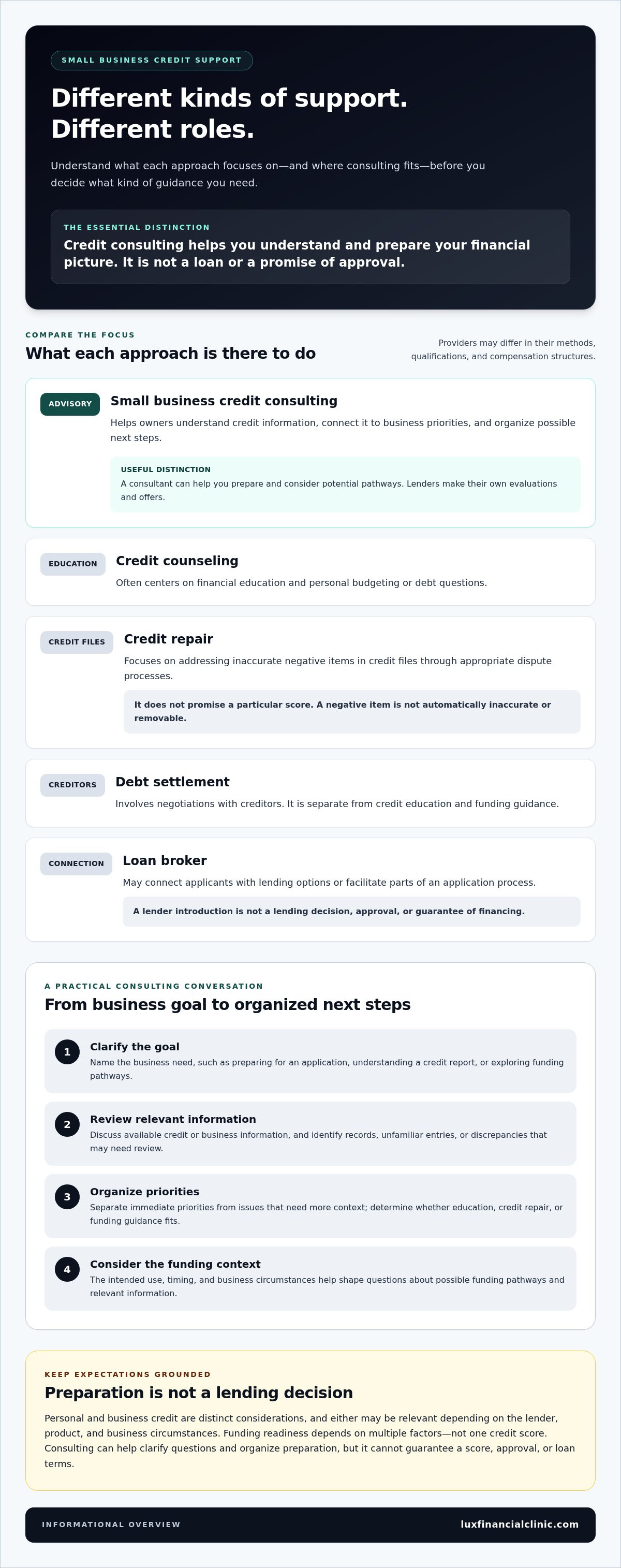
Small business credit consulting is advisory support that helps owners understand credit information, connect it to business priorities, and organize possible next steps. It can provide education and planning, but it isn’t a loan, a credit product, or a lender’s decision.
Credit consulting helps you understand and prepare your financial picture. It cannot promise a particular score, funding approval, or loan terms. That distinction matters. A thoughtful process can help you identify questions to resolve and information to organize, while lenders make their own evaluations and offers.
Owners often seek support because the path to financing can feel unclear: Should they review personal credit, business credit, cash flow, or all three? The answer depends on the business and the financing being considered. Consulting can help bring those questions into focus without suggesting that one action will determine the outcome.
What does a small business credit consultant typically help clarify?
A useful conversation starts with your goal, such as preparing for a future application, understanding a credit report, or exploring funding pathways. A consultant can discuss the questions you bring and the credit or business information available, then help separate immediate priorities from issues that need more context.
Personal and business credit are separate considerations, but either may be relevant to a financing decision depending on the lender, product, and business circumstances. A tailored roadmap might identify which records to review, what information is missing, and whether credit education, credit repair, or funding guidance fits your next step. This can make preparation more organized, but it cannot guarantee how a lender will respond.
When is consulting different from credit counseling or a loan broker?
These terms can describe different kinds of support, and providers don’t all use the same methods, qualifications, or compensation structures. Credit counseling often centers on financial education and personal budgeting or debt questions. Credit repair focuses on addressing inaccurate negative items in credit files through appropriate dispute processes. It doesn’t promise a particular score. Debt settlement is a separate activity involving negotiations with creditors, not the same as credit education or funding guidance.
A loan broker may connect applicants with lending options or facilitate parts of an application process. A consultant’s role is more advisory: helping the owner understand needs, prepare relevant information, and consider potential pathways. Business funding consulting can include identifying funding opportunities and lender introductions, but those introductions aren’t approval or a guarantee of financing.
For example, an owner seeking funds to purchase equipment can clarify the amount and timing of the need, review available business information, and prepare questions about potential financing. Consulting helps organize that preparation. It doesn’t make the lending decision or determine the terms.
The clearest measure of value is the process: whether the guidance explains its scope, relates recommendations to your circumstances, and gives you practical priorities. You should leave with a better understanding of what you know, what still needs review, and which next steps fit your business goals, without pressure to treat an uncertain outcome as assured.
How Small Business Credit Consulting Connects Credit, Business Goals, and Funding
A productive consultation begins with the business objective, not a score in isolation. Are you preparing to buy equipment, manage a seasonal cash-flow gap, or pursue a new opportunity? The intended use of funds helps shape the discussion: how much may be needed, when it may be needed, and what business information could help explain the request.
From there, small business credit consulting can help organize questions about available credit information, business finances, and possible funding pathways. The order matters. Reviewing a report may surface details to understand, but a negative item isn’t automatically inaccurate or removable. Examine its context first, then determine whether it calls for clarification, education, or an appropriate dispute process.
Funding readiness depends on multiple factors, not one credit score. A lender may consider credit information alongside business circumstances and the specific financing request. Consulting can help you prepare and understand the questions involved, but each lender makes its own evaluation.
How do personal and business credit considerations differ?
Owners may encounter personal credit reports from major consumer reporting agencies as well as business credit information held by entities such as Dun & Bradstreet. These records are distinct, and their relevance can vary with the lender and financing arrangement. A consultant can help you identify which information you have, note unfamiliar entries or discrepancies for review, and avoid assuming every lender relies on the same bureau or report.
How does a funding goal shape the consulting conversation?
A loan generally involves borrowing funds with repayment terms. A credit line provides access to funds up to a limit, subject to its terms. A lender introduction connects a business with a potential funding source but does not decide the application. These are different pathways, not interchangeable promises. The intended use, timing, and business context can guide which questions to prepare and what records may help explain the need.
For example, an owner seeking funds for equipment can clarify the purchase purpose, expected timing, and how the expense fits the business plan. Someone addressing operating costs may need to explain the timing and nature of that need. Neither example determines eligibility, but both help make the conversation specific rather than speculative.
A useful discussion can also distinguish credit education from credit repair and funding guidance. Education helps you understand reports and credit concepts. Credit repair may address inaccurate negative items through structured dispute protocols. Funding consulting can focus on identifying potential opportunities and lender introductions. Each serves a different purpose, and the right sequence depends on your circumstances and goals.
For a more detailed preparation framework, the credit readiness for business funding guide can help you connect your funding objective with the financial questions to consider. For help clarifying your priorities, explore personalized financial guidance through a financial diagnostic consultation with Lux Financial Clinic.
How to Compare Small Business Credit Consulting Options
Different forms of support address different questions. Start by identifying the need you want to resolve, then compare each model’s focus, degree of personalization, and practical output. No single option is right for every owner, and a polished label alone won’t tell you what the work includes.
| Service model | Typical focus | Personalization | May suit an owner who |
|---|---|---|---|
| Credit education | Understanding credit reports, scores, and related concepts | Can range from general learning materials to instruction shaped around questions | Wants to build credit literacy and understand what information means |
| Credit repair | Reviewing credit-file concerns and addressing potentially inaccurate negative items through dispute processes | May involve attention to the individual’s reports and the items being reviewed | Has specific personal credit-report entries they believe may be inaccurate |
| Business funding consulting | Clarifying funding needs and exploring potential funding pathways | Can connect guidance to the business objective and available information | Is preparing to explore financing and wants help organizing questions or potential options |
| Broader financial advisory | Discussing wider financial priorities, which may include business planning or cash-flow questions | Depends on the provider’s scope and the owner’s circumstances | Has financial questions extending beyond credit or one funding goal |
Which consulting model fits your business situation?
If your main need is to understand credit terminology or reports, structured education may be a sensible starting point. If you’ve identified a potentially inaccurate entry on a personal report, a credit repair discussion can focus on how the item is reviewed and what dispute steps may be appropriate. Funding questions call for advisory support centered on your intended use of funds and possible pathways. These models can complement one another, but their purposes differ.
What should a transparent consulting process explain?
In small business credit consulting, clarity about the process is more useful than a broad promise. Understand what the work covers, what information you’ll need to provide, how privacy is handled, and what you’ll receive afterward, such as written priorities or documented next steps. Fees and service duration vary, so those details should be explained for the specific engagement rather than assumed from a general industry label.
Follow-up matters, too. A discussion may be helpful, but you also need to know how recommendations connect to your original goal and what actions remain yours to take. For example, guidance could identify records to organize or questions to raise as you explore financing. It shouldn’t blur the line between preparation and a lender’s independent decision.
For related financing education, the business loan qualification guide can help you consider what lenders may evaluate. Use it alongside a clear view of your own priorities, rather than treating any one model as universally best.
How to Prepare for a Small Business Credit Consulting Conversation
A little preparation can make small business credit consulting a focused conversation rather than a broad review of every financial concern. You don’t need to have every answer or document in hand. Start with what you know, note what you don’t understand, and identify the decision you’re trying to make.
Before a consulting conversation, define your goal, gather relevant records, list your questions, and choose the priorities you want to address first. Use this sequence to prepare:
- Define the goal. Describe what you hope to clarify, such as preparing for a funding conversation, understanding a credit report, or reviewing your current financial priorities.
- Gather relevant records. Collect available personal or business credit reports, a concise business overview, and details about existing financing and repayment obligations, as appropriate.
- List your questions. Write down unfamiliar report entries, unclear terms, and points you want explained so you can use the discussion well.
- Set priorities. Identify what feels most time-sensitive and what can be addressed later. This helps keep recommendations connected to your actual goal.
What information can help make the discussion more useful?
A brief business overview can include what the business does, how long it has operated, and its near-term financial objective. Add relevant credit information and mark entries you don’t understand, without assuming an item is inaccurate. Note current financing, repayment obligations, and questions about how they relate to your plans. Share only information relevant to the discussion, and use an appropriate secure channel for sensitive documents rather than sending them through an unsecured method.
What questions help clarify scope, process, and expectations?
Ask what the service covers, how recommendations are tailored to your circumstances, what information you’ll need to provide, and what actions remain your responsibility. Clarify how progress is reviewed and what written next steps you can expect. It’s also useful to ask which outcomes depend on a lender or credit reporting agency, since those decisions are outside a consultant’s control.
Keep expectations practical. Instead of asking whether a particular score or approval can be guaranteed, ask what the available information suggests you should understand or prepare next. The answer can help you assess whether the guidance addresses your real need and whether the process feels clear and organized.
With your goal and records in view, a financial diagnostic consultation can help clarify needs and establish tailored priorities. Explore a personalized financial diagnostic consultation to bring your questions into a focused discussion.
How Lux Financial Clinic Brings Credit and Funding Guidance Together
Once you understand what different forms of support can and cannot do, look for guidance that reflects your circumstances. Lux Financial Clinic brings financial diagnostic consultations, credit repair, and business funding consulting into a personalized process. The aim is to clarify priorities and organize possible next steps, not to promise a score change or funding approval.
A financial diagnostic consultation can connect your current questions with your business objectives. If credit concerns and funding plans overlap, the discussion can help identify which issue needs attention first and what information may be useful to review. This makes small business credit consulting more relevant to your decisions than a one-size-fits-all checklist.
What can a personalized financial diagnostic help organize?
A diagnostic begins with your circumstances, business goals, and questions. For example, you might want to understand a credit-report entry while preparing for a future funding conversation. A tailored roadmap can separate those needs into manageable priorities, such as understanding available credit information, addressing an inaccurate negative item, or organizing questions about potential funding pathways.
Credit repair has a specific focus: inaccurate negative items. It isn’t a process for removing accurate information simply because it may be unfavorable. When a report item appears inaccurate, structured dispute protocols provide an organized way to address the concern. The consultation can help clarify whether credit education, credit repair, or funding guidance is most relevant to your immediate objective.
What is a sensible next step after comparing your options?
Start by naming the need that feels most pressing. Is it greater clarity about your credit information, support addressing a potentially inaccurate report item, or advice as you explore funding opportunities? Being specific keeps the conversation grounded and helps distinguish actions you can organize through guidance from decisions that remain with credit reporting agencies or lenders.
If you’re reviewing concerns across credit reports, the three-bureau credit dispute service guide offers related information about dispute support. For funding questions, business funding consulting can focus on identifying potential opportunities and lender introductions, while leaving approval decisions to the lender.
You don’t need to resolve every financial question at once. Bring your main objective and the information you already have, then use the conversation to clarify what deserves attention first. A thoughtful plan can make the next steps easier to see, even when the final outcome depends on factors beyond your control.
Explore financial guidance with Lux Financial Clinic for a personalized conversation about your priorities.
Take Your Next Step With Greater Clarity
The next step doesn’t need to answer every financial question at once. Choose one decision you want to approach with more confidence, then focus there. Thoughtful small business credit consulting can turn a broad concern into a manageable priority, while leaving room to adjust as your business needs evolve.
At Lux Financial Clinic, a financial diagnostic consultation can clarify your circumstances and establish priorities shaped around your goals. Business funding consulting can also support your exploration of potential funding opportunities and lender introductions. These conversations offer guidance for planning, not a promise of approval or specific terms.
Bring the question that matters most to you right now. Explore personalized financial guidance with Lux Financial Clinic and take a considered step toward a clearer path forward. You can build readiness one informed decision at a time.
Frequently Asked Questions
Can small business credit consulting help if I have no business credit history?
Yes. A lack of established business credit still leaves useful questions to explore, such as what financial records you have and what steps may support a clearer business profile over time. A consultant can help you understand your starting point and distinguish credit-building preparation from an immediate financing request. For instance, you might discuss how you separate business and personal transactions before evaluating potential funding pathways.
Does my personal credit affect my ability to get business financing?
It can, depending on the lender, financing option, and details of your application. Some financing discussions may involve the owner’s personal credit information as well as the business’s financial profile, while others may weigh information differently. Keep personal and business records distinct as you prepare. Ask which information is relevant to the financing you’re considering, and review any personal report you provide for entries you don’t recognize.
Will a credit consultant guarantee business loan approval?
No responsible consultant can guarantee that a lender will approve a business loan. A consultant may help you understand your financial information, organize application questions, and explore potential funding opportunities, but the lender makes the decision and sets any terms. Be cautious of claims that a particular score, dispute, or consulting process ensures approval. A more useful question is what preparation can make your application information clearer.
How long does small business credit consulting take?
There isn’t one standard timeframe. The length depends on the questions you bring, the records that need review, and whether you’re seeking a focused discussion or support across several priorities. A conversation about understanding one report entry may differ from work that includes credit concerns and funding exploration. Ask what stages are involved, how follow-up works, and what factors could affect the pace before beginning.
What should I bring to a small business credit consultation?
Bring a short description of your business and the decision you’re trying to make, along with any relevant credit reports or financing records you already have. If you’re comparing funding options, notes about current obligations can add context. You don’t need to share unrelated personal information. Keep sensitive documents protected and use an appropriate secure channel when sharing them for review.
Is credit repair the same as small business credit consulting?
No. Credit repair is a more specific service focused on reviewing and disputing inaccurate negative information in credit files. Small business credit consulting can address broader questions, such as understanding credit considerations or organizing funding-related priorities. For example, an owner may need credit education before deciding whether a report entry warrants closer review. Accurate negative information shouldn’t be treated as automatically removable through credit repair.


